Measured answers for heating and cooling problems
A diagnostic visit turns a symptom into a testable system problem.
HVAC Diagnostic in Jasper, GA is the right starting point when heating or cooling equipment is not operating normally and the cause is unknown. The symptom may be a total shutdown, weak airflow, short cycling, uneven temperature, unusual noise, water, ice, odor, poor humidity control, or an unexpected energy increase. These signs help direct the work, but they do not identify a failed part by themselves. A technician must follow the operating sequence and test the system under the conditions that produce the concern.
Air Conditioning Repair Man is owned by Wayne Buras, a working HVAC technician with 20 years of residential and light commercial experience. Wayne holds a Georgia warm-air license and EPA Section 608 Universal Technician certification, and he continues his education through manufacturer classes and seminars. He became interested in HVAC after a technician repaired the air conditioner at his own home and explained the work. That experience still shapes his approach: find the problem, explain the evidence, and let the customer understand the next step.
Beginning with the symptom and its history
A useful diagnostic starts with what changed. The technician may ask which rooms are affected, whether the problem occurs in heating or cooling, how long the system runs, what the thermostat displays, and whether the concern follows weather, time of day, or another household event. Recent storms, electrical work, renovations, filter changes, maintenance, or repairs can provide context. Intermittent conditions often require more history because the equipment may operate normally during the visit.
Describe observations without guessing at the part. A clicking outdoor unit, silent indoor blower, overflowing drain, cold supply air with low volume, and breaker that trips after several minutes each point toward different test paths. Save error messages and photographs. A short recording of an abnormal sound can help when it stops before service. Avoid repeated resets because they can clear stored information or temporarily hide the sequence that needs testing.
Following the system's operating sequence
Heating and cooling equipment works through an ordered sequence. The thermostat creates a demand. Power, control boards, relays, safeties, motors, valves, and other components respond in the order required by the system. If one step is missing, the technician checks the command entering that step, the response leaving it, and any condition that prevents operation. This method narrows the failure while reducing unnecessary part replacement.
The exact sequence depends on equipment type. A straight-cool air conditioner with a furnace differs from a heat pump, dual-fuel system, package unit, or ductless system. Fuel-burning equipment adds ignition, flame proving, combustion air, venting, and safety controls. Heat pumps add reversing, defrost, and auxiliary heat. Model and serial information, wiring diagrams, manufacturer procedures, and the installed configuration guide the appropriate tests.
- Confirm the reported symptom and current thermostat demand
- Identify equipment type, connected components, and power sources
- Follow control voltage and operating commands through the sequence
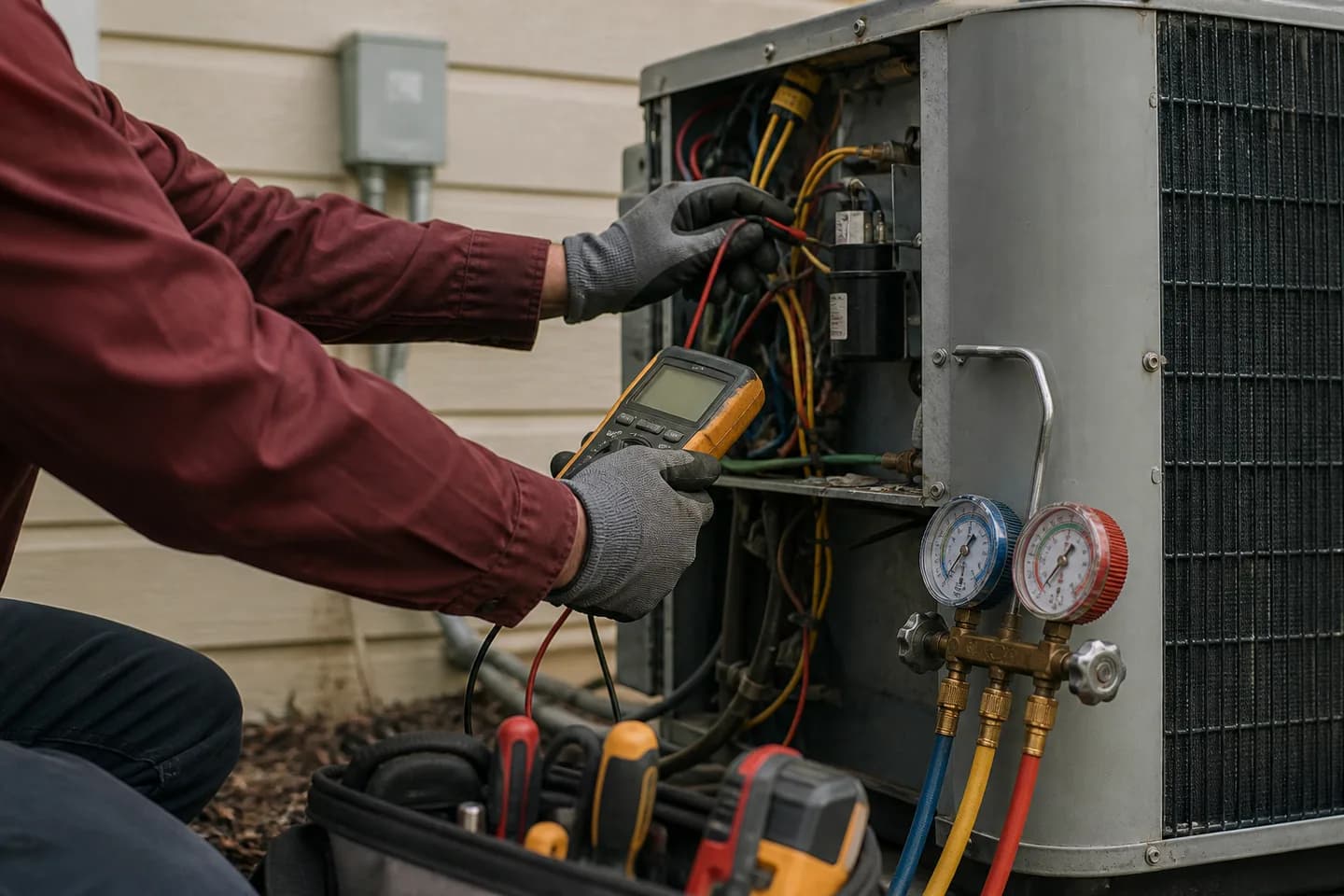
- Measure suspect components and compare results with specifications
- Test the repaired function and document any remaining limitation
Measurements that separate cause from coincidence
Visual inspection is valuable for burned wiring, loose connections, corrosion, physical damage, contamination, water, ice, blocked airflow, and failed moving parts. Many failures still require measurement. Voltage, current, resistance, capacitance, temperature, pressure, static pressure, and control signals may be appropriate depending on the complaint. Readings need context from ratings, equipment data, operating mode, and present conditions.
For example, a weak capacitor may prevent a motor from starting, but the motor and electrical circuit should also be evaluated. Low cooling performance may involve airflow before refrigerant measurements can be interpreted correctly. A safety switch may be open because it did its job, so the reason it opened matters more than simply resetting it. Good diagnostics establish a cause that explains both the symptom and the observed evidence.
Handling intermittent and layered problems
Some systems have more than one condition. A drain blockage may shut the equipment off through a float safety while a dirty filter contributes to icing. A weak electrical component may cause hard starting while a loose connection produces heat. One failure can also prevent testing of another part of the system. The technician should state which problem is confirmed, which check must wait until operation is restored, and whether follow-up testing is included.
Intermittent failures can be harder to reproduce. Stored fault history, temperature patterns, wiring condition, operating measurements, and the homeowner's recordings may help. Sometimes the responsible step is to document current findings and gather more evidence rather than replace a part on suspicion. If monitoring or a return visit is recommended, the homeowner should know what to record, whether normal operation is allowed, and which sign requires shutdown.
From diagnostic finding to repair choice
The diagnostic result should identify the condition, supporting evidence, effect on operation, and recommended correction. A repair estimate should describe the work and price before authorization. If access, parts availability, weather, or an earlier failure prevents a complete system test, that limit should be written down. Restoring one failed circuit does not prove cooling or heating performance until the equipment can run through the relevant mode.
When the confirmed repair is substantial, homeowners may want a replacement comparison. Useful context includes equipment age and condition, service history, refrigerant, part availability, comfort, efficiency, warranty, and plans for the house. Diagnosis remains valuable even when replacement is chosen because it explains the immediate failure and helps prevent an unrelated problem, such as damaged ductwork or electrical supply, from carrying into the new installation.
Preparing safely and using the final report
Before the appointment, provide access to thermostats, indoor and outdoor equipment, electrical panels, and applicable attic or crawlspace openings. Secure pets and clear stored items away from service panels. Turn equipment off for smoke, a burning odor, severe mechanical noise, ice, water near electrical components, or a breaker that trips again after one reset. Do not bypass a safety, push a contactor, open a refrigerant circuit, or continue operating visibly damaged equipment.
Keep the diagnostic summary with future repair and maintenance records. It should identify the serviced system, symptom, tested condition, diagnosis, work completed, and any remaining recommendation. Wayne built Air Conditioning Repair Man around open communication and customer education. A good report supports that goal by giving the homeowner something more durable than a verbal part name and making later service easier to compare with what happened today.
Common questions
HVAC diagnostic questions
What is included in an HVAC diagnostic visit?
Scope varies, but the visit generally includes confirming the symptom, identifying the equipment, following the relevant operating sequence, testing likely causes, and explaining a finding or the next test needed. Repair parts and added labor may be separate.
Can a thermostat error code tell me which part to replace?
Not reliably. A code identifies a condition detected by the controls. Wiring, airflow, power, sensors, safeties, and connected components may create the same code, so testing is needed before choosing a repair.
Why might the technician need to return after a diagnosis?
A specific part may need to be ordered, an intermittent symptom may need more evidence, or one failure may block testing of the full system. The contractor should document what was confirmed and what remains to be checked.
Does a diagnostic fee include the repair?
Policies vary. Ask how diagnostic labor, repair labor, parts, return visits, and any credit toward approved work are handled. Added work should be explained and approved before it is completed.
Should the system be running when the technician arrives?
Normal operation may help reproduce a safe symptom. Turn the system off for smoke, burning odor, ice, severe noise, water near electrical parts, or repeated breaker trips. Follow any instructions given when scheduling.
Can an HVAC diagnostic find the cause of uneven rooms?
It can test equipment operation, controls, airflow, zoning, and accessible duct conditions related to the complaint. Room differences may also involve return paths, insulation, windows, sun exposure, or air leakage. A useful diagnosis separates confirmed mechanical findings from building conditions that need additional evaluation.