
Cooling projects and ongoing system care
A good AC contractor helps with the full life of the system.
Air Conditioning Contractor in Jasper, GA means more than choosing equipment or replacing a failed part. A contractor may help with installation, replacement, repair, diagnostics, tune-ups, and planned maintenance. Each service calls for a different conversation. A repair starts with the present fault. An installation starts with the home, comfort goals, equipment match, ducts, controls, drainage, electrical needs, and the way the finished system will be started and tested.
Air Conditioning Repair Man is a family-owned business led by Wayne Buras. Wayne has 20 years of residential and light commercial HVAC experience. He studied air conditioning technology at Chattahoochee Technical College, has held an HVAC warm-air license since 2007, and holds EPA Section 608 Universal Technician certification. He also attends manufacturer classes and seminars as products and service methods change. That background supports work on existing systems and the planning needed when a home is ready for new equipment.
What an air conditioning contractor can help with
Contractor services cover the decisions that keep a cooling system working from installation through replacement. Air conditioning installation places and connects new equipment. AC replacement removes aging or failed equipment and matches the new system with the home and existing components. Repair and diagnostics address faults. Maintenance and tune-ups support equipment that is still operating. Residential AC services bring those tasks together for homeowners who want one point of contact.
The service should fit the need. A thermostat problem does not automatically call for a new system. A failed compressor on older equipment may deserve both a repair estimate and a replacement comparison. A new condenser should not be selected without checking the indoor match, refrigerant, controls, electrical supply, and airflow. The contractor's job is to identify the decision in front of the customer and provide enough information to choose a practical next step.
Planning an installation or replacement
Equipment selection begins with the home rather than the old model number alone. Size, layout, windows, insulation, air leakage, shade, occupancy, ducts, and indoor comfort goals can affect the load. Existing equipment may have been oversized, undersized, or paired with ducts that do not move the needed airflow. Replacing it with the same capacity without review can repeat humidity, noise, cycling, and room-balance problems.
A project also needs a compatible indoor and outdoor system, thermostat or control, refrigerant path, drain, equipment base or support, electrical connection, disconnect, and accessible service area. The contractor should explain what will remain, what will change, and whether duct, electrical, drain, or control work is part of the scope. Written details help the homeowner compare proposals based on the full job rather than the equipment label alone.
- Review the home's cooling needs, room comfort, and existing system history
- Confirm that indoor and outdoor equipment are designed to work together
- Check airflow, filter access, ducts, controls, drainage, and electrical needs
- Describe removal, installation, startup, testing, and homeowner instruction
- Put equipment, labor, warranty, exclusions, and added work in writing
Installation details affect comfort after the crew leaves
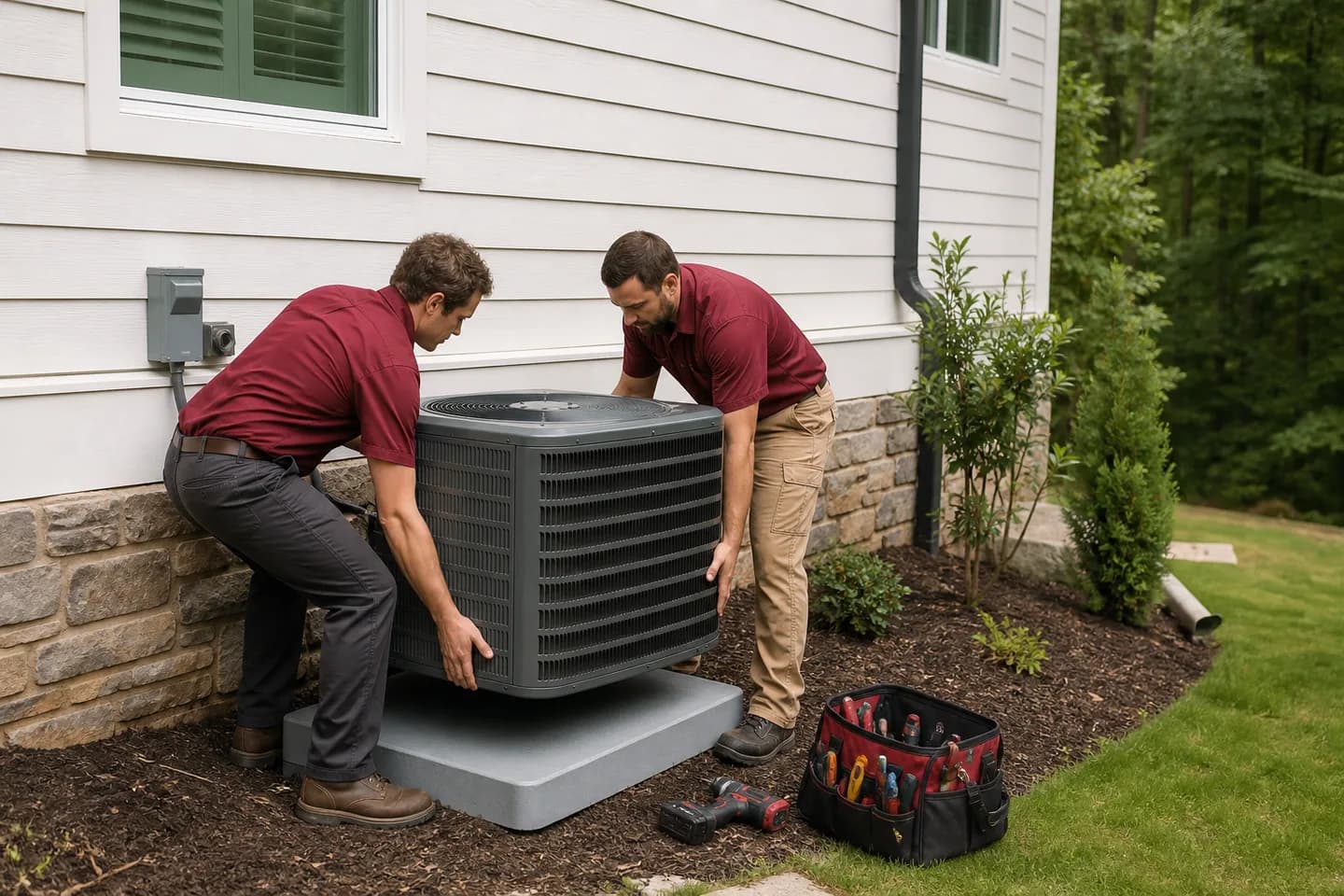
New equipment can only perform as well as its setup and the system around it. Airflow must fit the equipment. Refrigerant tubing needs correct sizing, condition, connections, evacuation, and charging procedures. Drainage must carry condensate away. Controls need the right configuration for stages, blower speeds, heat pump functions, or communicating features. Outdoor equipment needs stable support, clearance, and a location that allows service and airflow.
Startup is part of installation, not an optional final step. The contractor should confirm thermostat operation, blower settings, temperature change, electrical operation, drainage, outdoor performance, and other manufacturer checks that apply. Equipment information and warranty documents should be provided or recorded. The homeowner should learn the filter size, basic thermostat use, maintenance expectations, and which sounds or behaviors are normal during operation.
Repair and diagnostic work from the same contractor
A contractor who handles repair can learn the history of the equipment over time. Repeated motor trouble may point toward airflow resistance. Recurring drain shutdowns may need more than another line clearing. A system with several large repairs may be approaching a replacement discussion. Service records help separate a one-time part failure from a pattern tied to age, installation, controls, or the conditions around the equipment.
Diagnosis should still come before a large recommendation. The technician confirms the reported symptom and tests the operating sequence. Wayne explains what failed, what can be repaired, and whether the overall condition makes another option worth reviewing. This approach gives the homeowner a repair answer even when replacement is possible. It also gives a replacement conversation real evidence rather than beginning with a sales assumption.
Maintenance after installation protects the investment
Filters, coils, blowers, drains, electrical parts, controls, and outdoor airflow need attention as the system operates. Planned maintenance can find some dirty conditions, weak readings, and drainage concerns before they create a shutdown. It also creates a record of how the equipment operated when it was newer. No maintenance plan prevents every future repair, but neglect can shorten useful life and make a small issue harder on connected parts.
Manufacturer guidance and warranty terms should shape the schedule. Keep invoices, model and serial information, startup records, warranty documents, and maintenance history together. Air Conditioning Repair Man offers AC maintenance, tune-ups, HVAC maintenance, and service options for homeowners who want recurring care. The contractor should clearly separate what a visit includes from repair work that needs added approval.
Choosing a contractor for a Jasper home
Ask about experience with the system type, how equipment is selected, and how startup is documented. Review the written scope rather than relying on a verbal equipment price. Ask who performs the work, what is excluded, how changes are approved, and how warranty questions are handled. A contractor should be willing to explain why the proposed equipment and work fit the home without burying the answer in technical terms.
Wayne grew up locally from age 15, graduated from Cherokee High School, continued into trade school, and raised his family in the area. He left employment with another company to create a family-owned business that could serve customers more directly. That local history does not replace technical work, but it shapes the service standard. Air Conditioning Repair Man pairs manufacturer education and field experience with communication that helps the customer understand the system they are paying to repair, maintain, or replace.
Common questions
Questions about hiring an AC contractor in Jasper
What should be included in an AC installation proposal?
The proposal should identify the equipment, major materials, labor scope, controls, removal, drainage, electrical or duct work included, startup, warranty information, exclusions, price, and change process. Ask for clarification when an item that matters to the home is not written down.
Should a contractor replace my AC with the same size?
Not automatically. The old size is useful history, but it may not match the home's present load, ducts, insulation, or comfort needs. The contractor should review the house and explain the sizing method before selecting replacement capacity.
Can an AC contractor repair equipment from another installer?
In many cases, yes. Access to parts, manufacturer information, warranty status, installation condition, and equipment age can affect the repair. The technician should diagnose the current fault and explain any installation concern separately.
What is the difference between installation and replacement?
Installation can describe equipment placed in a new or newly served space. Replacement removes existing equipment and connects new components to an existing home system. Replacement still needs sizing, compatibility, airflow, electrical, drain, control, and startup review.
Why should one company handle maintenance after installation?
It is not required, but continuity can help. The company may already know the equipment, setup, filter, controls, and startup readings. Any qualified service provider should still document maintenance and follow manufacturer guidance.