
New cooling equipment planned for the home
Installation quality begins before the equipment arrives.
Air Conditioning Installation in Jasper, GA begins with planning the system around the building, not simply choosing a brand or copying an old model number. Cooling capacity, humidity control, airflow, ducts, thermostat location, electrical service, drainage, equipment placement, and the indoor and outdoor match all affect the result. A system can be new and still cycle poorly, run loudly, or leave rooms uncomfortable when those details are skipped.
Wayne Buras brings 20 years of residential and light commercial HVAC experience to installation work. He studied air conditioning technology at Chattahoochee Technical College, has held an HVAC warm-air license since 2007, and continues manufacturer classes as equipment and refrigerants change. Air Conditioning Repair Man explains the proposed system, written scope, installation steps, and startup checks so the homeowner understands what will be installed and what the finished system needs to operate well.
Choosing capacity for the house
An air conditioner must handle the home's cooling load without being much larger than needed. Square footage is only one part. Windows, orientation, insulation, air leakage, ceiling height, shade, number of occupants, appliances, and local design conditions also affect heat gain. Duct location and condition matter because cooled air may travel through an attic, crawl area, or other hot space before reaching the rooms.
Oversized equipment can cool the thermostat area quickly and shut off before removing enough moisture. Frequent starts add wear and may create temperature swings. Undersized equipment may run for long periods and still fall behind when the actual load exceeds capacity. A contractor should explain the sizing approach and how equipment stages or variable capacity fit the load rather than promising that a larger unit will always cool better.
Matching indoor equipment, outdoor equipment, and controls
A split system combines an outdoor unit with an indoor coil and blower or furnace. Those parts need to be compatible and rated as a system. Coil size, metering device, refrigerant, blower airflow, efficiency, control stages, and heat pump features all affect the match. A high-efficiency outdoor unit cannot deliver its rated performance when paired with the wrong indoor section or control.
Thermostats also need the correct setup. Single-stage, multi-stage, heat pump, variable-speed, and communicating systems use different signals. Some features work only with a matched manufacturer control. The proposal should state whether the thermostat is included and what functions it supports. If an existing thermostat remains, its compatibility and wiring should be checked before installation day.
- Cooling capacity selected from the home's load and operating needs
- Indoor coil and blower matched with the outdoor equipment
- Thermostat and wiring suitable for stages, heat pump functions, or communication
- Filter size and access that support the required airflow
- Documented equipment ratings and model information for the completed system
Ducts and airflow are part of the installation
New equipment needs the right amount of air across the indoor coil. Existing ducts may be too small, damaged, disconnected, poorly sealed, or difficult to balance. A restrictive return, narrow filter rack, closed damper, or undersized supply path can create noise and high pressure. The blower cannot solve every duct problem by running faster. The contractor should review accessible ducts and discuss concerns that may limit the new system.
Room comfort history provides useful clues. If one room has always been hot, new equipment alone may repeat the pattern. The cause may involve duct capacity, return air, insulation, sun exposure, or zoning. The project scope should say whether duct corrections or balancing are included. When a larger duct project is not part of the installation, the homeowner should still know which comfort concern may remain.
Refrigerant tubing, drainage, and electrical work
Refrigerant lines need correct sizing, condition, insulation, support, connections, evacuation, and charging procedures. An old line set may be reusable in some projects and unsuitable in others. The decision depends on refrigerant, manufacturer rules, cleanliness, size, routing, condition, and access. Wayne holds EPA Section 608 Universal Technician certification for regulated refrigerant handling and follows the procedures that apply to the installed equipment.
The indoor coil produces condensate during humid cooling weather. The drain needs proper material, slope, trap or vent arrangement when required, termination, and safety protection. Electrical service must match equipment nameplate requirements and include the proper disconnect and overcurrent protection. The contractor should identify which electrical and drain work is included and when another trade, permit, or separate correction is needed.
Equipment placement and service access
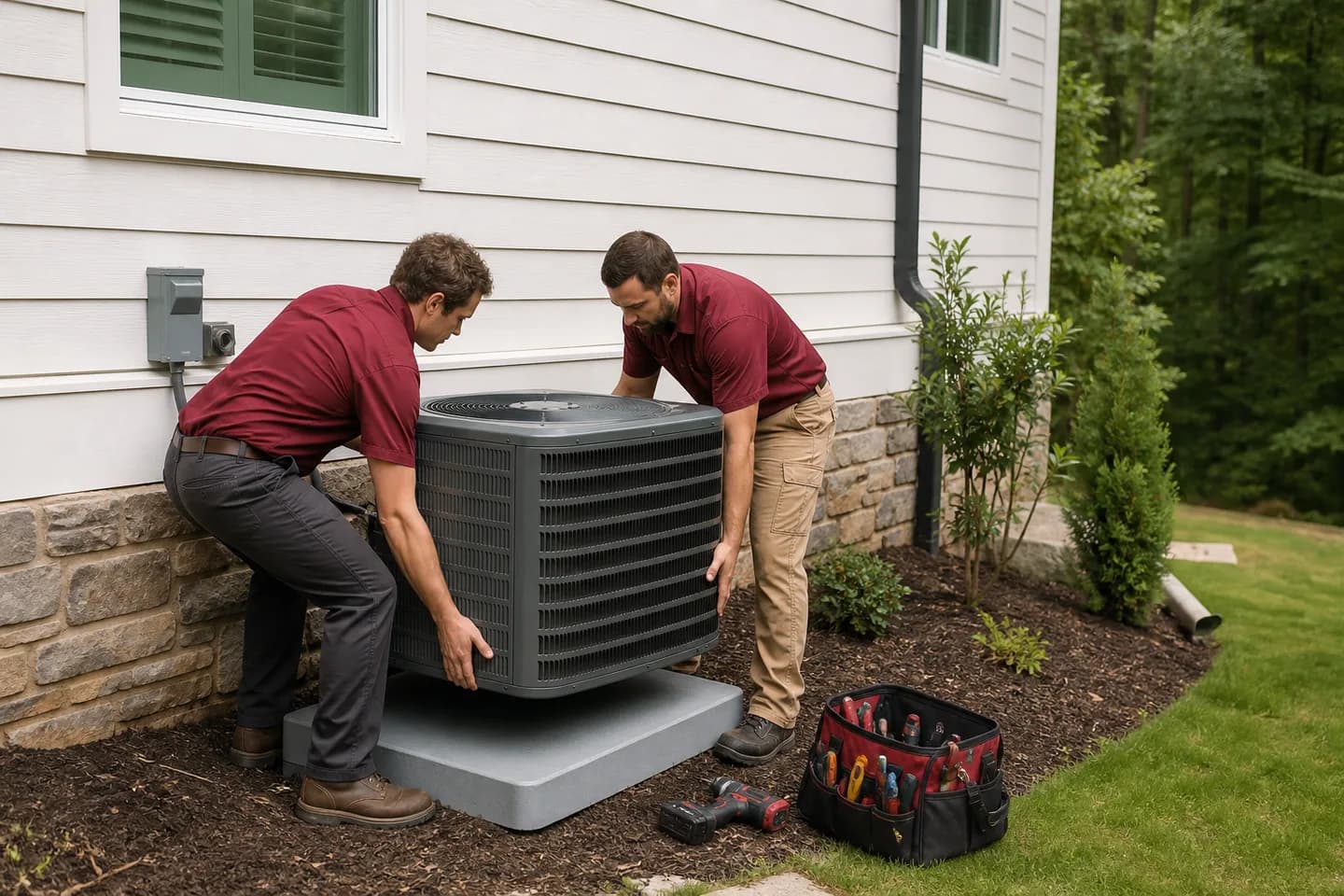
The outdoor unit needs a stable, level support and open space for coil airflow and discharge air. It should not be placed where roof runoff, dryer exhaust, thick shrubs, or tight walls interfere. Noise, bedroom windows, property layout, service clearance, and line routing can also affect placement. The indoor unit needs safe access for filters, panels, drain service, and future repairs.
A cramped installation may save space now and create higher service labor later. Filters should be replaceable without removing unrelated parts. Drain pans and switches should be visible where possible. Panels need room to open. Attic and crawl access should be considered with safe working space. Good planning recognizes that every air conditioner will need maintenance and may need repair during its life.
Startup, testing, and homeowner handoff
Installation is not finished when the equipment turns on. The technician should complete manufacturer startup steps and confirm control response, blower configuration, airflow, temperature change, drainage, electrical operation, outdoor performance, and charge using the method for the equipment. Readings should be taken after the system reaches stable operation under suitable conditions. A problem found during startup should be corrected before the job is treated as complete.
The homeowner should receive model information, warranty documents or registration guidance, thermostat instruction, filter size, and maintenance expectations. Ask what normal sounds and cycles to expect, especially with multi-stage or variable equipment. Keep the proposal, startup information, invoices, and manuals together. These records help with warranty questions and give future service technicians a reliable picture of how the system began its operating life.
Common questions
Air conditioning installation questions
How is the right AC size selected?
The contractor reviews the home's cooling load, construction, windows, insulation, air leakage, occupancy, ducts, and local conditions. The old equipment size can provide history, but it should not be the only reason for selecting the new capacity.
Can I keep my existing indoor coil?
Only when the indoor coil is compatible with the new outdoor equipment, refrigerant, ratings, metering device, condition, and manufacturer requirements. A mismatched coil can reduce performance and may create warranty or charging problems.
Does a new AC installation include duct replacement?
Not unless the written scope includes it. The contractor should review accessible ducts and identify limitations. Sealing, resizing, adding returns, balancing, or full duct replacement may be separate work depending on the system and home.
How long does AC installation take?
Timing depends on access, equipment type, duct or electrical changes, weather, permits when applicable, removal, and startup needs. Ask for the expected schedule and what could change it. A careful startup should not be skipped to meet a short estimate.
What should I check before approving the finished installation?
Confirm that the system operates, drains, responds to the thermostat, and delivers airflow without the reported issues. Review filter access, controls, model information, warranty documents, cleanup, completed scope, and any follow-up item in writing.
What happens to the old equipment and refrigerant?
The installation plan should include safe removal and disposal of replaced equipment. Refrigerant must be recovered with appropriate equipment instead of being released. Ask whether removal, recovery, hauling, and disposal are included, especially when old equipment is difficult to reach or additional material will remain on the property.
Will new air conditioning equipment fix every uneven room?
Not necessarily. New equipment can improve reliable capacity and control, but room differences may involve supply ducts, return paths, zoning, insulation, windows, air leakage, or sun exposure. Discuss existing comfort patterns before selection so the contractor can identify related work or explain which building conditions remain outside the installation.