Practical heating help for colder days
A heating contractor should make the system and the choices clear.
Heating Contractor in Jasper, GA means having someone who can inspect, maintain, diagnose, and repair the equipment that keeps a home comfortable when temperatures fall. A heating problem may begin with no heat, weak airflow, short cycles, an unfamiliar sound, a thermostat message, or one room that never feels right. Those symptoms are useful clues, but the contractor still needs to identify the system, follow its operating sequence, and test the condition before recommending a repair.
Air Conditioning Repair Man is a family-owned business led by Wayne Buras. Wayne has 20 years of residential and light commercial HVAC experience, studied air conditioning technology at Chattahoochee Technical College, and has held a Georgia warm-air license since 2007. He is also an EPA Section 608 Universal Technician and continues manufacturer classes and seminars. His service style centers on open communication, customer education, and direct explanations from the person responsible for the technical work.
What a heating contractor can help with
Heating work includes more than replacing a failed part. Furnace repair addresses a confirmed operating problem. A furnace inspection documents condition, safety-related observations, and present operation within a stated scope. Heating system maintenance handles recurring cleaning and checks before peak use. HVAC system repair looks at heating, cooling, airflow, and controls when the issue involves components shared across the whole system.
The right appointment depends on what the equipment is doing. A system that will not start usually needs diagnosis and repair, not a routine maintenance checklist. Operating equipment with no recent care may be ready for seasonal maintenance. A homeowner seeking condition information for planning may need an inspection. Describe the symptom and goal when scheduling so enough time and the correct service scope can be assigned.
- Furnace repair for failed starts, shutdowns, noise, and uneven output
- Furnace inspection for documented condition and operating observations
- Heating system maintenance for planned seasonal care
- HVAC system repair when shared airflow, control, or equipment problems are involved
- Clear repair options and written limits when full testing is not possible
Heating systems found in Jasper homes
Homes may use a gas furnace paired with central air conditioning, an electric furnace, a heat pump with electric backup heat, a dual-fuel system, package equipment, or ductless heat pumps. Some houses have more than one system or zoning controls for different floors. Each setup uses a different combination of thermostats, power, controls, blowers, heating components, safeties, and outdoor equipment.
System identification comes before testing. A heat pump that blows cooler air than a gas furnace may be operating normally, while the same air temperature from another system could show a problem. A dual-fuel system must change between heat pump and furnace operation through its controls. Model information, wiring diagrams, thermostat configuration, fuel type, and the installed equipment relationship help the technician follow the correct sequence.
Diagnosis comes before the heating repair
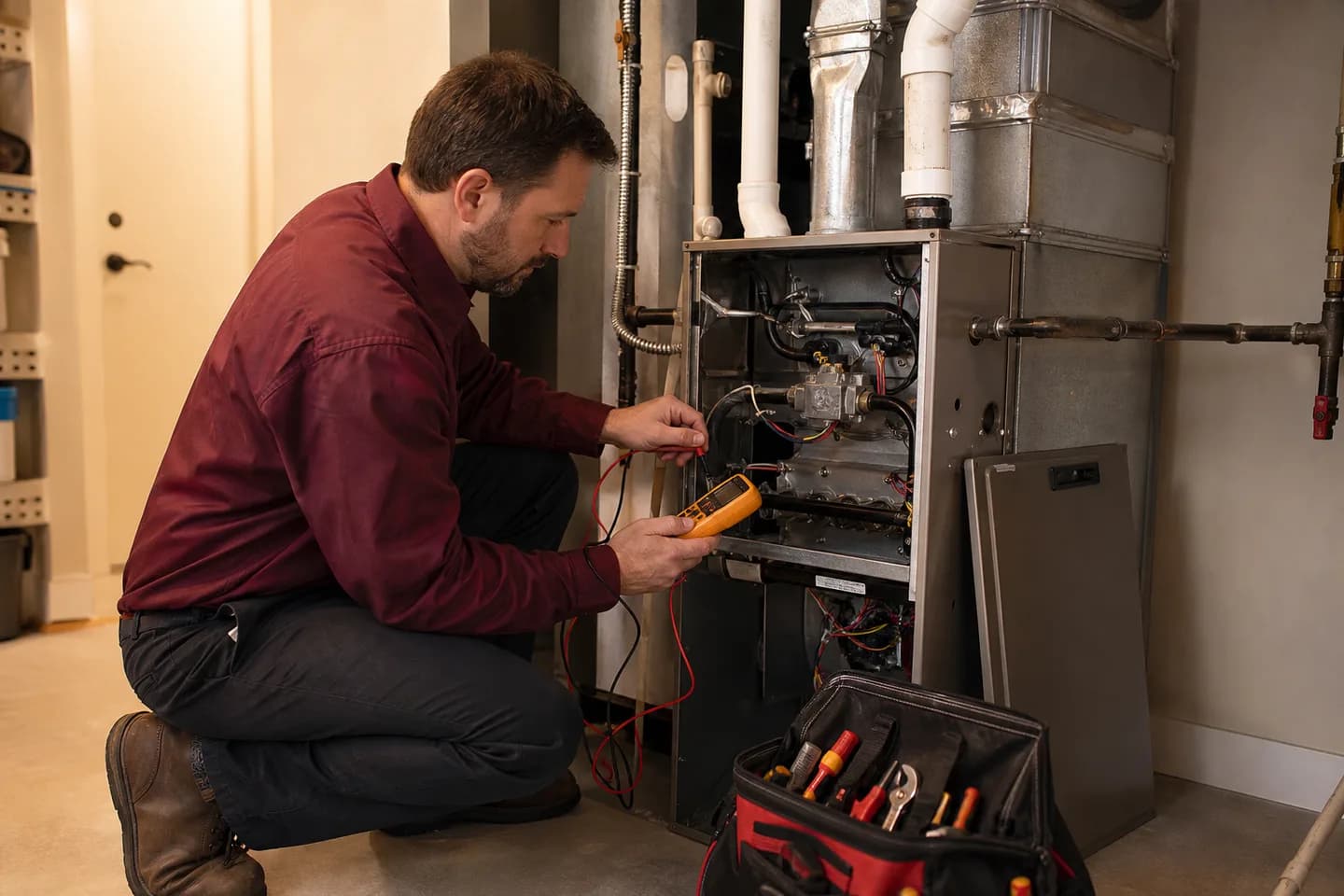
A thermostat call begins an operating sequence. Depending on the system, the sequence may involve a control board, pressure or temperature safeties, inducer, ignition, gas valve, flame proving, blower, reversing valve, defrost controls, compressor, outdoor fan, electric heat, or zone controls. When the sequence stops, the technician tests what command entered that step, how the component responded, and whether another condition prevented operation.
Fault codes and visible damage can help narrow the work, but they are not complete answers by themselves. A limit code may appear because of restricted airflow, blower trouble, control settings, or another overheating condition. An ignition code may involve fuel supply, venting, ignition, sensing, wiring, or controls. Testing the connected system reduces repeated part replacement and gives the homeowner a reason for the proposed repair.
Inspection and maintenance have different jobs
An inspection focuses on present condition and the items named in its scope. A maintenance visit includes recurring care, cleaning, adjustment, and operating checks listed by the contractor. The two services may overlap, but neither label shows every included task. Homeowners should ask whether the visit covers filters, blower and airflow, thermostat response, electrical measurements, ignition, safeties, venting, combustion-related checks, heat pump functions, and a written report.
Maintenance can correct routine neglect and reveal some developing concerns. It cannot promise that a motor, control, igniter, sensor, or other component will not fail later. An inspection also cannot see through a sealed or inaccessible part unless the scope calls for added work. A useful report states what was checked, what was not accessible, which findings need repair, and which observations are simply worth watching over time.
Heating safety begins before the service visit
Turn the system off for smoke, a burning electrical odor, severe mechanical noise, sparking, visible equipment damage, or repeated breaker trips. If anyone suspects a gas leak or carbon monoxide event, leave the building and contact emergency services or the appropriate utility from a safe location. Do not search for the leak, operate switches, or re-enter until the property has been cleared by the proper responder.
Carbon monoxide alarms should be installed and maintained according to product instructions and local requirements. They support household safety but do not replace furnace service. Never bypass a limit, door switch, pressure switch, flame control, or other protective device to keep heat running. If a contractor identifies an unsafe condition, the equipment may need to stay off until the source is corrected and operation can be verified.
Choosing a contractor and keeping useful records
Ask who will perform the work, what the visit includes, how added repairs are approved, and what testing will follow the repair. Share the equipment type, model information when available, service history, and exact symptom. Clear access to the thermostat, indoor unit, outdoor equipment, electrical panel, and attic or crawlspace opening when applicable. Secure pets and save photos or recordings of intermittent messages and sounds.
Keep the final diagnosis, invoice, parts information, operating notes, maintenance reports, and any remaining recommendation. Records help a contractor see whether a shutdown is isolated or part of a pattern. Wayne became interested in the trade after a technician repaired the air conditioner at his own home and took time to talk with him. Air Conditioning Repair Man carries that same idea into heating work by pairing technical service with an explanation the homeowner can use.
Common questions
Heating contractor questions
When should I call a heating contractor?
Call when the system will not heat, cycles abnormally, trips a breaker, makes a new sound, produces an unusual odor, displays a recurring code, or leaves persistent comfort problems. Smoke, suspected gas, or carbon monoxide concerns require immediate safety action first.
What is the difference between furnace repair and HVAC system repair?
Furnace repair focuses on the furnace and its connected heating sequence. HVAC system repair may involve heating, cooling, thermostats, zoning, shared airflow, ducts, and controls. The contractor can identify the correct scope from the equipment and symptom.
Can a heating contractor work on heat pumps?
Many heating contractors service heat pumps, but experience and scope vary. Heat pumps use refrigerant, reversing, defrost, outdoor components, and backup heat, so tell the company which system you have when scheduling.
Should I turn the heat off before the appointment?
Turn it off for smoke, burning odor, severe noise, electrical damage, or repeated breaker trips. Leave the property for suspected gas or carbon monoxide concerns. Otherwise, safe operation may help reproduce the symptom unless the contractor gives different instructions.
What should a heating service report include?
It should identify the equipment, reported symptom or visit purpose, work completed, measured or observed findings, repairs, tested operation, and any limitation. Weather, access, intermittent behavior, or a blocking failure may prevent part of the planned test.
How can I prepare for a heating contractor visit?
Clear access to equipment and controls, secure pets, gather prior service records, and save thermostat codes or recordings of intermittent sounds. Tell the company about fuel odors, breaker trips, water, recent construction, or earlier repairs when scheduling.