Cooling help for Jasper homes
AC problems are easier to handle when the next step is clear.
Air Conditioning Repair Service in Jasper, GA starts with a simple goal: find out why your home is not cooling and explain what can be done about it. A warm house can become uncomfortable fast during a Georgia summer. The problem may be as small as a clogged filter or thermostat setting. It may also involve a failed electrical part, a drainage issue, low airflow, or a problem within the refrigerant circuit. A careful diagnosis separates a useful repair from a guess.
Air Conditioning Repair Man serves residential and light commercial systems with 20 years of heating and air experience behind the work. Owner and technician Wayne Buras believes customers should know what is happening inside their system. That means plain answers, open communication, and a chance to review the available options before making a decision. The pages in this section cover urgent breakdowns, routine repairs, inspections, tune-ups, heat pumps, condensers, zoning controls, and planned maintenance.
When the air stops blowing cold
The first sign of trouble is not always a completely dead system. Some air conditioners keep running while the rooms get warmer. Others start and stop every few minutes, blow weak air, make a new sound, or leave part of the house comfortable while another part stays hot. These details matter. They help narrow the search before panels are opened or parts are tested. Write down when the problem began and whether anything changed after a storm, filter replacement, thermostat adjustment, or power interruption.
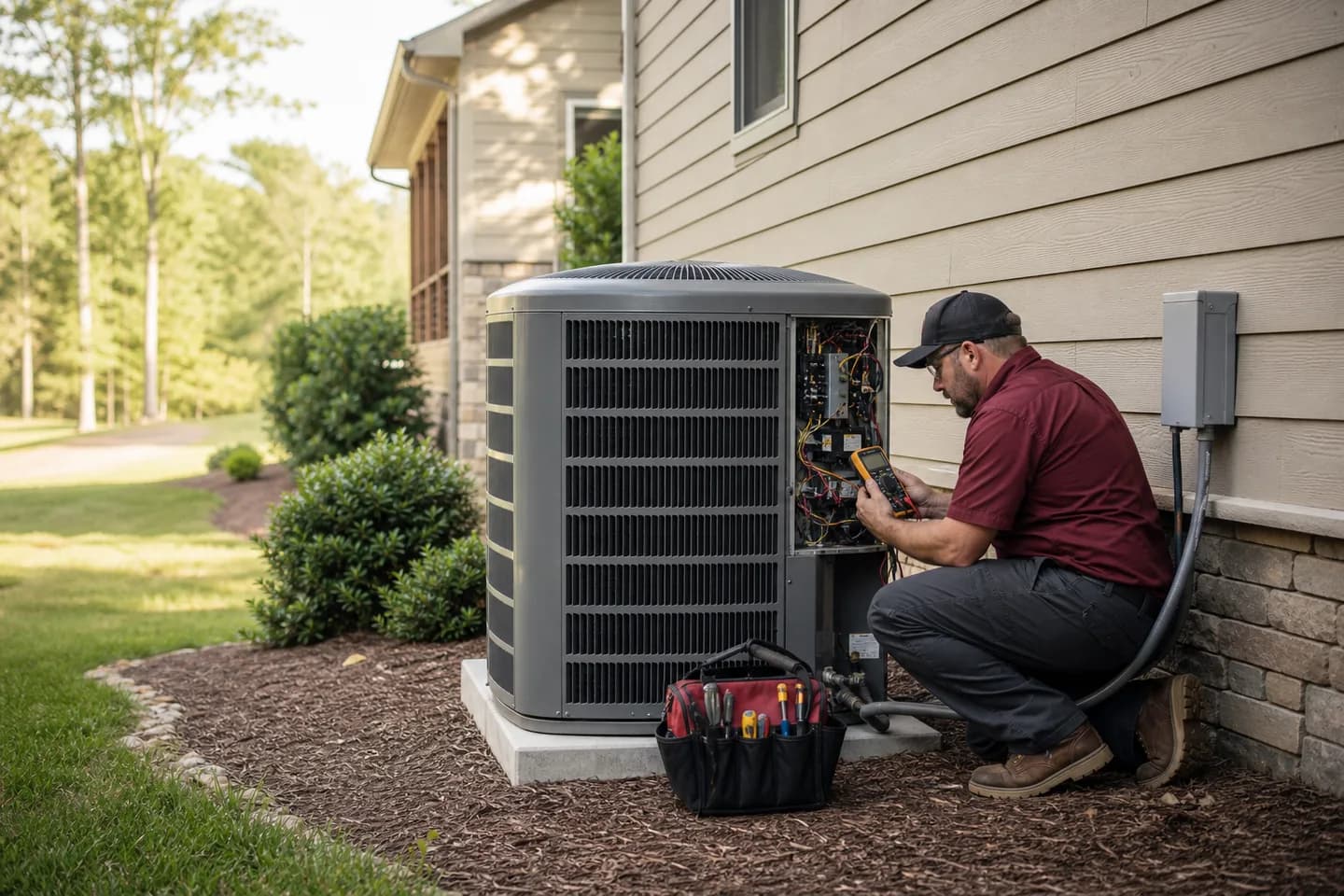
A repair visit should move from the basic causes to the more involved ones. The thermostat, filter, electrical supply, indoor airflow, outdoor unit, drain system, and temperature change across the equipment can all provide clues. A technician may test motors, capacitors, contactors, safety switches, controls, and other parts based on the symptoms. The goal is not to replace parts until something works. The goal is to connect the symptom to a measured cause and then discuss the repair that fits that finding.
Repair options for different cooling problems
Air conditioning repair covers many kinds of work because every no-cooling call is not the same. A system that will not start calls for different tests than a system with ice on the refrigerant line. Poor airflow may point toward a filter, blower, duct, coil, or control issue. Warm air may be tied to the outdoor unit, refrigerant circuit, thermostat, or a system setting. Water near the indoor unit often calls for a look at the drain line, drain pan, pump, or coil condition.
The service list also separates broad repair from focused needs. Emergency AC repair is for problems that cannot wait for a normal appointment. AC condenser repair focuses on the outdoor equipment. Zoning system repair looks at dampers, thermostats, and zone controls. Heat pump repair accounts for equipment that provides both heating and cooling. Diagnostics and inspections help when a homeowner needs facts about operation or condition before choosing the next step.
- No cooling, weak cooling, or warm air from the vents
- A system that runs constantly or starts and stops too often
- New rattling, buzzing, grinding, or clicking sounds
- Water around the indoor equipment or a drain that backs up
- Uneven temperatures, zone control problems, or poor airflow
Jasper weather puts real demand on an AC system
Cooling equipment in Jasper works through long stretches of heat and humidity. On the hottest days, a small loss of airflow or capacity becomes much easier to notice. Humidity also adds work because the system removes moisture while it lowers the indoor temperature. If the equipment is short cycling, oversized, dirty, or not moving enough air, the house may feel damp even when the thermostat number looks close to normal. Comfort depends on temperature, airflow, and moisture control working together.
Outdoor equipment also sits through pollen, grass clippings, falling leaves, rain, and summer storms. Debris around the condenser can limit the air it needs to release heat. Power interruptions can expose weak electrical parts or leave a control in need of a reset. These local conditions do not prove why a system failed, but they are useful context during troubleshooting. Seasonal care can reduce avoidable strain, while a proper diagnostic visit handles the problems that maintenance alone cannot prevent.
What homeowners can check before requesting repair
A few safe checks may solve a simple problem or give the technician better information. Confirm that the thermostat is set to cool and that the temperature setting is below the room temperature. Look at the thermostat display and replace its batteries if the model uses them. Check the air filter and replace it when it is heavily loaded. Make sure supply vents and return grilles are open and not blocked by furniture, rugs, or boxes. Look outside for leaves or other loose debris pressed against the condenser.
Safety comes first. Do not remove electrical covers, touch a swollen capacitor, add refrigerant, or reach into a fan section. If a breaker trips again after one reset, leave it off and request service. Repeated resets can hide an electrical fault and create more damage. Turn the system off if you notice smoke, a burning smell, loud electrical buzzing, or water reaching electrical parts. These signs call for professional testing rather than another attempt to start the equipment.
- Check thermostat mode, temperature setting, display, and batteries
- Inspect the filter and confirm that vents are open
- Look for obvious outdoor debris without opening the unit
- Reset a tripped breaker only once and stop if it trips again
- Share any recent sounds, smells, leaks, storms, or power issues
Repair, maintenance, and replacement are different decisions
A repair addresses a confirmed fault. Maintenance cleans, checks, and adjusts equipment that is still operating. Replacement changes the system when repair no longer makes practical sense. Those choices should not be treated as the same conversation. A newer system with one failed part may be a good repair candidate. An older system with repeated failures, hard-to-find parts, poor comfort, or a major component problem may deserve a repair and replacement comparison.
Wayne focuses on giving customers enough information to make that comparison. Useful details include the failed part, the condition of the rest of the equipment, repair cost, system age, past repair history, energy use, comfort problems, and parts availability. No single item makes the choice by itself. A clear explanation lets the homeowner weigh the immediate cost against the likely life and performance of the system after repair.
Local service built around communication
Air Conditioning Repair Man is a newer family-owned business backed by two decades of trade experience. Wayne has lived in the Cherokee and Pickens County area for 39 years. He graduated from Cherokee High School, continued his education at Chattahoochee Technical College, and has held an HVAC warm-air license since 2007. He also holds EPA Clean Air Section 608 Universal Technician certification.
Training does not stop after trade school. Heating and air equipment changes as manufacturers introduce new controls, motors, refrigerants, and product designs. Wayne continues to attend manufacturer classes and seminars to stay current. That technical work supports a customer service goal that is just as important: explain the system in language the homeowner can use. A good visit should leave you with a clearer picture of the problem, the options, and what to watch after the work is complete.
Common questions
Questions about air conditioning repair in Jasper
Why is my AC running but not cooling the house?
Possible causes include restricted airflow, a dirty coil, an outdoor unit that is not operating, a failed electrical part, a thermostat issue, or a refrigerant circuit problem. The same symptom can come from several faults, so testing is more useful than replacing a part based on a guess.
Should I turn the system off if there is ice on it?
Yes. Continuing to run a frozen system can add strain and may lead to water around the indoor equipment as the ice melts. Turn cooling off, check the filter, and request service. Do not chip ice from the coil or refrigerant lines because those parts can be damaged.
How often should an air conditioner be maintained?
Many homes benefit from a professional cooling check once a year, often before the hottest weather arrives. Filter changes may be needed more often and depend on the filter, household, pets, dust, and system use. Maintenance can lower avoidable strain, but it cannot prevent every part failure.
Does a warm house always mean the AC needs refrigerant?
No. Low refrigerant is only one possible cause. Airflow problems, electrical failures, controls, dirty equipment, compressor trouble, and thermostat settings can also reduce cooling. Refrigerant should not be added until the system has been tested and the reason for an incorrect charge has been addressed.
What information should I share when requesting service?
Share what the system is doing, when the problem started, whether the indoor fan or outdoor unit runs, and any sounds, smells, water, ice, or breaker trips you noticed. The equipment age and repair history also help. Clear symptoms give the technician a stronger starting point.