Seasonal care for heating and cooling equipment
HVAC maintenance follows the full system through changing seasons.
HVAC Maintenance in Jasper, GA gives heating and cooling equipment scheduled attention before small forms of neglect become larger operating problems. A complete plan may include cooling equipment, heating equipment, shared blower and controls, filters, drainage, electrical components, thermostats, outdoor units, and visible duct connections. The exact checklist should match the installed system because a heat pump, gas furnace with central air, dual-fuel system, and ductless unit do not use the same sequence.
Wayne Buras owns Air Conditioning Repair Man and brings 20 years of residential and light commercial HVAC experience to every service decision. He holds a Georgia warm-air license and EPA Section 608 Universal Technician certification, and he continues manufacturer classes and seminars. That background matters during maintenance because useful care combines routine tasks with equipment-specific checks and a clear boundary between included service and separate repair work.
Choosing maintenance for the system you own
Start by identifying the number and type of systems. A home may have a gas furnace and air conditioner, an all-electric heat pump, a dual-fuel arrangement, mini-splits, or separate equipment for different floors. The plan should state which units and operating modes are included. It should also explain whether cleaning, filters, drain treatment, electrical measurements, combustion checks, and written reporting are part of the visit or separately priced.
Timing depends on equipment and use. Cooling equipment is commonly serviced before heavy summer operation. Heating equipment deserves attention before winter. A heat pump works in both seasons and may benefit from checks in both modes. Manufacturer guidance and warranty terms may affect frequency. A maintenance agreement can provide reminders and continuity, but its value depends on the actual tasks, not the plan name alone.
Filters, blowers, and the shared air path
Many heating and cooling systems use the same return ducts, filter, blower, supply ducts, and thermostat. A restrictive or poorly fitted filter can affect both seasons. Dust on a blower wheel or indoor coil can reduce airflow. Damaged ducts or blocked returns can create room complaints and operating stress. Maintenance begins with these shared components because a heating or cooling measurement can be misleading when the air path is not correct.
The contractor should confirm filter size, fit, condition, and airflow direction. Filter replacement frequency depends on filter area and type, system use, pets, renovation dust, indoor conditions, and household needs. A higher-rated filter is not always a safe upgrade if the system cannot move air through it. Pressure or airflow measurements may be recommended when equipment, sound, comfort, or filter condition suggests excessive resistance.
- Thermostat settings, calls, and basic control response
- Filter condition, fit, and replacement guidance
- Blower operation and accessible cabinet condition
- Visible duct, return, and supply concerns near equipment
- Changes in room comfort, sound, odor, or cycle behavior
Cooling-season maintenance
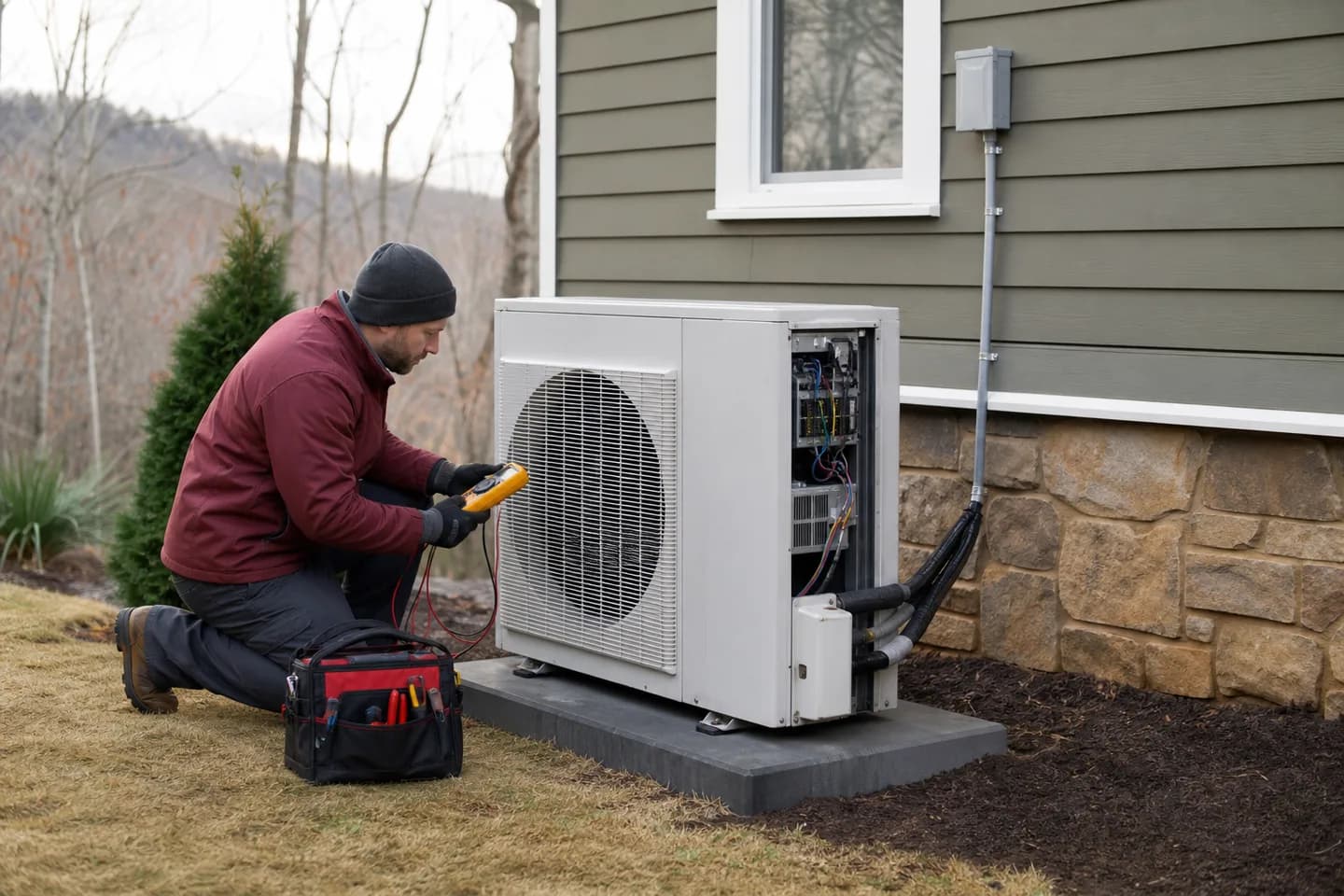
Cooling service may review the indoor coil, condensate pan and drain, outdoor coil, fan operation, electrical components, controls, insulation, equipment support, and performance readings within the chosen scope. Pollen, leaves, and grass can reduce outdoor airflow. Sludge or algae can block drainage. Heat and repeated starts can weaken electrical parts. Each condition should be observed or measured before it becomes a recommendation.
Refrigerant is not a product that should be topped off every year. A sealed system with the correct charge does not consume it. Charge evaluation requires correct airflow, stable operation, suitable outdoor conditions, and manufacturer procedures. If measurements indicate a concern, leak evaluation and repair may be separate diagnostic work. The maintenance report should say what was tested and whether conditions limited the conclusion.
Heating-season maintenance and safety
Heating checks depend on the equipment. A heat pump needs refrigerant-cycle, reversing, defrost, controls, outdoor unit, and auxiliary heat attention. Electric heat uses staged heating elements and controls. Fuel-burning equipment adds combustion, ignition, venting, flame-safety, gas, and heat-exchanger considerations. Work involving fuel and combustion should follow the equipment design and accepted safety procedures.
Carbon monoxide alarms are an important household safeguard, but they do not replace furnace service. Likewise, a normal maintenance visit does not guarantee that a component cannot fail later. If the contractor finds vent damage, an unsafe combustion condition, overheating, electrical damage, or another serious concern, the equipment may need to remain off until repaired. The report should explain the observed condition, not simply use a frightening label.
Separating maintenance from diagnostic and repair work
Maintenance is most effective on operating equipment. If the system will not start, trips a breaker, leaks significantly, freezes, or produces an abnormal smell or sound, tell the company before the visit. The appointment may need to be treated as diagnostic service. A seasonal checklist cannot be completed accurately while a primary failure prevents normal operation, and routine cleaning should not hide the need to establish the actual cause.
When maintenance reveals a failed or weak component, the contractor should explain the evidence, effect, urgency, and repair option. The homeowner should approve added work. Some observations support future planning rather than immediate repair, such as age, surface corrosion, or a component reading that remains within specifications but has changed from a previous baseline. Clear categories keep maintenance from becoming an automatic list of replacements.
Keeping records and doing safe homeowner care
Save each report with installation, warranty, and repair documents. Useful records identify the serviced units, work performed, measured values when taken, parts installed, access or weather limits, and next recommended action. Trends can show a recurring drain blockage, changing electrical value, repeated control code, or comfort complaint. Documentation also helps if a manufacturer asks for maintenance history during a warranty claim.
Between visits, homeowners can check filters, keep supply and return grilles open, maintain clearance around outdoor equipment, watch for drainage, and notice changes in operation. Do not open electrical or refrigerant sections, bypass safeties, clean a coil with damaging pressure or chemicals, or work around fuel-burning components without proper training. Air Conditioning Repair Man can provide the technical checks while giving the household a manageable list of routine observations.
Common questions
HVAC maintenance questions
How often should HVAC maintenance be scheduled?
Many systems are serviced before the main heating and cooling seasons, but equipment type, use, manufacturer guidance, environment, and warranty terms affect frequency. Ask for a schedule matched to your actual system.
Is HVAC maintenance the same as AC maintenance?
AC maintenance focuses on cooling. HVAC maintenance may include heating, cooling, and the shared airflow and control components. Confirm which equipment and modes are included in the quoted visit.
Does maintenance guarantee that my system will not break down?
No. It can correct routine neglect and identify some developing conditions, but components can fail after testing normally. Maintenance reduces avoidable problems and creates useful records without predicting every future failure.
Can maintenance be completed if the system is not working?
A nonworking system usually needs diagnosis first. Once the failure is repaired and normal operation is available, the contractor can complete applicable performance checks and discuss remaining maintenance tasks.
What should be included in an HVAC maintenance report?
It should identify the equipment, tasks completed, observed condition, measurements when part of the scope, repairs or recommendations, and any limits caused by access, weather, or an existing failure.
Does HVAC maintenance include furnace safety checks?
It can, but the scope must specifically include the fuel-burning equipment and appropriate safety, ignition, combustion, venting, and control checks. Ask what is tested and whether cleaning, repair, or specialized combustion analysis is part of the quoted service.
Can the same visit cover a furnace and air conditioner?
Some shared components can be reviewed together, but complete heating and cooling performance tests may depend on outdoor conditions and the chosen scope. A plan may use separate seasonal visits so each mode can be operated and measured appropriately.
Will maintenance help with HVAC odors?
Tell the contractor what the odor resembles, when it appears, and where it is strongest. Dust, drains, moisture, overheating electrical parts, fuel-burning problems, and non-HVAC sources require different responses. Burning or gas-like odors should be treated as safety concerns, not routine deodorizing.