Cooling help outside normal hours
After-hours AC trouble still needs safe steps and a measured diagnosis.
24-Hour AC Repair Service in Jasper, GA is intended for cooling failures that happen at night, early in the morning, on weekends, or during another time when a standard appointment may not fit the situation. A home can become uncomfortable quickly during hot weather. Electrical smells, repeated breaker trips, severe noises, active water leaks, and a complete loss of cooling can add urgency. The first goal is to keep people and property safe while service is requested.
After-hours availability, arrival time, and repair completion depend on current calls, location, weather, equipment, and parts. Air Conditioning Repair Man does not replace testing with a rushed guess. Wayne Buras brings 20 years of residential and light commercial experience to the visit. He explains what can be diagnosed and repaired now, what equipment must remain off, and whether a part or return appointment is needed. Clear expectations matter as much after dark as they do during the day.
Deciding whether the call needs after-hours attention
Consider the outdoor heat, indoor temperature, household needs, and the type of equipment symptom. A warm house with no cooling may need prompt help during extreme weather. Smoke, sparking, a burning electrical smell, repeated breaker trips, or a loud mechanical failure call for shutting the system off. Water reaching ceilings, floors, or electrical parts may also need quick action to limit damage.
A mild comfort complaint without unsafe signs may be manageable until a regular appointment. The customer decides what level of disruption is reasonable for the household. The service company can explain current availability and basic steps but cannot judge every home from a short call. If indoor heat becomes hard for anyone to tolerate, move to a cooler safe location. People come before the machine.
Safe actions while arranging service
Set the thermostat to cool, choose a lower setting, and confirm the display works. Check the filter and vents. Look at the indoor and outdoor equipment from a safe distance. Note whether each unit runs. A homeowner may reset a tripped breaker once when there is no smoke, burning odor, water near electrical parts, or another unsafe sign. If it trips again, leave it off.
Do not open electrical panels, push a contactor, replace a capacitor, reach into a fan, or add refrigerant. Turn the system off for ice, severe noise, burning odor, or active water that may affect electrical components. Close blinds, limit heat-producing appliances, and use safe fans while waiting. Never run a generator, grill, or fuel-burning device inside the home, garage, or near openings because of fire and carbon monoxide danger.
- Shut the system down when electrical or mechanical operation appears unsafe
- Reset a tripped breaker only once and stop after a second trip
- Protect the area from condensate water without opening equipment
- Move to a cooler safe place if the indoor temperature becomes hard to tolerate
- Keep model information and symptom details ready for the service call
Information that helps an after-hours technician
Share the service address, equipment type when known, approximate age, and access details. Describe when cooling stopped and whether the thermostat, indoor fan, and outdoor unit respond. Mention breaker trips, water, ice, odors, sounds, fault messages, and recent storms or power interruptions. A photo of the equipment label or a short recording of an intermittent sound may help identify likely tools or parts before arrival.
Also share any repair performed recently and whether the same symptom has happened before. Do not clear fault history repeatedly if the equipment can remain safely off. Make a path to the thermostat, indoor unit, electrical panel, and condenser. Secure pets and provide safe lighting around outdoor access. These details support a more focused visit when time and visibility may be limited.
What the after-hours diagnostic visit covers
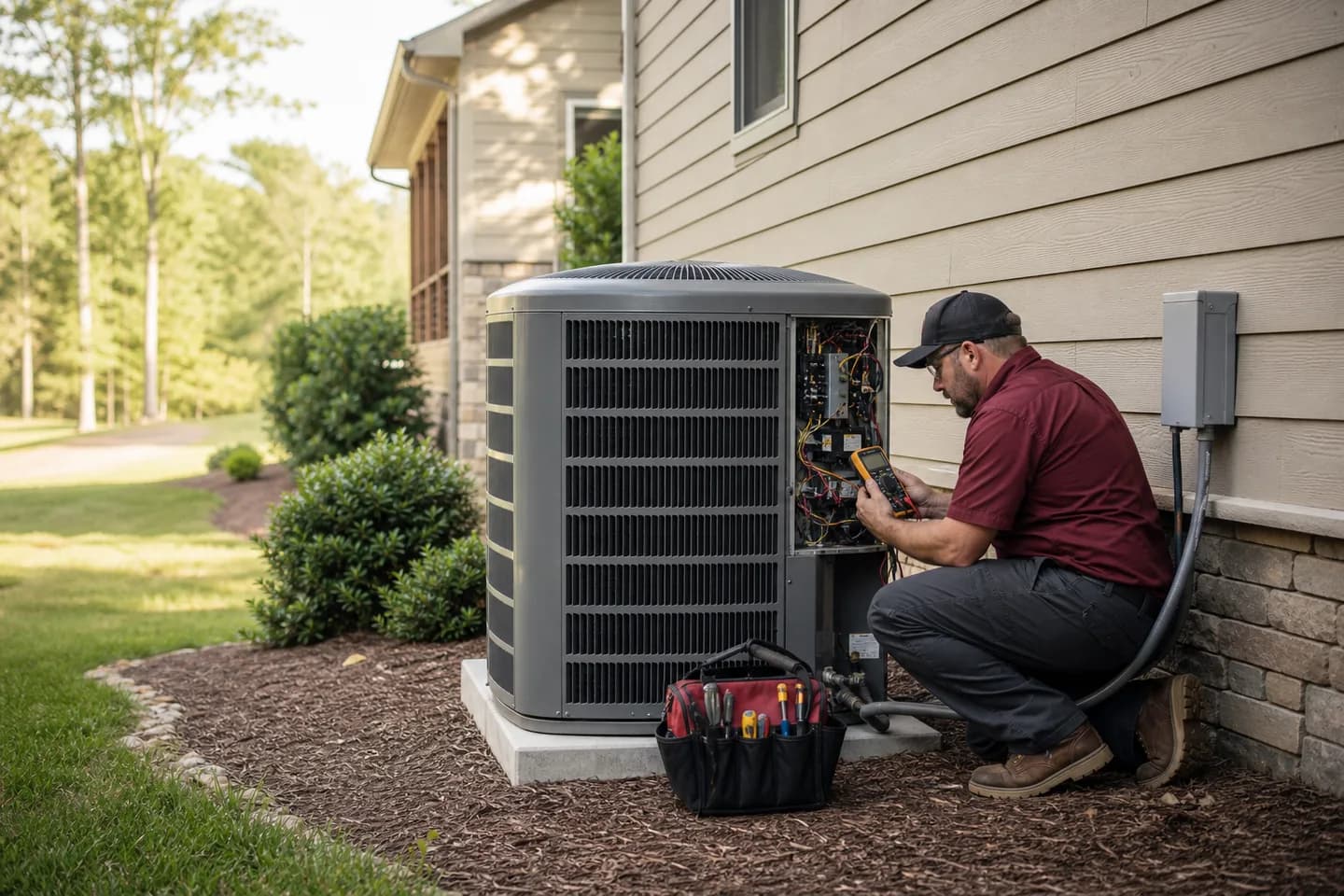
The technician checks the immediate safety concern and confirms the symptom. Testing then follows the failed operating sequence. A dead system may need thermostat, power, control, fuse, transformer, and safety checks. An indoor fan with no outdoor operation may need control signal, line power, contactor, capacitor, motor, compressor, and safety testing. Water calls for drain, pan, pump, switch, and freeze evaluation.
The same standards apply outside normal hours. A part should be tested before it is replaced. A breaker should not be reset repeatedly. Refrigerant should not be added without operating evidence and a discussion of why the charge is incorrect. Wayne explains the finding and the available repair. If conditions prevent complete testing, the customer should know what is confirmed, what remains unknown, and what follow-up is needed.
When the full repair cannot be completed that night
Some repairs use common parts that may be available. Others require an equipment-specific motor, board, sensor, coil, compressor, or refrigerant procedure. Supply houses may be closed, and specialized work may need daylight, added equipment, or another technician. A temporary action is offered only when it is safe and does not bypass a control or create more damage. Some systems must remain off until the correct repair can be completed.
The homeowner should receive a clear next step. That may include a part search, return appointment, leak test, larger repair estimate, or replacement comparison. Ask whether any temporary operation is allowed and which thermostat setting to use. Record the diagnosis and completed work. A partial after-hours visit still has value when it makes the system safe, identifies the fault, and replaces uncertainty with a practical plan.
Planning ahead for the next cooling emergency
Keep the company contact, model numbers, filter size, breaker location, and equipment access information together. Know where the indoor unit and drain are located. Check filters regularly and keep outdoor airflow clear. Planned spring maintenance can find some weak readings, drain buildup, and dirty conditions before summer demand. It cannot prevent every after-hours failure, but it can reduce avoidable ones.
Air Conditioning Repair Man also offers AC service contracts and preventative maintenance for customers who prefer scheduled care. Wayne has lived in the Cherokee and Pickens County area for 39 years and started his company to serve local customers with a closer relationship. That relationship helps after a breakdown because equipment history, past readings, and earlier repairs are already part of the conversation.
Common questions
24-hour AC repair questions
Does 24-hour service mean a technician will arrive immediately?
Not necessarily. Response depends on current call volume, travel, weather, safety, and technician availability. Ask for the current expectation when requesting service. Share unsafe symptoms first so the company can give appropriate shutdown guidance.
Will after-hours AC repair cost more?
After-hours pricing policies vary. Ask about the diagnostic charge, after-hours fee, repair approval, and payment terms before dispatch when possible. The technician should explain added work and receive approval before moving forward.
Can I leave the AC running until the technician arrives?
Turn it off for smoke, burning smell, breaker trips, severe noise, ice, or water near electrical parts. A system that only blows warm air may also add unnecessary run time. Describe the symptom and follow the company's guidance for the specific condition.
What if the needed part is not available overnight?
The equipment may need to remain off until the correct part is obtained. The technician should explain any safe temporary option, the part plan, and the expected follow-up. Safety controls should never be bypassed to create temporary operation.
Should I call emergency services for an AC problem?
Call emergency services for active fire, smoke, sparking that creates immediate danger, or another life safety event. An HVAC company handles equipment diagnosis and repair after the immediate emergency is addressed. Leave the area when fire or electrical danger is present.
What does it mean when the thermostat says wait or delay?
Many thermostats delay compressor startup for several minutes after a power change or quick setting change. Let the delay finish. If the equipment still does not start, or if unsafe electrical signs appear, stop changing settings and request service.