Help for cooling problems
A good AC repair begins with the right diagnosis.
Air Conditioning Repair in Jasper, GA is not one single fix. A home can feel warm because the system has lost power, the indoor fan is not moving enough air, the outdoor unit is not releasing heat, or a control is sending the wrong signal. Drain problems, dirty equipment, failed motors, weak electrical parts, and refrigerant circuit faults can also affect cooling. The symptom gives the starting point, but testing shows which repair actually fits.
Air Conditioning Repair Man approaches the visit in a clear order. First, listen to what the homeowner has noticed. Next, check the basic operating conditions and follow the evidence through the system. Then explain the finding in plain language. Owner and technician Wayne Buras has worked in residential and light commercial HVAC for 20 years. His goal is to help customers understand how their equipment works and what choices they have before a repair moves forward.
Common signs that an air conditioner needs repair
A system does not have to stop completely before it needs attention. Long run times, short cycles, weak airflow, warmer rooms, rising indoor humidity, and new sounds can all point toward a developing fault. You may notice the outdoor unit running while the air from the vents feels warm. You may hear the thermostat click but get no response from the equipment. Water may appear near the indoor unit, or ice may form on a refrigerant line. Each sign narrows the list of possible causes.
Pay attention to patterns. Does the problem happen only in the afternoon, after a power interruption, or when more than one zone calls for cooling? Does one room stay warmer than the rest? Did airflow change slowly over several weeks or all at once? These details can help separate a capacity issue from an electrical failure, airflow restriction, control problem, or duct concern. A short description from the homeowner often saves time because it shows how the system behaves between service visits.
How the cause of a cooling problem is found
Diagnosis starts with the system as a whole. The thermostat must call for cooling. The indoor and outdoor equipment need the correct power. Air must move through the filter, return, blower, coil, ducts, and supply vents. The outdoor coil needs room to release heat. Temperature readings, electrical measurements, pressure readings when appropriate, and visual conditions help show where normal operation changes. The exact tests depend on the symptom and equipment design.
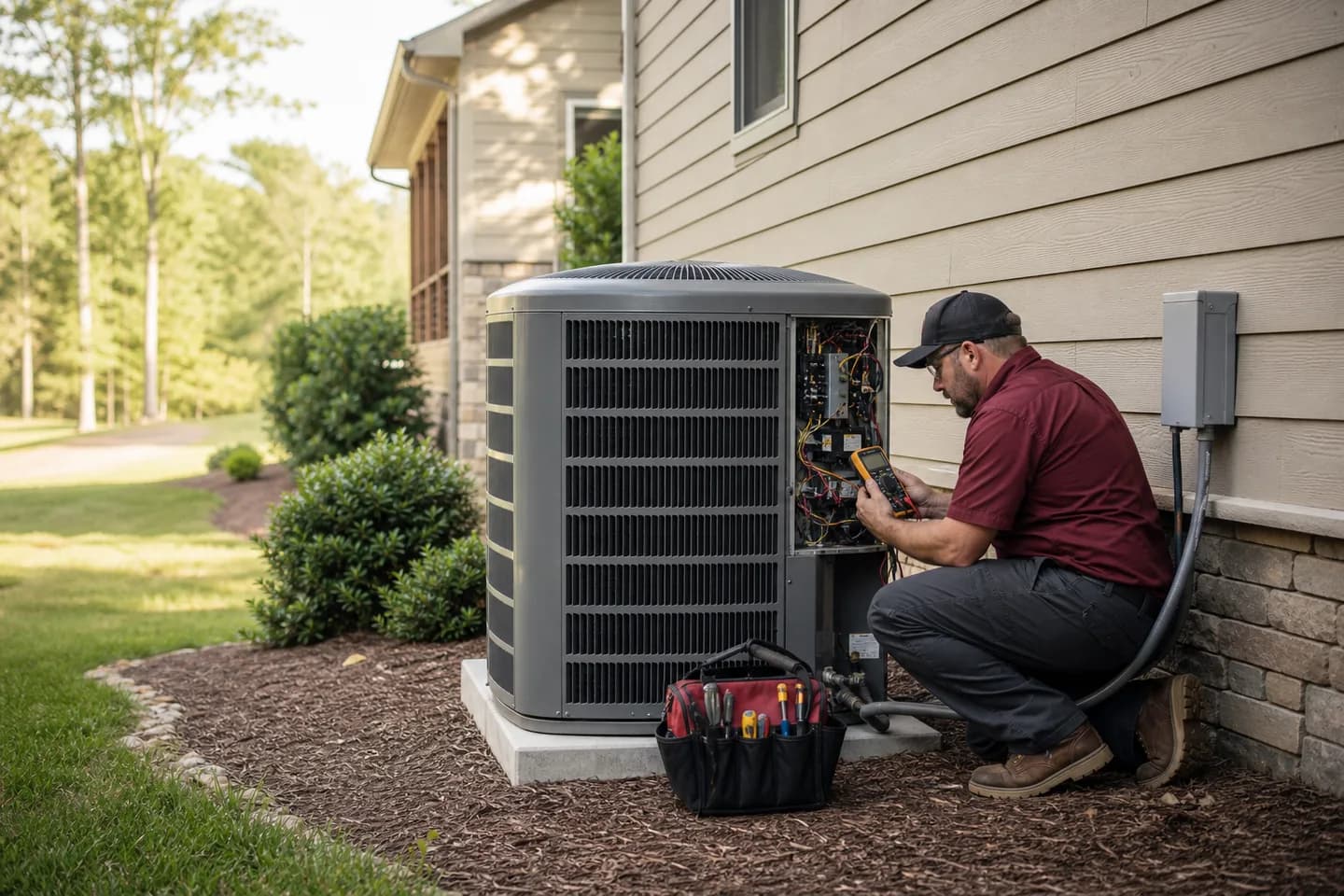
A technician may inspect wiring and connections, test a capacitor or contactor, check motor operation, look at the drain system, and compare the air entering and leaving the equipment. If the refrigerant circuit needs attention, the charge and system conditions must be evaluated together. Adding refrigerant without finding out why the charge is incorrect does not address a leak or another underlying problem. Good testing connects the repair recommendation to evidence the homeowner can understand.
Repairs that may restore normal cooling
Many repairs involve a specific part or condition. A failed capacitor may keep a motor or compressor from starting. A worn contactor can interrupt power to the outdoor equipment. A clogged drain may trip a safety switch. A dirty filter or blower problem can reduce airflow enough to freeze the indoor coil. Thermostat and control issues can prevent the equipment from receiving the right call. Fan motors, relays, switches, wiring, and condensate pumps can also fail with age and use.
Other problems involve more than a single replaceable part. A refrigerant leak needs to be located and evaluated before the system is returned to service. A damaged coil or compressor problem may require a larger repair discussion. Duct leakage or poor duct design can affect comfort even when the equipment runs. The right answer depends on the test results, equipment age, parts availability, repair history, and the condition of the system around the failed component.
- Electrical repairs for failed capacitors, contactors, relays, or damaged connections
- Airflow repairs involving filters, blowers, coils, controls, or accessible duct concerns
- Drain repairs for clogs, pumps, switches, pans, or unwanted water near the equipment
- Control repairs involving thermostats, boards, sensors, and communication between components
- Refrigerant circuit testing when temperatures and system readings point in that direction
Why Jasper summers reveal small problems quickly
An air conditioner may seem fine during mild weather and struggle once outdoor temperatures stay high. A weak capacitor, dirty coil, slow motor, or airflow restriction creates more noticeable symptoms when the system runs for longer periods. Humidity adds another part of the comfort load. If cycles are too short or airflow is not right, the home may feel sticky even when the thermostat reaches its setting. That does not point to one automatic repair, but it is useful information during testing.
Pollen, leaves, grass clippings, and other debris can gather around outdoor equipment in North Georgia. Summer storms and power changes can also be part of the story when a failure appears suddenly. Homeowners can keep the area around the condenser open and change filters on a schedule that fits their household. When performance still changes, a repair visit can separate normal summer workload from a part or system condition that needs attention.
When to compare repair with AC replacement
Most service calls do not begin with a replacement decision. They begin with a problem that needs to be identified. Once the cause is known, the homeowner can compare the repair with the broader condition of the equipment. System age is one factor, but it is not the only one. The cost and size of the repair, past failures, comfort, efficiency, parts availability, and the condition of major components all belong in the discussion.
A focused repair may be a sensible way to keep a system operating. A larger failure on older equipment with a history of problems may make replacement worth reviewing. Wayne presents the options and explains how the system is likely to operate after the proposed work. The customer can then choose based on the home, budget, and expected use instead of feeling pushed toward one answer before the facts are available.
What to watch after the repair is complete
After service, notice how the system starts, how the airflow feels, and whether indoor temperature begins moving toward the thermostat setting. Cooling a very warm home takes time. The equipment should not be judged by how fast it changes the temperature in the first few minutes. What matters is steady operation, a reasonable temperature change through the equipment, and the return of normal comfort without the original noise, leak, trip, or cycling problem.
Keep the filter accessible and note the date it was changed. Leave supply vents and returns open unless the system was designed for another arrangement. Keep plants and loose debris away from the outdoor unit. If the original symptom returns, record when it happened and contact the company rather than repeatedly resetting a breaker or control. Clear follow-up information makes it easier to see whether the same fault returned or a different condition developed.
Common questions
Air conditioning repair questions
Why does my AC turn on and off every few minutes?
Short cycling can be related to thermostat location or settings, restricted airflow, a safety control, electrical trouble, refrigerant circuit conditions, or equipment sizing. The cause should be tested because frequent starts can add wear and may keep the system from removing enough humidity.
Can a dirty filter cause the AC to stop cooling?
Yes. A heavily loaded filter can reduce airflow, lower performance, and contribute to coil freezing. Replacing the filter is a good first check, but a system that remains frozen or still has weak airflow may have another issue that needs professional service.
Why is there water near my indoor AC unit?
The drain line may be clogged, a condensate pump may have failed, the pan may be damaged, or a frozen coil may be thawing. Turn the system off if water is reaching electrical parts or damaging the home, then request service to find the source.
Is it safe to keep running an AC that makes a loud noise?
A new grinding, harsh buzzing, metal-on-metal sound, or repeated electrical clicking should not be ignored. Turn the system off if the noise is severe, if there is a burning smell, or if operation appears unsafe. Running it may increase damage to a motor, fan, or another part.
How long should it take for my house to cool after a repair?
That depends on the starting indoor temperature, outdoor heat, humidity, home construction, and system capacity. A home that became very warm may need hours to recover. The technician can check whether the equipment is operating normally even when the house has not yet reached the thermostat setting.