One system for heating and cooling
Heat pump repair must account for both operating modes.
Heat Pump Repair in Jasper, GA covers equipment that moves heat for cooling in summer and heating in cooler weather. A heat pump uses many of the same parts in both seasons, but it also changes direction through controls and a reversing valve. It may use defrost operation, outdoor sensors, and auxiliary heat. A problem can appear in only one mode or affect the full system. Testing should begin with the exact symptom and the conditions present when it happens.
Wayne Buras has 20 years of residential and light commercial HVAC experience and continues manufacturer training as equipment changes. That background is useful with heat pumps because control sequences differ by brand, age, efficiency level, and thermostat setup. Air Conditioning Repair Man explains whether the concern is in the refrigeration cycle, airflow, electrical system, controls, defrost operation, or backup heat. The homeowner then has a clearer path for repair.
How a heat pump changes from cooling to heating
In cooling mode, a heat pump moves heat from inside the home to the outdoors, much like a standard air conditioner. In heating mode, it reverses the refrigerant flow and collects heat from outdoor air. The indoor coil becomes warm and the outdoor coil becomes cold. A reversing valve and its control circuit make this change. The thermostat may also manage auxiliary electric heat or another backup source when added heat is needed.
This design means a shared part can affect both seasons. The compressor, indoor blower, outdoor fan, coils, refrigerant circuit, and many electrical components work in heating and cooling. Other faults are mode-specific. A reversing valve problem may leave the system unable to switch. A defrost fault may show only during cold, damp weather. An auxiliary heat problem may appear when the thermostat calls for more heat than the heat pump can provide alone.
Signs that a heat pump needs repair
Cooling symptoms include warm air, weak airflow, long run times, short cycles, high humidity, or no outdoor operation. Heating symptoms may include cool supply air, a home that cannot reach the thermostat setting, auxiliary heat that runs too often, or an outdoor unit that gathers heavy ice and does not clear it. Some frost on an outdoor coil during heating can be normal. A properly operating system enters defrost as needed. A solid block of ice or repeated failure to clear calls for service.
Noise and electrical symptoms matter in both modes. Buzzing, grinding, repeated clicking, breaker trips, and a burning smell deserve attention. Water around the indoor unit in cooling mode may involve the drain or a frozen coil. Steam rising from the outdoor unit during defrost can be normal, while smoke or a strong electrical odor is not. If you are not sure, turn the system off when operation appears unsafe and describe exactly what you saw.
- The system cools but will not heat, or heats but will not cool
- Outdoor ice does not clear during a normal defrost cycle
- Auxiliary or emergency heat stays on more than expected
- The thermostat calls but the indoor or outdoor equipment does not respond
- Airflow, sound, cycling, or temperature has changed from normal operation
How heat pump problems are diagnosed
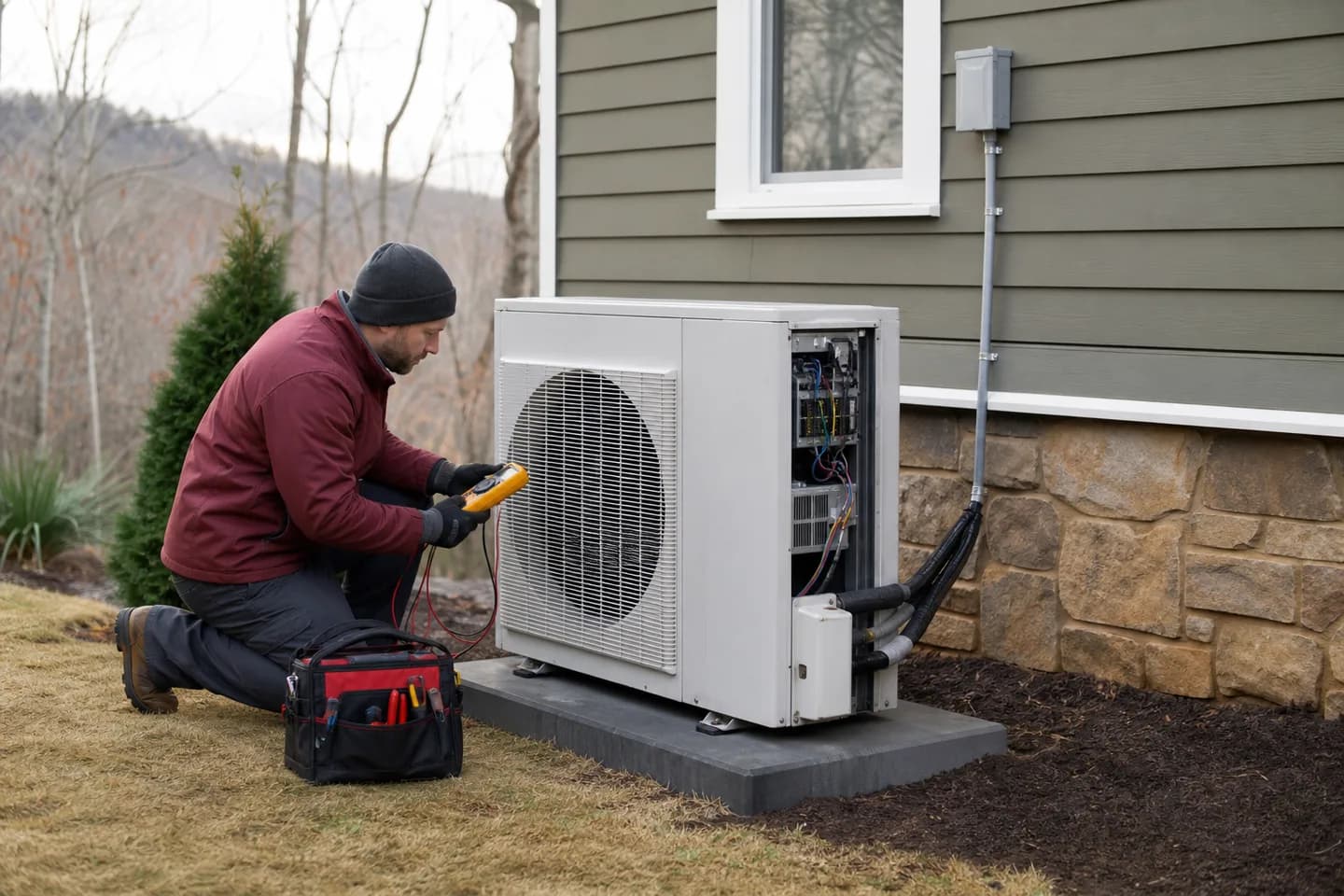
The technician confirms thermostat settings and the mode being requested. From there, testing follows power, controls, safeties, airflow, indoor and outdoor equipment, and the refrigerant circuit. Heating mode adds checks for the reversing valve command, defrost board or sensors, outdoor coil condition, and auxiliary heat sequence. Fault codes can help direct testing, but they should be verified with the manufacturer sequence and direct measurements.
Outdoor temperature changes what normal operation looks like. Supply air from a heat pump often feels cooler than furnace air even when it is heating the home. Long heating cycles can be normal in certain weather. The question is whether the system is producing the expected heat for the conditions and whether backup heat is staged correctly. Temperature, electrical, pressure, and airflow readings help separate normal heat pump behavior from a repair need.
Common heat pump repairs
Heat pumps share many common repairs with air conditioners. Capacitors, contactors, fan motors, blower motors, thermostats, control boards, sensors, drain components, wiring, and refrigerant circuit parts can fail. Mode-specific repairs may involve the reversing valve circuit, defrost control, outdoor temperature sensor, or auxiliary heat components. The failed part should be tested along with the circuit or condition that controls it.
Some repairs require a larger discussion. A leaking coil, compressor failure, difficult reversing valve repair, or unavailable model-specific control can carry a higher cost. System age, condition, refrigerant type, repair history, warranty, and parts availability all affect the choice. A smaller electrical or control repair may be straightforward even on older equipment. Wayne explains the actual finding before repair and replacement options are compared.
Heat pump performance through Jasper seasons
Jasper homes can ask the same heat pump to handle humid summer afternoons and cold winter mornings. Summer care focuses on indoor airflow, drainage, outdoor heat release, and cooling performance. Winter operation adds defrost and backup heat. Leaves and debris around the outdoor unit can limit airflow in either season. Filters affect both modes because the same indoor blower and ducts usually serve the entire system.
During winter, keep the outdoor unit clear without chipping ice from the coil. A defrost cycle may briefly switch modes, stop the outdoor fan, produce steam, and bring on auxiliary heat. Those signs can be normal. If heavy ice remains, the fan does not run, or the home loses heat, service is needed. During summer, use the same no-cooling checks as an air conditioner: thermostat, filter, vents, breaker, and visible outdoor condition.
Maintenance and settings that support a heat pump
Use a thermostat designed and configured for the heat pump and its backup heat. Large temperature changes can bring on auxiliary heat, depending on the controls. That may be normal, but a sudden change in auxiliary heat use can also point toward a heat pump problem. Do not use emergency heat as a routine setting. It is intended to provide backup when the heat pump cannot operate or when a technician directs its use.
Seasonal maintenance should review both heating and cooling functions when weather allows useful testing. Filter care, coil condition, electrical readings, drainage, thermostat setup, defrost operation, and auxiliary heat deserve attention across the year. No checklist prevents every failure. It can still find conditions that raise strain and help the homeowner learn what normal heat pump operation looks like before a change occurs.
Common questions
Heat pump repair questions
Why is my heat pump blowing air that does not feel hot?
Heat pump supply air often feels warm rather than hot compared with furnace air. It can still heat the home through longer cycles. If the indoor temperature falls, the air is truly cold, or auxiliary heat never responds, the system should be checked.
Is ice on the outdoor heat pump normal?
A light frost can be normal during heating. The system should enter defrost and clear it. Heavy ice that remains, covers the coil, blocks the fan, or returns quickly may involve airflow, controls, sensors, the fan, or the refrigerant circuit.
What is emergency heat?
Emergency heat uses the backup heating source without normal heat pump operation. It may cost more to run and should not be the everyday setting. Use it when the heat pump cannot operate or when a technician recommends it for the current condition.
Why does auxiliary heat come on?
Auxiliary heat may come on during defrost, large thermostat changes, or cold conditions when the heat pump needs help. Frequent or unexpected use can also point toward a heat pump performance, control, sensor, or setup issue.
Can the heat pump cool normally and still need heating repair?
Yes. A reversing valve circuit, defrost control, sensor, thermostat setup, or auxiliary heat part may affect heating while cooling still works. Testing in the problem mode is the best way to identify a season-specific fault.