
Seasonal cooling care
A tune-up prepares working equipment for the demand ahead.
AC Tune-Up in Jasper, GA is planned service for an air conditioner that is operating or ready to be started for the cooling season. It is different from a repair call. The purpose is to review operation, clean or address accessible maintenance items, check common wear points, and identify conditions that may deserve attention before summer run times increase. A tune-up cannot promise a breakdown-free season, but it can reduce avoidable strain and give the homeowner a clearer picture of the system.
The exact steps depend on equipment type, access, condition, and manufacturer guidance. A split air conditioner, heat pump, packaged unit, variable-speed system, and communicating system may not use the same checklist. Wayne Buras continues manufacturer education and technical seminars so service can follow the design of the equipment. He also explains which findings are routine maintenance, which are optional improvements, and which point toward a repair that should be handled separately.
What an AC tune-up is meant to accomplish
A tune-up creates a seasonal snapshot. The technician confirms that the thermostat calls correctly, the indoor and outdoor equipment start, air moves through the system, condensate can leave, and operating readings are reasonable for the conditions. Accessible debris and maintenance needs can be addressed within the service scope. Electrical connections and common wear parts may be checked. The homeowner can also share any change in sound, comfort, humidity, or run time since the last cooling season.
This visit is most useful before the first extended stretch of hot weather. Mild spring conditions give time to address a developing issue before the system is needed every afternoon. Still, a tune-up can be performed later when scheduling or weather requires it. What matters is that the equipment is safe to operate and able to run for testing. A system that is already broken, frozen, tripping a breaker, or leaking badly needs diagnostic or repair service first.
Airflow and indoor equipment checks
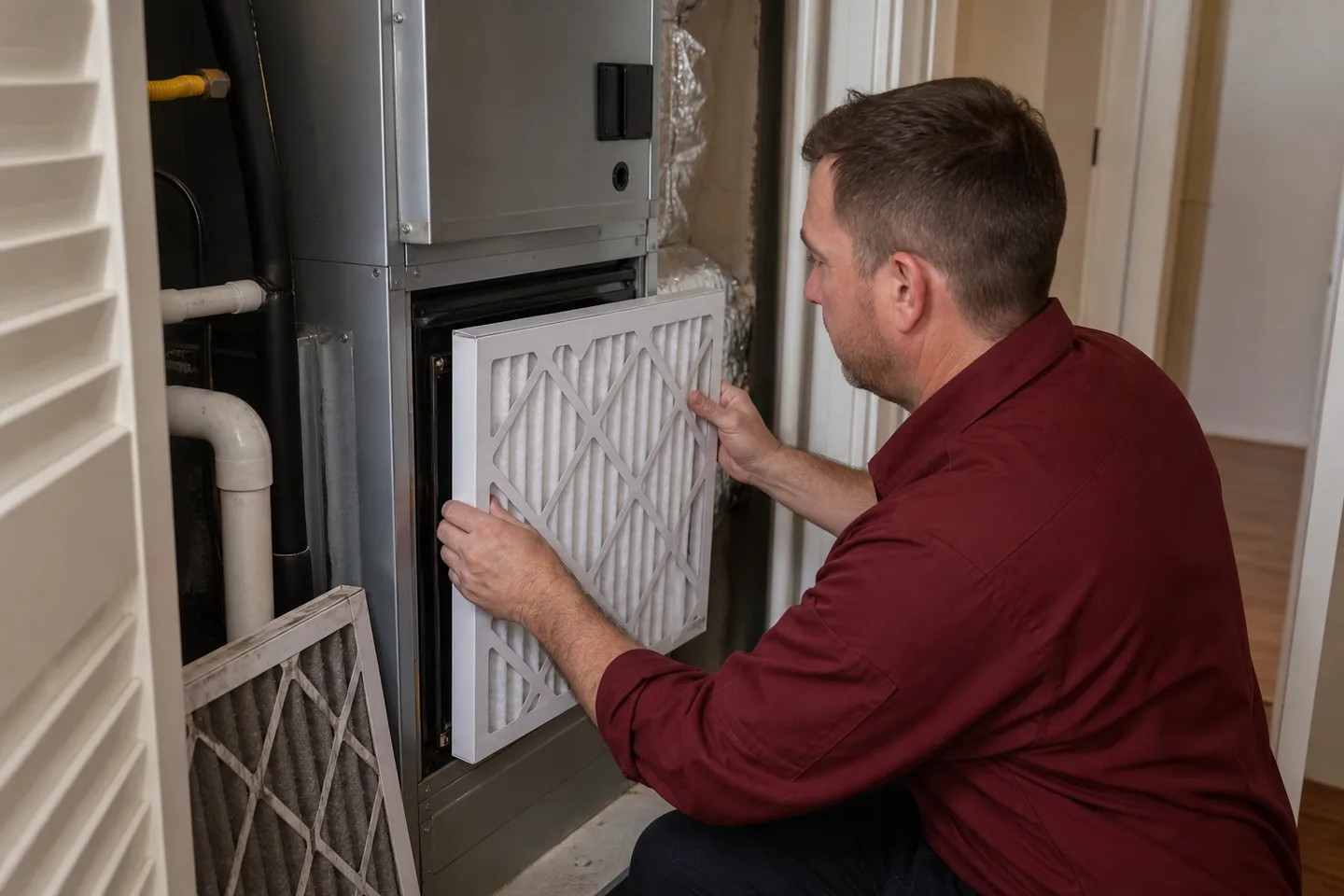
Cooling depends on the right amount of air moving across the indoor coil. The filter, return grille, blower, coil, dampers, and supply path all affect that movement. A tune-up may include checking the filter, looking at accessible blower and coil conditions, listening to motor operation, and noting signs of airflow restriction. Some cleaning tasks are included in routine service, while a heavily impacted coil or blower may need separate work because access and time are greater.
The indoor section also produces water as it removes moisture from the air. The drain line, pan, trap, safety switch, and pump when present deserve attention. A small buildup can become a shutdown or water leak during long summer cycles. Drain service must fit the system design and access. The technician should also note rust, water staining, damaged insulation, or cabinet gaps that may affect operation or signal a past problem.
- Review the filter and discuss a replacement schedule that fits the home
- Observe blower startup, sound, and accessible cleanliness
- Look for visible coil restriction, ice history, or cabinet air leaks
- Check accessible condensate components and safety controls
- Note room airflow or comfort concerns reported by the homeowner
Outdoor condenser and electrical checks
The condenser needs clean coil surfaces and open space around the cabinet so it can release heat outdoors. Leaves, pollen, grass clippings, and other debris can limit airflow. The appropriate cleaning method depends on coil design and condition. High pressure can bend fins or damage a coil, so homeowners should avoid aggressive washing. Plants and stored items should be kept back from the unit while still following any manufacturer clearance requirements.
Electrical components face heat, vibration, and repeated starts. A tune-up may include inspecting accessible wiring and connections, checking the contactor, testing capacitors, and measuring motor or compressor operation when appropriate. A reading outside the expected range does not always mean the same action on every system. The technician compares the value with component ratings, manufacturer data, operating conditions, and the condition of connected equipment before discussing repair.
Cooling performance and refrigerant observations
Temperature readings can show whether the system is changing the air as expected under the current conditions. These readings need airflow context. A blocked filter or dirty coil can change temperatures and make other measurements misleading. Refrigerant circuit checks also depend on equipment design, outdoor temperature, indoor load, charge method, and stable operation. A tune-up is not a reason to add refrigerant as a routine product. A sealed system should not use refrigerant like fuel.
If readings suggest an incorrect charge, leak, restriction, or another refrigerant circuit concern, the technician should explain the evidence and recommend diagnostic work. Adding refrigerant without looking for the reason may provide only temporary change and can leave the system incorrectly charged. Wayne holds EPA Section 608 Universal Technician certification, which covers the required knowledge for handling regulated refrigerants and protecting the environment during service.
What a tune-up cannot prevent
Maintenance can find some worn parts, dirty conditions, loose connections, and drain concerns. It cannot see the future or test every component under every load. A control board may fail after checking normally. A motor winding can open later. Storms, power changes, leaks, and mechanical failures can happen after service. A tune-up lowers avoidable risk and provides information, but it is not a promise that no repair will be needed.
It also cannot correct system design problems through a basic checklist. Poor duct design, equipment sizing, building heat gain, insulation, and room balancing may require separate evaluation. If the homeowner reports a long-term comfort problem, that concern should be documented and discussed rather than hidden inside the maintenance visit. The next step may be repair, airflow testing, duct work, zoning review, or a replacement conversation depending on what is found.
Simple care between professional visits
Check the filter regularly and change it based on its condition and manufacturer directions. Homes with pets, construction dust, high use, or certain filter types may need a different schedule than a simple monthly rule. Keep return grilles and supply vents open and clear. Do not stack items around the indoor equipment. Keep leaves, plants, and grass clippings away from the outdoor unit without opening its panels.
Listen for changes when the system starts and stops. Watch for water, ice, unusual odor, or a thermostat that begins losing its setting. Record maintenance and repair dates. These habits give the technician better history and may catch a change before comfort is lost. Air Conditioning Repair Man can also discuss preventative maintenance or service contract options for homeowners who prefer planned reminders and a more regular service schedule.
Common questions
AC tune-up questions
When is the best time for an AC tune-up in Jasper?
Spring is a practical time because the system can be checked before the longest summer run times. A later visit can still be useful. The system should be safe and able to operate for testing. Broken or frozen equipment needs repair service rather than routine maintenance.
Does a tune-up include every possible cleaning task?
Not always. Routine accessible cleaning may be included, but a heavily impacted indoor coil, blower wheel, or hard-to-access component can require added labor and a separate scope. The technician should explain what is included and what condition calls for additional work.
Will a tune-up lower my power bill?
It may help when dirt, airflow restriction, control settings, or another maintenance condition is causing extra run time. Savings cannot be promised because weather, thermostat use, home construction, duct condition, equipment efficiency, and utility rates also affect energy use.
Should refrigerant be added during every tune-up?
No. Refrigerant is not a routine refill item. If the charge is incorrect, the system should be evaluated for the reason and charged using the proper method for the equipment. Adding refrigerant without supporting measurements can harm performance.
What if the tune-up finds a repair need?
The technician should explain the finding, whether it affects current operation, and what repair is recommended. You can review the option before added work begins. Some conditions need prompt action, while others can be planned based on severity and system use.