A clear look at system condition
An inspection documents what can be observed and tested today.
Air Conditioning System Inspection in Jasper, GA is a structured review of cooling equipment, controls, airflow, drainage, and accessible installation conditions. Homeowners may request an inspection before the cooling season, after moving into a home, when planning a budget, or when they want another look at aging equipment that still operates. An inspection is not the same as a guarantee, invasive engineering study, code certification, or complete prediction of future failures.
Air Conditioning Repair Man uses the inspection to give the homeowner useful facts. Wayne Buras has 20 years of residential and light commercial HVAC experience, trade-school education, and continued manufacturer training. He explains what was observed, what operated normally under the current conditions, what could not be tested, and which findings call for maintenance, diagnostic work, repair, or future planning. Clear limits make the report more trustworthy.
Reasons to request an AC system inspection
A homeowner may want a baseline before summer, especially when equipment history is limited. An inspection can identify model information, approximate age when available, filter size, thermostat type, visible condition, and how the system operates during the visit. It may help with maintenance planning and provide a list of questions before a larger repair or replacement decision. It can also document a concern such as rust, water staining, unusual sound, or uneven cooling.
Real estate timing creates another reason, though a service inspection does not replace a licensed home inspection, appraisal, or specialized evaluation required by a contract. Outdoor temperature and access may limit cooling tests. A system cannot be fully judged when it is unsafe to run, shut down, frozen, or missing power. The scope should be discussed before the visit so the customer knows what the inspection can and cannot answer.
What can be reviewed at the thermostat and indoor equipment
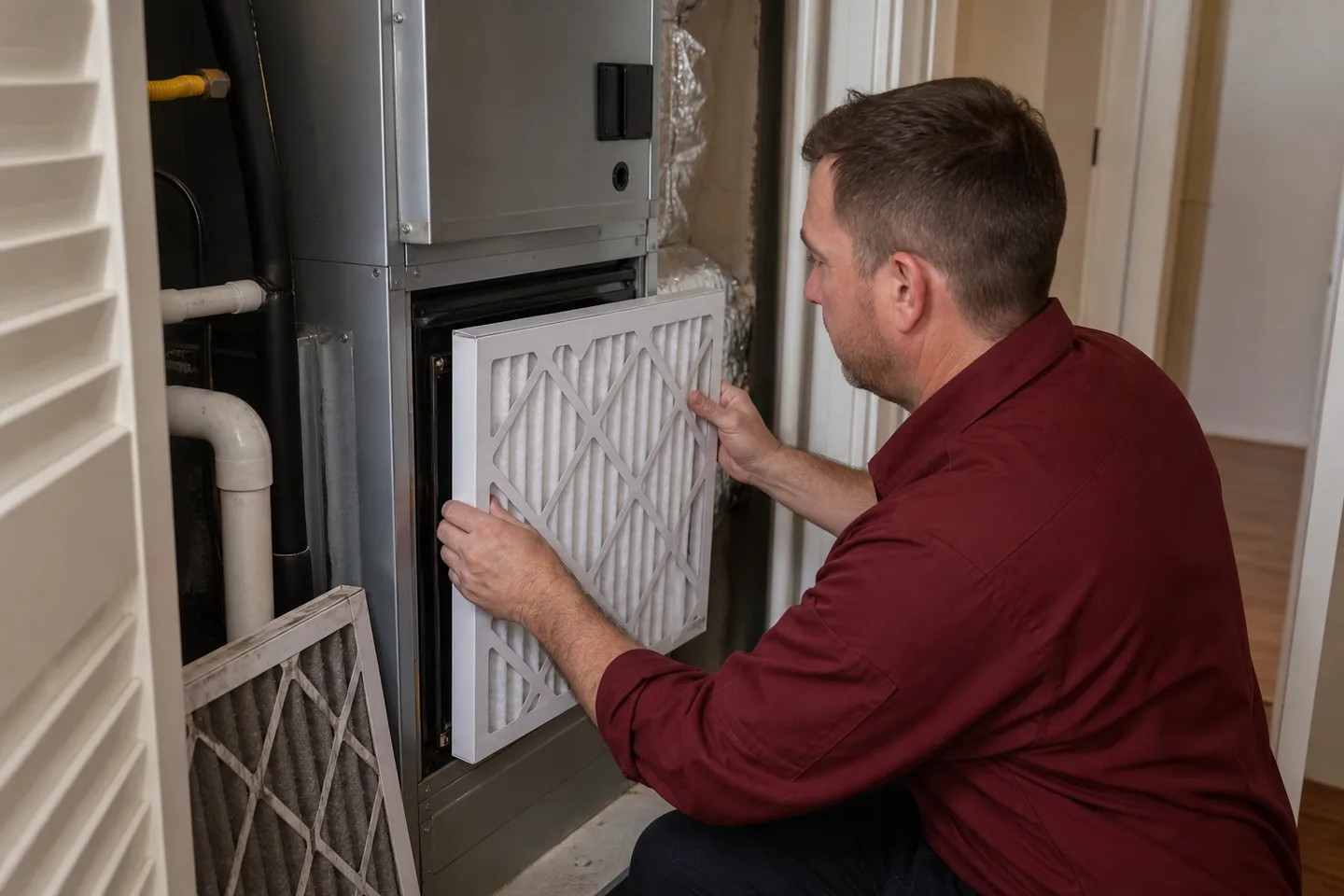
The thermostat can be checked for basic operation, mode response, displayed temperature, visible setup, and connection to the equipment. At the indoor unit, the technician may review the filter, cabinet, accessible coil condition, blower operation, insulation, drain components, safety switches, wiring, and signs of past water. Temperature and airflow observations help describe current performance when operating conditions allow.
Access affects the depth of inspection. A coil hidden in a sealed or difficult cabinet may not be visible without added work. Ducts behind walls cannot be fully inspected from the equipment opening. Internal cleanliness may need panel removal and time beyond a basic visual review. The report should distinguish what was directly observed from what was inferred. If a symptom requires testing beyond the agreed scope, a diagnostic recommendation may follow.
- Thermostat response and basic visible settings
- Filter type, size, condition, and accessible airflow path
- Blower, cabinet, insulation, and visible indoor coil condition
- Drain line, pan, pump, safety switch, and signs of water
- Temperature and operating observations under current weather and load
What can be reviewed at the outdoor equipment
The outdoor inspection may include cabinet condition, coil cleanliness, clearance, visible damage, line insulation, disconnect condition, wiring, and the operating sound of the fan and compressor. Model and serial information can help establish equipment identity and possible age. Electrical and refrigerant readings may be included when they fit the inspection scope, equipment condition, weather, and customer request.
A clean appearance does not prove that every internal part is healthy. The same is true in reverse. Surface rust or faded paint does not automatically mean the equipment cannot operate. The technician looks for conditions tied to function or safety, such as burned connections, damaged wiring, oil staining, severe corrosion, blocked airflow, loose parts, or abnormal readings. Findings should be described with their likely effect rather than judged by appearance alone.
Inspection findings, maintenance items, and repair needs
Inspection results often fall into different groups. A dirty filter or loose debris may be a maintenance item. A failed capacitor, damaged wire, drain fault, or motor problem may need repair. An unusual measurement without a clear cause may call for diagnostic work. Old equipment that operates today may simply need future budgeting. Grouping findings this way helps the homeowner understand urgency and avoid treating every note as the same kind of problem.
A system may pass basic operation while still having a comfort complaint in one room. That concern may need duct, zoning, insulation, or load evaluation beyond the equipment inspection. The inspection should record the complaint and explain the next useful service. Wayne separates current operation from recommendations so customers know what is based on direct evidence and what is a planning suggestion.
Limits of a one-time system inspection
An inspection records a point in time. Electrical parts can fail later. Small leaks may not be visible. Intermittent controls may operate normally during the visit. Weather may not create the load needed to test full cooling performance. Concealed ducts, buried lines, internal coil surfaces, and sealed components may not be accessible. The technician cannot promise remaining life or a future without breakdowns.
These limits do not make an inspection useless. They make honest language important. A useful inspection states the conditions, access, tests, and observations. It notes when the system could not be run and why. It recommends further work only when there is a reason. Homeowners can then combine the report with repair history, utility use, comfort, age, and future plans.
Using the inspection to plan the next step
Handle safety and active water concerns first. Address confirmed faults that affect operation. Plan maintenance items before peak cooling demand when practical. For aging equipment, gather replacement information before an emergency forces a rushed choice. Keep the inspection with manuals, invoices, warranty records, and model information. A future technician can compare new symptoms with the earlier condition.
Wayne has lived in the Cherokee and Pickens County area for 39 years and built Air Conditioning Repair Man as a family-owned local business. He wants the inspection to support a long-term customer relationship, not just a one-time list. That means answering questions, explaining how the system works, and helping the homeowner decide what is needed now, what can wait, and what deserves attention at the next seasonal visit.
Common questions
Air conditioning inspection questions
Is an AC inspection the same as a tune-up?
They overlap, but the purpose can differ. An inspection focuses on documenting condition and operation. A tune-up includes planned maintenance tasks within its scope. Ask what cleaning, testing, adjustments, and written findings are included before scheduling.
Can an inspection tell me how many years the system has left?
No exact remaining life can be promised. Age, condition, maintenance, use, installation, environment, and part failures all affect life. The inspection can describe current condition and known concerns to help with planning.
Can cooling be inspected during cold weather?
Some visual, electrical, control, filter, and equipment checks may be possible. Full cooling operation or refrigerant evaluation may be limited by outdoor temperature and manufacturer instructions. The report should state what could not be tested under the conditions.
Does an inspection include hidden ductwork?
Only accessible duct areas can be directly reviewed during a standard service inspection. Ducts behind walls or ceilings may need cameras, testing, opening finishes, or another specialized scope. Room airflow patterns can still suggest where added evaluation may help.
What should I receive after an inspection?
You should receive a clear explanation of current operation, observed concerns, access or weather limits, and recommended next steps. Written documentation varies by service scope. Ask ahead if you need a formal report for a specific transaction or purpose.
Is an HVAC service inspection the same as a home inspection?
No. An HVAC service inspection focuses on the heating and cooling equipment within the agreed scope. A home inspection covers many building systems and follows its own standards. Real estate, permit, warranty, or legal needs may require a different licensed professional or report.
Should the system be operating for an inspection?
Operating equipment allows more useful temperature, sound, airflow, control, and electrical observations. Do not run a system that is unsafe, frozen, leaking badly, or restricted by weather or manufacturer instructions. The report should state when operation was limited.