
Care before peak cooling demand
Preventative maintenance focuses on conditions that can be found before a breakdown.
Preventative AC Maintenance in Jasper, GA is routine care performed while cooling equipment is operating or being prepared for the season. It looks for dirt, drainage trouble, airflow restriction, weak electrical readings, control issues, and other accessible conditions that can raise strain or interrupt operation. Maintenance cannot predict every failure, but it can reduce problems caused by neglect and give homeowners time to address a concern before the hottest weather.
Wayne Buras has worked in residential and light commercial HVAC for 20 years. He continues to attend manufacturer classes and technical seminars because maintenance needs change with equipment design. A traditional single-stage air conditioner, heat pump, communicating system, and variable-speed unit may call for different procedures. Air Conditioning Repair Man pairs the technical checklist with a plain explanation of what was serviced, what was observed, and what should happen next.
Preventative maintenance and repair serve different needs
Maintenance supports equipment that can operate. It may include inspection, cleaning, checks, and adjustments within the service scope. Repair begins with a fault that must be diagnosed and corrected. If an air conditioner is frozen, tripping a breaker, leaking heavily, or unable to start, routine maintenance cannot be completed in the normal way. The immediate problem needs diagnostic attention first.
A maintenance visit can still find a repair need. A capacitor may test outside its expected range. A wire may show heat damage. A drain pump may fail. The outdoor fan may sound rough. These findings should be explained and approved as separate repair work when they fall outside the maintenance scope. This keeps the customer from believing every repair was included or every maintenance observation is an urgent failure.
Filter care and the indoor airflow path
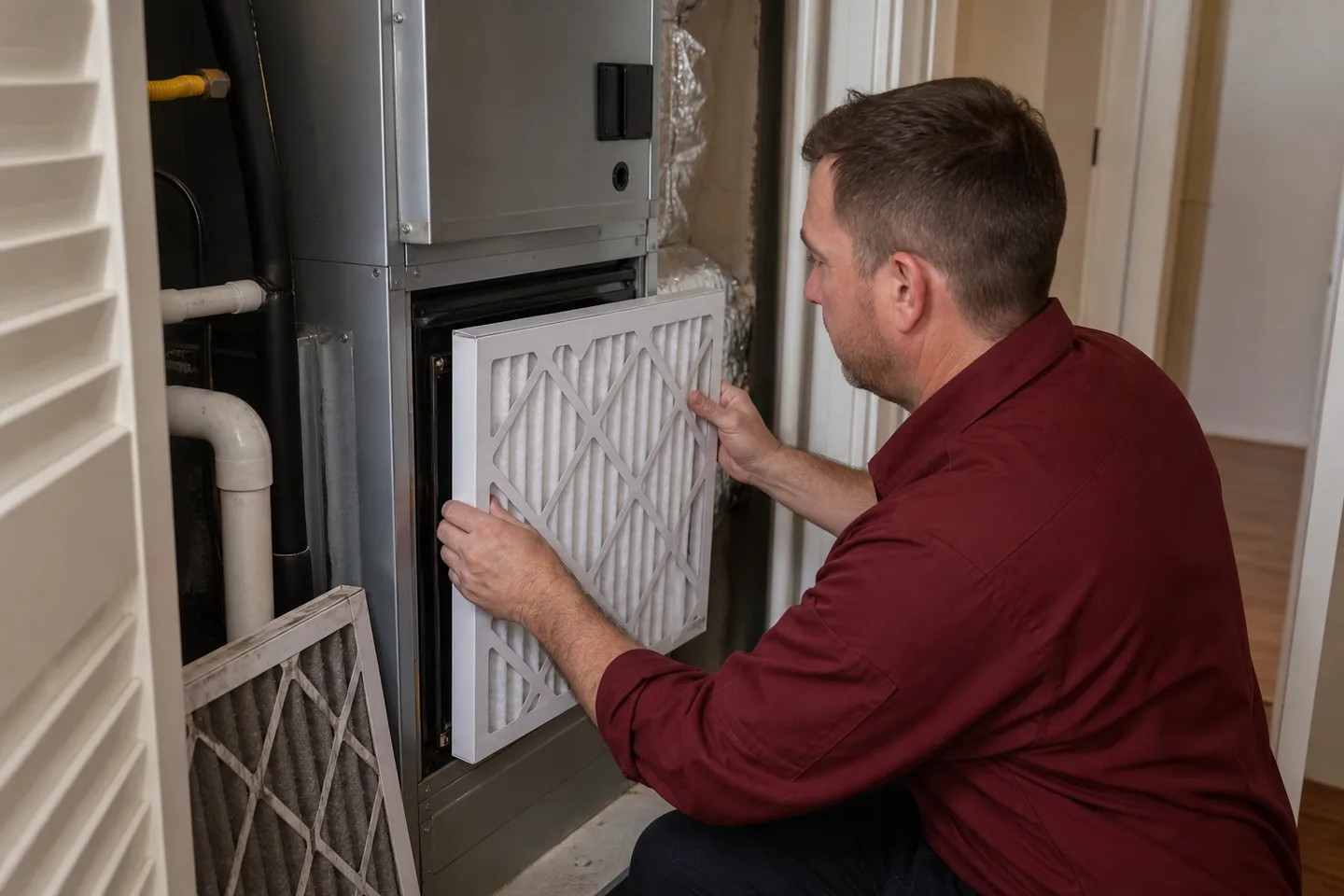
The filter protects the equipment and affects airflow. Check it more often than a fixed calendar suggests, then adjust the schedule based on its condition. Pets, dust, remodeling, high system use, and filter design change how quickly it loads. A higher-rated filter is not automatically better if the system cannot move enough air through it. The size, fit, and pressure effect all matter.
The technician may observe the return, blower, accessible coil surface, supply path, and cabinet for restriction or leakage. A dirty blower wheel or indoor coil can require added cleaning beyond a routine visit. Closed vents and blocked returns should be corrected. Airflow problems can lower cooling, raise humidity, freeze the coil, and add stress to motors. Preventative maintenance provides a chance to address the simple causes before summer operation grows longer.
- Check filter size, fit, condition, and replacement timing
- Keep return grilles and supply vents open and clear
- Observe accessible blower and indoor coil cleanliness
- Listen for motor noise and note weak airflow reports
- Discuss added airflow testing when basic observations show a concern
Drainage and moisture control
An air conditioner removes moisture from indoor air and sends the water through a drain system. The line, trap, pan, pump, and float switch may need service based on the installation. Algae, dust, rust, or other buildup can slow drainage. During long Jasper cooling cycles, a small restriction can become an overflow or a safety shutdown. Water staining around the unit can reveal an earlier problem even when the area is dry during the visit.
The proper maintenance method depends on access and materials. Homeowners should not pour harsh chemicals into a drain without knowing the system design and manufacturer guidance. A cracked pan, failed pump, poor slope, disconnected line, or frozen coil needs repair rather than routine flushing. The technician should identify whether the drain is simply due for care or whether a part or installation condition is causing repeat trouble.
Outdoor coil, fan, and electrical care
The outdoor unit releases heat and needs open airflow. Plants, leaves, grass clippings, and pollen can gather around the cabinet and coil. Preventative service may include appropriate accessible cleaning and a review of clearances. Pressure washing can bend fins and damage the coil, so cleaning should use a method suited to the equipment. Severe corrosion, impact damage, or oil staining should be documented for added evaluation.
Electrical parts are checked for visible wear and useful operating values. Capacitors, contactors, motors, wiring, and connections face heat and repeated cycling. A measurement outside the expected range can support a repair recommendation, but it should be read with the component rating and equipment condition. Tightening, testing, or replacing parts should follow manufacturer information and safe power procedures. High-voltage panels are not a homeowner maintenance area.
Performance checks and the refrigerant circuit
The technician may review thermostat response, cycle operation, temperature change, and other performance readings under current conditions. Airflow needs attention before refrigerant values are interpreted. Outdoor temperature, indoor load, equipment design, and the manufacturer's charging method affect what normal readings look like. A preventative visit is not a reason to add refrigerant every year. A sealed system should not lose charge through normal use.
If performance suggests low charge, a leak, a restriction, or another refrigerant concern, the finding moves beyond routine maintenance. Wayne holds EPA Section 608 Universal Technician certification and can explain the proper next test. Adding refrigerant without addressing the reason may give temporary change and can leave the charge wrong. The customer should know what evidence led to the recommendation before refrigerant work begins.
A practical maintenance rhythm for Jasper homes
Many homes benefit from a professional cooling visit each year, often in spring. Heat pumps may need attention across both heating and cooling seasons. Filter checks happen more often and belong with the homeowner between visits. The best schedule depends on equipment, household, operating hours, environment, and manufacturer guidance. A service contract can help customers who prefer reminders and a set plan.
Keep a maintenance record with dates, readings when provided, filter information, repairs, and model numbers. Watch for changes between visits. Maintenance does not replace a service call when the AC stops cooling, freezes, trips a breaker, or develops an unsafe sound or odor. It supports normal operation and creates history. That history helps Wayne compare today's condition with past service and explain whether a new change is routine wear or a repair concern.
Common questions
Preventative AC maintenance questions
How often should I change my AC filter?
Check it regularly and change it based on condition, filter type, and manufacturer guidance. Pets, dust, remodeling, and heavy use can shorten the interval. A filter that lasts longer in one home may load quickly in another.
Can preventative maintenance stop every AC breakdown?
No. It can find some wear, dirt, weak readings, and drain concerns before failure. Parts can still fail later, and storms or unexpected damage can occur. Maintenance lowers avoidable risk without acting as a guarantee.
Is coil cleaning always included in maintenance?
Accessible routine cleaning may be included, depending on the service. A heavily impacted indoor coil, special coil design, chemical cleaning, or difficult access can need a separate scope. Ask what cleaning tasks are part of the visit.
Can I perform AC maintenance myself?
Homeowners can check filters, keep vents clear, and remove loose debris around the outdoor cabinet. Electrical, motor, internal cleaning, refrigerant, and control work require training and tools. Turn the system off when an unsafe condition appears.
What should I do if maintenance finds a weak part?
Ask for the measurement, expected range, likely effect, and repair option. Some findings deserve prompt repair, while others can be watched. The technician should explain whether the part affects current operation and whether another condition contributed.
Does preventative AC maintenance include duct cleaning?
Not usually unless the written service specifically includes it. A maintenance visit may note accessible duct damage, leakage, restriction, or heavy buildup. Full duct cleaning and duct repair are separate services that need their own scope, access review, and price.
Should the AC be running before the maintenance appointment?
Leave the system in normal operation unless it is unsafe, frozen, leaking, or the company gives different instructions. A working system allows operating tests. Share any recent problem before the visit because broken equipment may need diagnostic service first.