Safe first checks and professional testing
Troubleshooting follows the symptom one step at a time.
Air Conditioner Troubleshooting in Jasper, GA begins with simple observations. Is the thermostat calling for cooling? Does the indoor fan run? Is the outdoor unit operating? Is air moving from the vents, and does it feel different from room air? Are there sounds, water, ice, odors, or a tripped breaker? These questions divide a broad complaint into a smaller group of possible causes. Homeowners can make several safe checks, but electrical panels and refrigerant work belong with a trained technician.
Troubleshooting has personal meaning for Wayne Buras. His HVAC career began after a technician came to repair the AC in his own home. The conversation sparked his interest, and he went on to study air conditioning technology at Chattahoochee Technical College. After 20 years in residential and light commercial work, he still values the same thing that started his path: clear communication between a technician and a homeowner who wants to understand what is happening.
Start with the thermostat
Set the thermostat to cool and choose a temperature below the current room reading. Confirm that the fan setting is on auto for normal cooling. A fan set to on can blow room-temperature air between cooling cycles and make it seem like the AC is not working. Check the display. Replace batteries if the thermostat uses them. Wait several minutes after a setting change because many systems include a delay that protects the compressor from rapid restarts.
Look for alerts, schedule changes, hold settings, Wi-Fi errors, or a thermostat that has lost its time. Smart thermostats can be set up incorrectly for the equipment type, and conventional thermostats can have wiring or switch problems. Do not remove wires unless you are trained to work with the control circuit. If the display is blank, the cause may be batteries, low-voltage power, a fuse, a drain safety, or another system fault rather than the thermostat itself.
Check airflow without opening the equipment
Inspect the filter and replace it when it is heavily loaded. Use the size and type intended for the system. A filter that is too restrictive can reduce airflow even when it looks clean. Make sure return grilles and supply vents are open and not blocked. Listen for the indoor blower. Weak air from every vent may involve the filter, blower, coil, duct system, or controls. One weak room may point toward a local duct or damper condition.
If ice is visible on a refrigerant line or around the indoor coil area, turn cooling off. A frozen system needs time to thaw before many tests can be completed. Running it can add strain and create water as the ice melts. Do not chip or heat the ice. Check the filter, keep the fan setting only as directed by the service company, and protect the area from water. Freezing can come from airflow or refrigerant circuit problems and needs diagnosis if it returns.
- Confirm thermostat mode, setting, display, and fan position
- Check the filter and keep all return and supply grilles clear
- Note whether the indoor blower and outdoor unit operate
- Turn cooling off when ice, burning odor, or severe noise appears
- Record the symptom instead of repeatedly changing settings or power
Look at power only from safe access points
Check the main electrical panel for a tripped HVAC breaker. A tripped handle may sit between on and off. If there is no smoke, burning odor, water near electrical parts, or other unsafe sign, a homeowner may reset it once. Move it fully off, then back on. If it trips again, leave it off. Repeated resets can increase damage and remove a useful clue about the fault.
The outdoor disconnect and equipment panels contain high voltage. Capacitors can store energy after power is removed. Do not open those areas, push a contactor, or touch wiring. Some indoor units also have service switches that look like light switches, but their location and use vary. If a switch was turned off by accident, restoring it may help. If you are not certain what a control serves, leave it alone and show it to the technician.
Match common symptoms with the next professional test
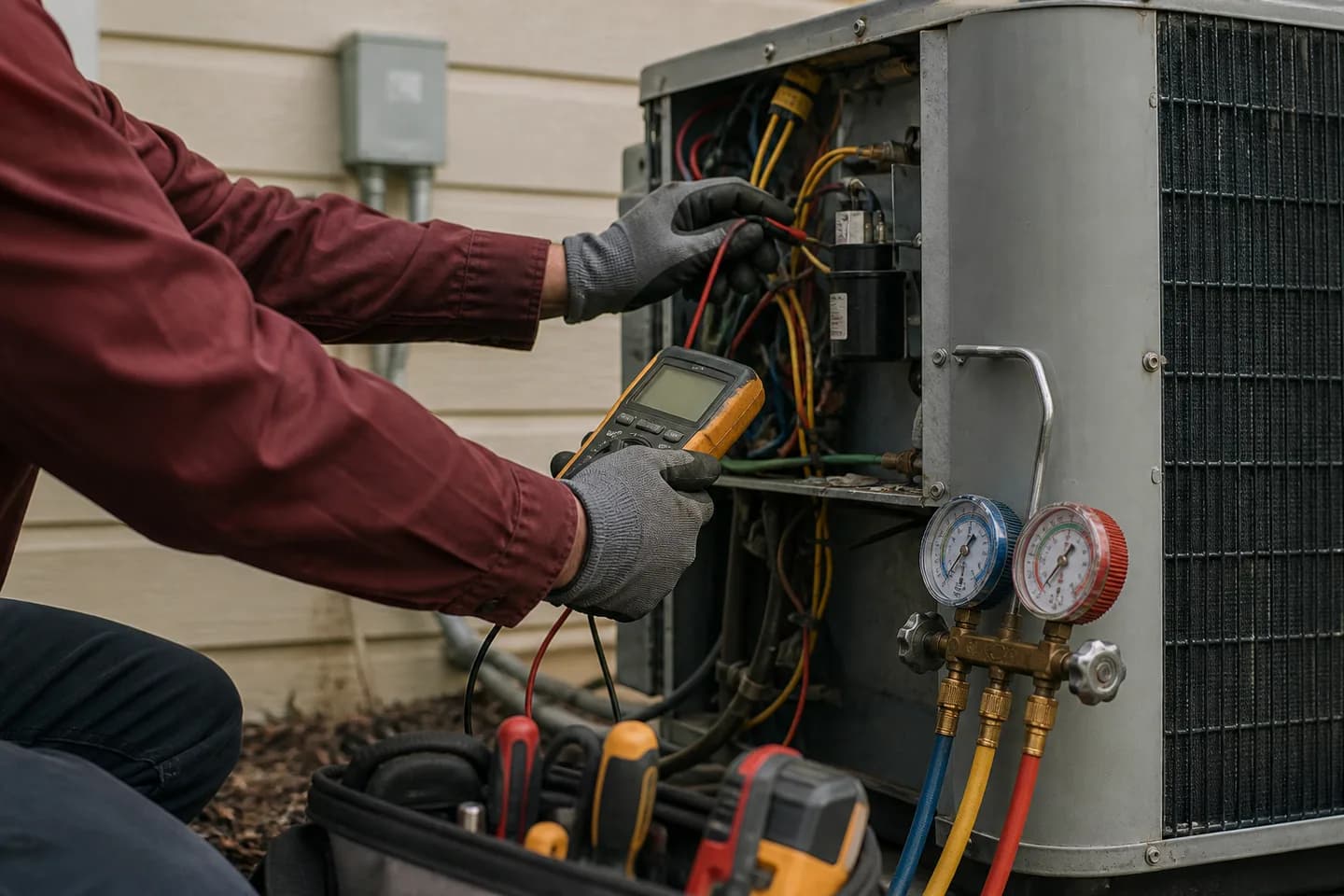
A dead system leads to thermostat, power, control, fuse, transformer, and safety checks. An indoor fan with no outdoor unit leads to control signal, high-voltage power, contactor, capacitor, motor, compressor, and safety testing. Both units running with warm air leads to airflow, temperature, coil, refrigerant circuit, and compressor performance checks. Water leads to the drain, pump, pan, coil, and freeze history. Short cycling leads to thermostat, controls, airflow, safeties, electrical parts, and operating conditions.
These are paths, not final answers. A common symptom can have an uncommon cause. Direct measurements matter because replacing a thermostat will not repair a failed transformer, and adding refrigerant will not correct a stopped blower. Wayne combines the homeowner's report with equipment data and readings. He then explains where normal operation stopped and why the proposed repair matches that point.
Know when troubleshooting should stop
Turn the system off for smoke, sparking, a burning electrical smell, repeated breaker trips, or a severe grinding or banging sound. Keep away from damaged wiring and moving fan parts. If water is reaching an electrical area or causing active damage, shut the system down from a safe control and request service. Contact emergency services for a fire, active smoke, or another immediate danger before calling an HVAC company.
Do not add refrigerant, seal a suspected leak with a retail product, bypass a safety switch, or connect wires to force the system on. Do not open a refrigerant circuit. These actions can create injury, equipment damage, and environmental harm. Wayne holds EPA Section 608 Universal Technician certification for refrigerant handling. A safe stopping point is part of good troubleshooting because some answers require tools, training, and access that a homeowner should not attempt.
Write down what happens after a reset or repair
If a simple thermostat correction, battery change, or filter replacement restores cooling, watch the next several cycles. Note whether the system starts normally, airflow remains steady, and indoor temperature moves down. A very warm house may take hours to recover. If the breaker, safety, or error returns, stop resetting it. A repeating problem needs diagnosis even if the equipment runs for a short time after each reset.
Keep a short service history with dates, symptoms, and completed work. Include filter size and equipment age when known. Intermittent faults become easier to find when the technician can see a pattern. Air Conditioning Repair Man uses that information along with testing to avoid guessing. The result should be more than a running system. It should be a homeowner who knows what changed and what to watch next.
Common questions
Air conditioner troubleshooting questions
Why is my thermostat blank?
Possible causes include dead thermostat batteries, loss of low-voltage power, a blown fuse, failed transformer, open service switch, wiring problem, or a condensate safety switch. Check batteries and obvious switches, but leave electrical testing to a technician.
Why does the AC blow cold air and then warm air?
The thermostat fan may be set to on, the outdoor unit may stop during the cycle, a safety may open, or the system may be short cycling. Note whether the condenser runs when the air turns warm and share that pattern during service.
Can I troubleshoot low refrigerant myself?
No. Refrigerant circuit testing requires training, tools, system data, and proper handling. Ice or warm air does not prove low refrigerant. Airflow and other equipment faults can create similar signs. A technician should test the full operating condition first.
Why does my breaker keep tripping when the AC starts?
The system may have a short, failed motor, compressor problem, damaged wiring, weak breaker, or another high-current condition. Reset it only once when there are no unsafe signs. Leave it off after another trip and request electrical testing.
What should I do if troubleshooting does not restore cooling?
Leave the system off if operation appears unsafe. Gather the symptom details, equipment information, and any fault messages, then request a diagnostic visit. Safe basic checks are useful, but they are not meant to replace professional testing of electrical and refrigerant systems.