
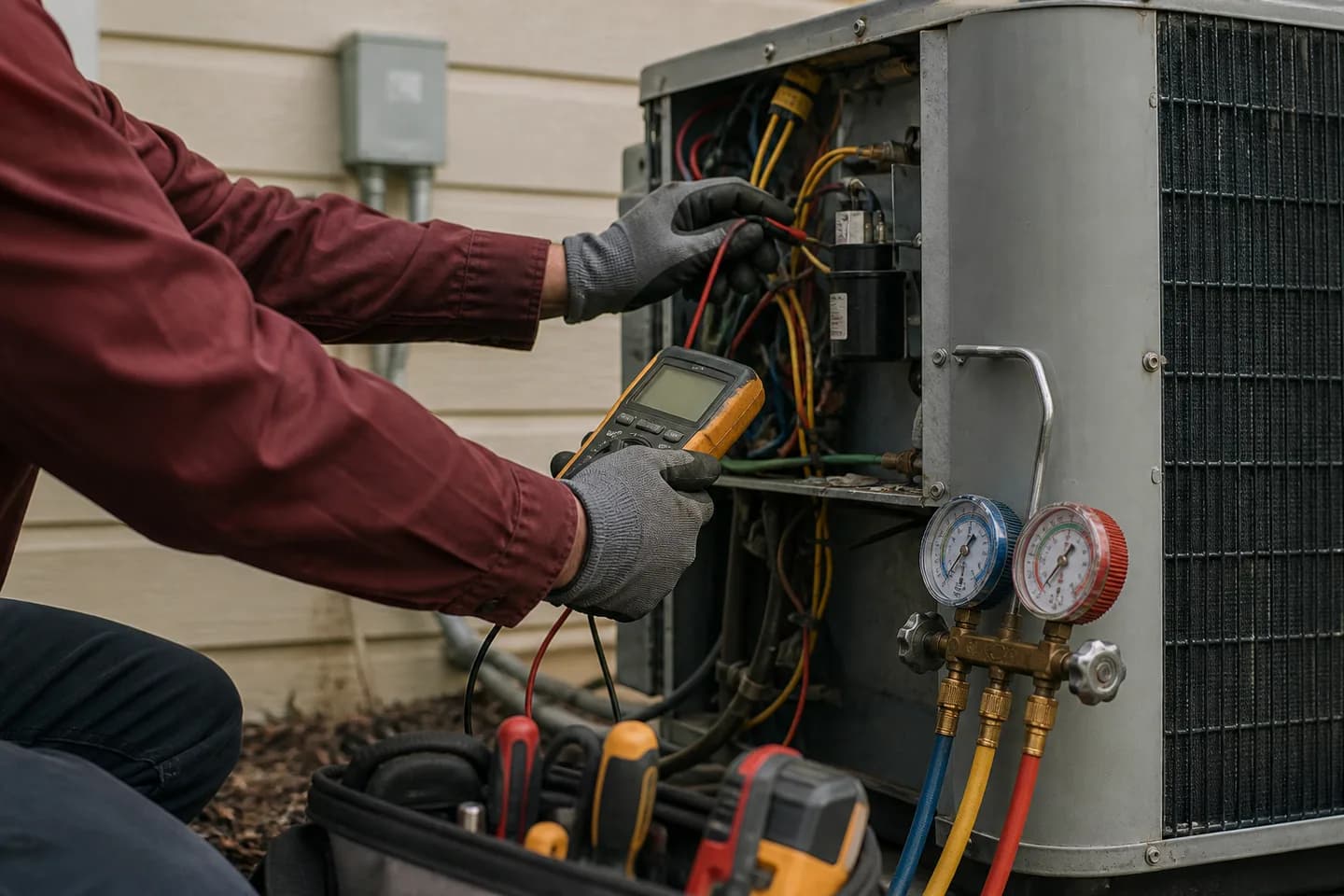
Testing before repair
A diagnostic visit turns a symptom into a usable answer.
Air Conditioning Diagnostic in Jasper, GA is the process of finding why a cooling system is not operating as expected. The homeowner may report warm air, weak airflow, high humidity, a system that will not start, or a new noise. Those symptoms are helpful, but they do not name the failed part by themselves. Several faults can create the same result. A diagnostic visit uses observation, system knowledge, and measurements to narrow the possibilities and identify the condition that supports a repair recommendation.
Wayne Buras places strong value on this part of the work. He wants customers to understand how their system operates and what options they have. That approach comes from 20 years in residential and light commercial HVAC, formal training at Chattahoochee Technical College, manufacturer classes, and continued seminars. A diagnosis should not end with a technical code or a part name. It should end with an explanation of what was tested, what was found, and what the next step means for the home.
The difference between a diagnostic, inspection, and repair
A diagnostic visit begins with a known problem. The system is not cooling, the breaker trips, airflow has changed, or another symptom needs an explanation. Testing follows that symptom until the technician can identify a likely cause. An inspection is broader. It reviews system condition and operation, often when the equipment still works or when a homeowner wants a general assessment. A repair is the work performed after a fault has been identified and approved.
These services can happen during the same appointment, but they should not be confused. A tune-up may reveal a failed or damaged part that needs diagnostic work. A diagnostic may also reveal maintenance needs that did not cause the current problem. Keeping the terms clear helps the homeowner know what is included. It also prevents a list of observations from being presented as though every item caused the breakdown or must be repaired at once.
What the homeowner can tell the technician
The diagnostic begins before a meter is used. The homeowner knows what normal operation felt and sounded like. Share when the problem started, whether it came on slowly or suddenly, and whether it follows a pattern. Mention recent storms, power interruptions, thermostat changes, filter changes, or other work near the equipment. Describe which components run, which rooms feel different, and whether you saw water, ice, or a breaker trip.
A phone video or recording of an intermittent sound can help when the system does not repeat it during the visit. Thermostat alerts and equipment fault messages are also useful. Do not clear a code repeatedly before service if the system can be left safely off. Repair history, equipment age, and model information add context. None of these details prove the answer, but they help the technician choose the first tests and avoid wasting time on conditions that do not match the behavior.
- When the change began and whether it was sudden or gradual
- Which equipment runs and what comes from the supply vents
- Any sound, odor, water, ice, or electrical trip
- Recent thermostat, filter, power, or service changes
- Past repairs and any pattern that repeats under certain conditions
How an air conditioning diagnostic is organized
The order depends on the symptom, but a cooling system needs a thermostat call, correct power, working controls, indoor airflow, outdoor heat transfer, and a properly operating refrigerant circuit. A dead system may start with the thermostat, breakers, disconnects, transformer, fuse, safeties, and control voltage. A running system with poor cooling may start with airflow, equipment cleanliness, temperature change, outdoor operation, and refrigerant circuit readings.
The technician may test voltage, current, resistance, capacitance, temperature, pressure, and static pressure when those measurements apply. Visual checks matter too. Burned connections, oil marks, rust, water trails, rubbed wires, debris, damaged insulation, and a dirty coil can direct the next test. One reading rarely tells the whole story. Values are compared with equipment data, operating conditions, manufacturer information, and the behavior reported by the homeowner.
Why parts should not be replaced based on a guess
Replacing a common part without testing can waste money and leave the original fault in place. A capacitor may test weak, but the motor it serves may also be failing. A blown fuse needs a search for the short that opened it. A drain switch that stops cooling may be doing its job because water cannot leave the unit. A low refrigerant reading needs context from temperatures, airflow, charge method, and leak evaluation.
Good diagnostic work asks two questions. What is not working, and why did it reach that condition? The second answer is not always available. Parts wear out, and some failures happen without a visible outside cause. Still, checking the connected system can prevent a repeat failure when airflow, wiring, drainage, control setup, or another condition contributed. The repair recommendation should match the evidence found during the visit, not a list of parts that might produce a similar symptom.
What a clear diagnostic explanation should include
The explanation should identify the failed part or system condition in plain language. It should connect that finding to the symptom and describe the proposed repair. If another option exists, the homeowner should hear how it differs. For a larger failure, useful context may include equipment age, system condition, repair history, parts availability, and whether the repair restores normal function without addressing a separate comfort or efficiency concern.
Some tests cannot be completed until an initial repair restores operation. For example, a system with no working blower cannot be fully evaluated for cooling performance. In that case, the technician should explain what is known, what remains untested, and what will be checked after the first repair. This is more honest than claiming the whole system is fine before it can run. Clear limits are part of a reliable diagnosis.
Local experience supports better context
Jasper cooling systems face long summer run times, humidity, pollen, outdoor debris, and occasional power interruptions from storms. Those conditions can shape the symptom. A dirty outdoor coil may become more noticeable during afternoon heat. A drain issue may appear during long cooling cycles that produce more condensate. A weak electrical part may fail after extended operation. Local context guides attention, but the system still needs direct testing before a cause is named.
Wayne has lived in the Cherokee and Pickens County area for 39 years and has worked in HVAC for 20. He has held a warm-air license since 2007 and holds EPA Section 608 Universal Technician certification. His local history and technical background support a practical style of service: listen first, test the equipment, explain the finding, and let the customer choose from the options that fit the actual condition.
Common questions
Air conditioning diagnostic questions
Does a diagnostic fee include the repair?
A diagnostic covers the work needed to identify the problem under the company terms. The repair, parts, refrigerant, or added testing may be separate. The scope and price should be explained before repair work moves forward, especially when the system needs an initial repair before more testing is possible.
Can an AC problem be diagnosed if it is working when the technician arrives?
Sometimes. Stored fault codes, electrical readings, visible damage, operating history, and a video of the symptom may provide useful evidence. Intermittent faults can be harder to confirm, and the technician should be clear when a condition cannot be reproduced during the visit.
Why are temperature and airflow checked before refrigerant?
Incorrect airflow can change coil temperatures and refrigerant readings. A dirty filter, blower issue, or blocked coil may make a properly charged system look abnormal. Checking basic airflow and operating conditions first helps the technician interpret refrigerant circuit measurements correctly.
Will a thermostat error code name the failed part?
A code points toward a condition or part of the sequence. It may not prove which component caused it. The code should be paired with manufacturer guidance and direct tests because wiring, sensors, controls, settings, and the named component can create related faults.
Should I approve a repair if the diagnosis is not clear to me?
Ask for another explanation. You should know what was found, how it relates to the symptom, what repair is proposed, and what remains unknown. Wayne built his service approach around open communication so customers can make decisions with a working understanding of the system.