
Cooling repair for the place you live
Home AC repair should account for comfort from room to room.
Residential AC Repair in Jasper, GA focuses on the way cooling equipment, airflow, controls, and the house work together. A system can run while bedrooms stay warm, humidity remains high, or the main living area never reaches the thermostat setting. Another home may lose cooling all at once because an electrical part fails. The repair starts with the symptom, but residential work also considers room use, duct layout, thermostat location, filter condition, and the patterns the homeowner notices each day.
Air Conditioning Repair Man is a family-owned business led by Wayne Buras, an owner and technician with 20 years of residential and light commercial experience. Wayne has lived in the Cherokee and Pickens County area for 39 years and raised his daughter here. That local connection shaped the reason he started his own company. He wanted to serve nearby customers with open communication, current technical knowledge, and enough explanation for a homeowner to understand the available options.
Residential cooling problems do not all feel the same
Some failures are obvious. The thermostat calls, but no air moves. The outdoor unit is silent. A breaker trips, water reaches the floor, or a harsh sound starts. Other problems develop slowly. Run times get longer, the second floor stays warmer, airflow feels weaker, or the home becomes more humid. These gradual changes can be easy to accept as normal until a very hot day exposes how much performance has been lost.
The pattern across the house helps direct testing. One uncomfortable room may point toward a closed damper, duct issue, return-air problem, sun exposure, or building condition. Every room warming at once is more likely to involve the main equipment, controls, or overall airflow. A home that cools at night but falls behind every afternoon may have a performance, capacity, airflow, duct, or heat-gain concern. The equipment and the house need to be considered together.
Home system types and shared components
Jasper homes may use a split air conditioner with a furnace or air handler, a heat pump with auxiliary heat, a packaged unit, or more than one system. Some have zoning dampers and multiple thermostats. Others rely on a single thermostat and manually balanced ducts. Variable-speed blowers, communicating controls, smart thermostats, and traditional single-stage equipment each follow a different operating sequence.
The same blower and duct system often serve both heating and cooling. A residential AC complaint may begin in a shared part such as the thermostat, filter, blower, low-voltage wiring, return duct, or zone control. That is why repair should not focus only on the outdoor unit. A technician follows the call through the connected system and checks whether air can move from the return, across the indoor coil, through the supply ducts, and into the occupied rooms.
How a residential AC repair visit works
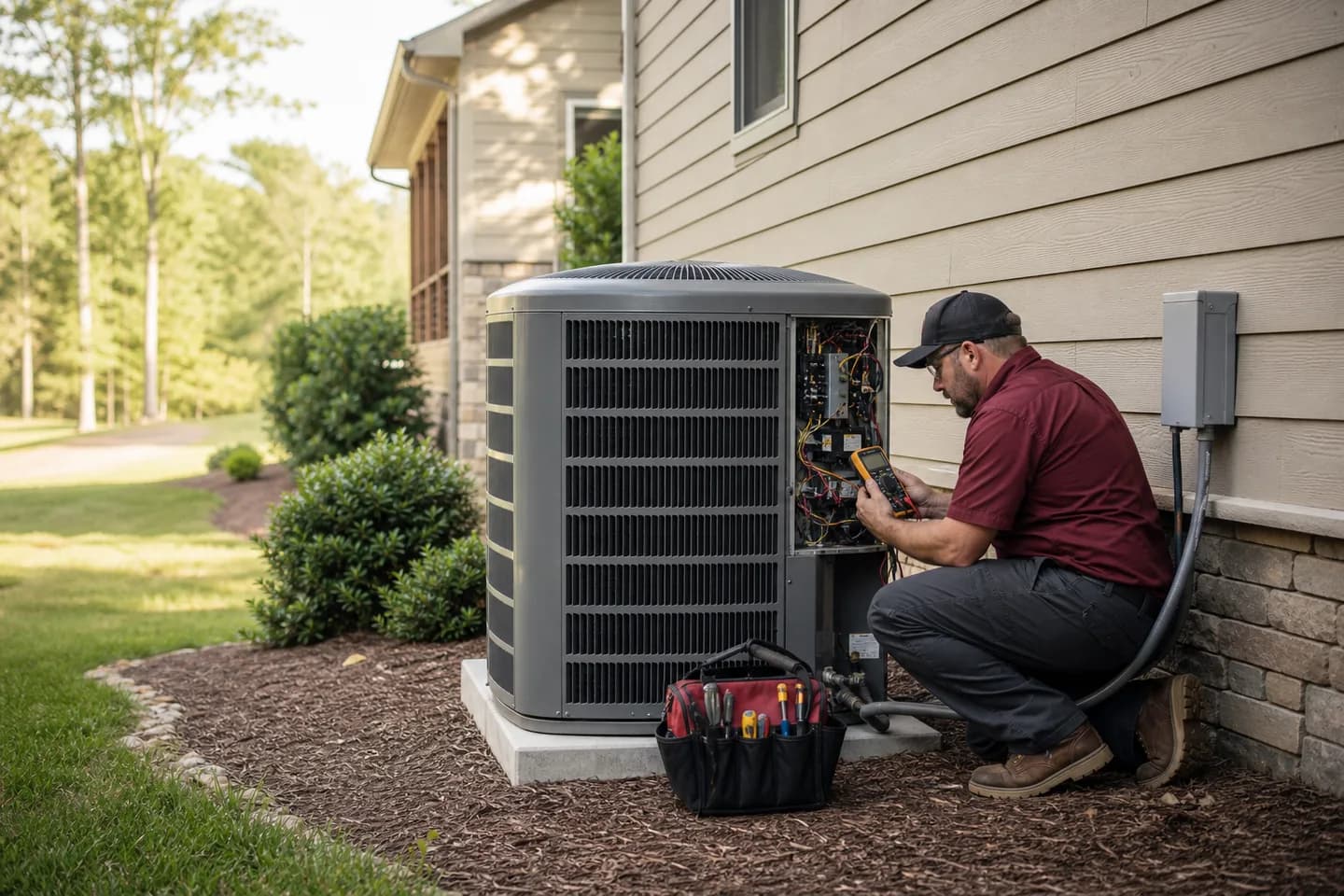
The visit begins with what changed inside the home. Share the rooms affected, the time of day, thermostat behavior, sounds, water, odors, or breaker trips. The technician then checks the operating sequence that fits the symptom. Thermostat demand, electrical supply, safeties, indoor airflow, outdoor operation, drainage, temperature change, and the refrigerant circuit may all be part of the process. Tests are chosen based on what the system is doing rather than a fixed list of replacement parts.
Once a cause is found, Wayne explains it in plain language. A repair recommendation should say what failed, how it affects cooling, and what work is proposed. If another condition was observed but did not cause the current problem, that should be separated from the immediate repair. Homeowners can then decide what needs attention now and what can be watched or planned. This keeps the conversation useful without turning every visit into a list of unrelated sales items.
- Listen to the household's description of room comfort and system behavior
- Confirm thermostat operation, power, controls, and safety switches
- Check indoor airflow, accessible equipment condition, and drainage
- Test outdoor components and the refrigerant circuit when the symptom calls for it
- Explain the finding, repair option, and any limits on further testing
Airflow, ducts, and rooms that stay warm
Air takes the easiest available path. A disconnected duct, crushed section, closed damper, blocked return, dirty filter, or poor balance can reduce comfort even when the AC equipment runs. Ducts in hot spaces can also gain heat or lose cooled air through leaks. The first step is to determine whether the room problem comes from delivered airflow, equipment capacity, zoning controls, or the building itself. Not every room complaint can be corrected by changing a motor or adding refrigerant.
Keep supply registers and returns open unless a technician has designed another setup. Closing too many vents can raise system pressure and reduce airflow rather than save energy. Furniture, rugs, curtains, and boxes should not block grilles. If one room has always been difficult, share that history. If the problem is new, mention when it changed. A new pattern may point toward a failed zone damper, duct damage, blower change, or another repairable condition.
Repair decisions for a household budget
Homeowners need more than a technical answer. They need to know whether a repair is likely to restore dependable use and how it compares with the age and condition of the system. A failed capacitor, contactor, sensor, or drain part may support a focused repair. A compressor, coil, major refrigerant leak, or model-specific control can create a larger choice, especially when the system has a history of breakdowns.
Wayne discusses the repair cost, equipment age, overall condition, warranty, parts availability, and past work when those facts matter. Comfort and energy use belong in the comparison too, but they should not be used to push replacement before the current fault is identified. Some families need the practical short-term repair. Others are ready to stop putting money into aging equipment. A clear explanation lets the household choose the path that fits.
Preparing the home for service and follow-up
Clear a safe path to the thermostat, indoor unit, electrical panel, and outdoor equipment. Keep pets in another area while doors and panels are open. If the air handler is in an attic or crawl area, point out the access and any known hazards. Gather past invoices, warranty information, model numbers, and notes about the symptom. These steps make the visit smoother and let more time go toward the actual system.
After repair, watch the temperature trend and airflow rather than expecting a very warm home to cool in minutes. Note whether the original noise, trip, leak, or cycling problem returns. Keep filters on a schedule based on condition. Leave the outdoor unit clear and avoid damaging the coil with tools or high-pressure washing. If something changes, a specific description helps the company decide whether it relates to the completed repair or a new issue.
Common questions
Residential AC repair questions
Why is the upstairs warmer than the downstairs?
Heat rises, upper rooms often gain more heat, and duct runs may be longer. Airflow balance, return placement, insulation, sun exposure, zoning, and equipment performance can all contribute. A new temperature difference deserves a check for duct, damper, blower, or system changes.
Should I close vents in rooms we do not use?
Usually, closing many vents is not a good way to save energy. It can raise duct pressure and reduce airflow through the equipment. Keep registers open unless the system has been evaluated and balanced for another arrangement or uses properly designed zoning controls.
Can a smart thermostat fix a cooling problem?
A smart thermostat can add scheduling and information, but it cannot repair failed equipment, poor airflow, or a refrigerant problem. An incorrect setup can also create trouble. The system should be diagnosed before assuming a thermostat upgrade will solve the comfort issue.
Why does my house feel humid even when the AC runs?
Short cycles, high airflow, dirty equipment, thermostat settings, system sizing, duct leakage, and reduced cooling performance can affect moisture removal. Humidity is a useful symptom, but testing is needed to identify which condition applies to the home.
Do I need to be home for residential AC repair?
An adult should be available to provide access, explain the symptoms, review findings, and approve work unless another arrangement has been made. The technician may need access to the thermostat, indoor equipment, electrical panel, rooms, and outdoor unit.