Year-round comfort service
Heating and cooling repairs often share the same controls and airflow.
Heating and Cooling Repair in Jasper, GA addresses comfort problems across the full year. A home may use an air conditioner with a furnace, a heat pump with auxiliary heat, or a packaged system that contains both functions. The thermostat, indoor blower, ductwork, electrical supply, and some controls may serve both seasons. A fault in a shared part can appear as no cooling in summer and no heating later. Other problems affect only one operating mode.
Air Conditioning Repair Man brings 20 years of residential and light commercial experience to these connected systems. Owner and technician Wayne Buras has held an HVAC warm-air license since 2007 and holds EPA Section 608 Universal Technician certification. He continues manufacturer classes and technical seminars because heating and cooling controls keep changing. His customer approach stays simple: listen to the problem, test the correct sequence, explain what failed, and review the choices in plain language.
How heating and cooling equipment work together
A split air conditioner often uses an indoor coil installed with a furnace. The furnace blower moves air across that coil in summer and moves heated air in winter. A heat pump uses the same refrigerant circuit in reverse and may pair it with electric heat or another backup source. Packaged equipment places more components in one outdoor cabinet. In each setup, the thermostat, power, controls, filters, ducts, and room vents connect the operating modes.
This shared design affects troubleshooting. A failed blower can stop useful heating and cooling. A thermostat or low-voltage problem may keep every mode from starting. A restricted filter can cause a cold evaporator coil in summer and a high-temperature limit trip in winter. A duct problem can leave the same room uncomfortable all year. The technician needs to identify which parts are common and which belong only to the active mode.
Seasonal symptoms and what they can mean
Cooling complaints include warm vent air, high humidity, weak airflow, ice, water, long run times, and a silent outdoor unit. Heating complaints include cool air, ignition trouble, frequent limit trips, unusual burner operation, auxiliary heat concerns, or a heat pump that will not defrost. Both seasons can bring breaker trips, control faults, blower noise, thermostat problems, and rooms that do not receive enough air.
Describe whether the fault appeared at the first seasonal startup or after weeks of normal use. Equipment that sits for months can reveal a weak part when it is called again. Dust and odor at the first furnace startup can differ from a lasting burning smell. Steam at a heat pump during defrost can differ from smoke. Clear timing and sensory details help the technician separate normal seasonal behavior from a condition that needs repair.
- No response in heating, cooling, or both thermostat modes
- The blower runs but delivered air does not change temperature normally
- A shared breaker, fuse, safety, thermostat, or control stops operation
- One room stays uncomfortable in every season
- A new sound, odor, trip, leak, or cycle pattern appears
Diagnosing the active mode and shared system
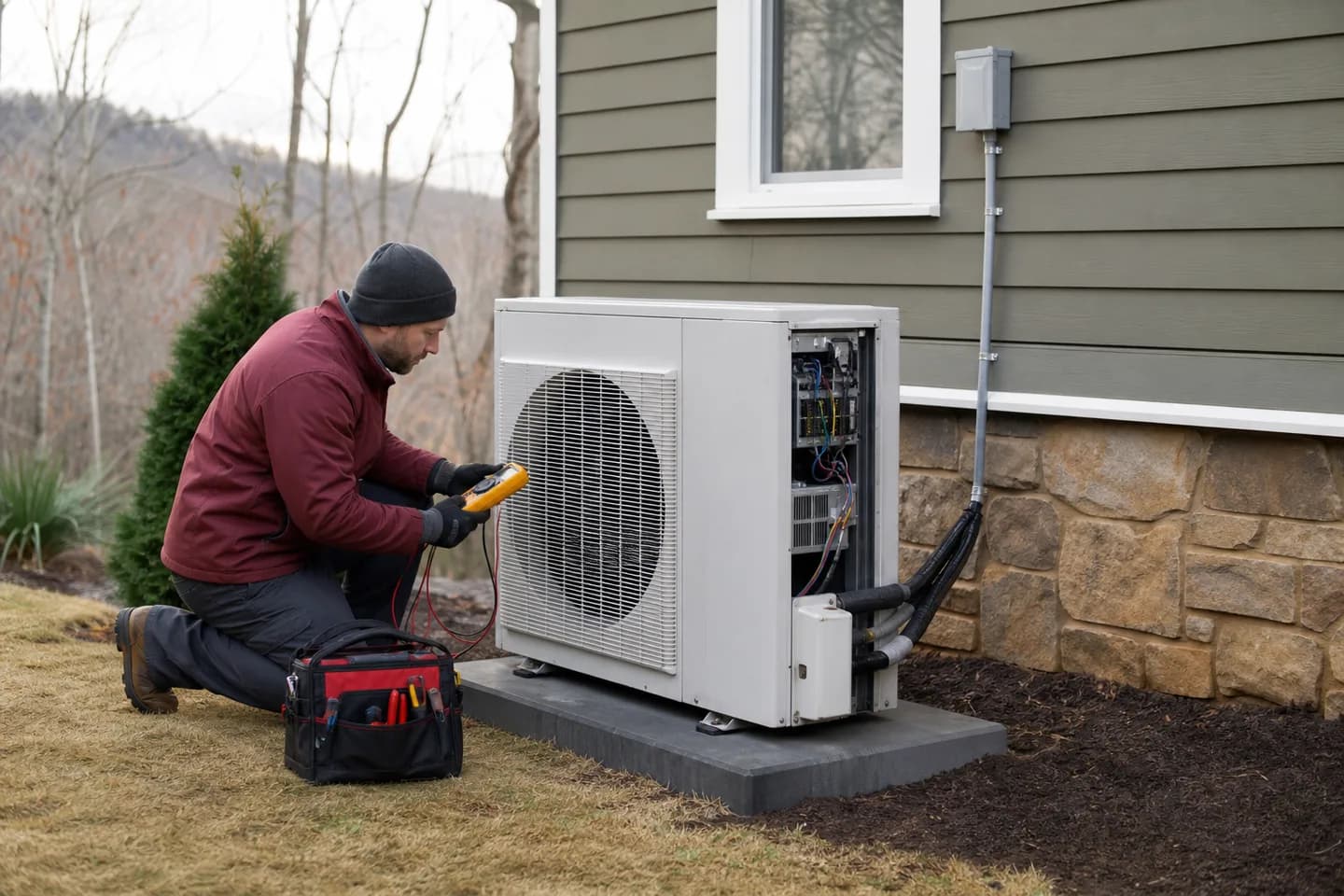
The technician first confirms the thermostat request and the mode that is failing. Cooling tests may follow indoor airflow, outdoor condenser operation, drainage, temperature change, and the refrigerant circuit. Furnace tests follow the manufacturer heating sequence, including inducer operation, pressure controls, ignition, flame proving, blower timing, and limits where those parts apply. Heat pump tests add reversing, defrost, sensors, and backup heat.
Shared components are checked in the same visit when the symptom points there. Control voltage, thermostat wiring, blower operation, filter condition, duct pressure, zone dampers, and electrical supply can affect more than one mode. A fault code helps direct the process but does not replace a measurement. Wayne compares equipment information, current conditions, and system behavior before recommending a repair.
Safety signs during heating and cooling operation
Turn the equipment off for smoke, sparking, a strong burning electrical smell, repeated breaker trips, or a severe mechanical sound. Water near electrical components also calls for a shutdown. For fuel-burning equipment, a carbon monoxide alarm, visible soot, unusual flame appearance, or suspected venting problem needs prompt attention. Leave the home and contact emergency services or the gas utility when there is an immediate gas or carbon monoxide concern.
Do not bypass a furnace limit, pressure switch, drain switch, rollout switch, or other safety control. Do not force a contactor, light equipment in a way not described by the manufacturer, or keep resetting a breaker. Safeties often stop operation because another condition is present. Restoring power without finding the reason can increase risk. Share the exact alarm, code, odor, or shutdown behavior with the technician.
Repair choices across older and newer systems
A thermostat, sensor, capacitor, contactor, igniter, relay, switch, motor, pump, or wiring repair may restore normal operation. Modern equipment may use model-specific variable-speed motors, inverter boards, communicating thermostats, and sensors that need manufacturer procedures. Older equipment can have simpler controls but may face discontinued parts, wear in major components, or a repair history that changes the financial choice.
A large cooling repair should be considered with the condition of the heating equipment when both share a cabinet or blower. A major furnace repair should account for the connected coil and cooling system. This does not mean every part must be replaced together. It means compatibility, age, access, and future plans deserve a review. Wayne separates the current failure from the broader system so the homeowner can decide what to repair now and what to plan later.
Care that supports comfort all year
Filters, returns, supply vents, and ducts affect every operating mode. Check the filter throughout the year and change it based on condition. Keep grilles open and clear. Outdoor equipment needs airflow in summer, and a heat pump needs it in winter as well. Condensate drains may operate during cooling and with certain high-efficiency heating equipment. Keep service areas accessible so leaks and changes can be seen.
Seasonal maintenance can catch some dirty conditions, weak electrical values, drainage issues, and control concerns before peak weather. It cannot prevent every failure. Keep a record of tune-ups, repairs, equipment age, and thermostat changes. This history makes it easier to see whether a new symptom is part of a pattern. Air Conditioning Repair Man can explain maintenance and service contract options for customers who prefer planned visits.
Common questions
Heating and cooling repair questions
Why do both my heat and AC have weak airflow?
Both modes may share the filter, return path, blower, ducts, dampers, and supply vents. A restriction, blower problem, duct issue, or zone control fault can affect the full year. The shared airflow path should be checked before separate heating and cooling parts are blamed.
Can one thermostat problem stop heating and cooling?
Yes. A thermostat, low-voltage wire, transformer, fuse, or control issue may stop calls in both modes. Some faults affect only one thermostat output. Testing can show whether the thermostat is sending the request and where the signal stops.
Should I test heating during summer after an AC repair?
Full heat testing may not be practical or appropriate in hot weather, depending on the equipment. Shared blower and control functions can still be observed. Ask what was tested, what could not be tested under current conditions, and whether a fall heating check is recommended.
Why does my system smell when heat first starts?
Light dust odor may occur briefly at the first seasonal startup. A persistent burning smell, electrical odor, smoke, soot, or unusual combustion smell is different. Turn the system off and request service when the odor is strong, continues, or comes with unsafe signs.
Can maintenance cover heating and cooling in one visit?
Some shared items can be reviewed together, but useful heating and cooling performance tests may need the right outdoor conditions. The service plan should state which modes and components are included and whether separate seasonal visits provide better testing.