Whole-system heating and cooling help
HVAC repair looks at how the parts work together.
HVAC Repair in Jasper, GA covers more than the outdoor air conditioner. A home comfort system may include a thermostat, indoor blower, evaporator coil, furnace or air handler, heat pump, outdoor condenser, drain, duct system, dampers, and safety controls. A fault in one area can change how another part behaves. Weak airflow may look like a cooling problem. A control issue may keep both heating and cooling from starting. Whole-system testing helps avoid treating only the most visible symptom.
Wayne Buras brings 20 years of residential and light commercial experience to this work. He studied air conditioning technology at Chattahoochee Technical College and continues to attend manufacturer classes and seminars. That ongoing education matters because newer HVAC systems may use variable-speed motors, communicating controls, electronic expansion devices, and equipment-specific diagnostic codes. The tools change, but the customer still deserves a simple explanation of the problem and available repair choices.
What the HVAC system includes
HVAC stands for heating, ventilation, and air conditioning. In a typical home, the thermostat calls for heating or cooling, the indoor equipment moves and conditions the air, the ducts carry it through the house, and return grilles bring air back. A split air conditioner pairs an indoor coil with an outdoor condensing unit. A heat pump can move heat in both directions and may use auxiliary heat. A furnace may share the same blower and duct system used by the air conditioner.
Because these parts share controls and airflow, a repair should account for their connections. A failing blower motor can reduce cooling in summer and heating airflow in winter. A thermostat or low-voltage wiring fault can stop both modes. A blocked filter can affect temperature, energy use, and equipment safety. A drain switch can shut down cooling to prevent water damage. Looking at the whole path from thermostat to room helps identify the actual break in operation.
Signs that point toward an HVAC repair
Common signs include no response from the thermostat, weak airflow in every season, unusual cycling, rooms that never reach the setting, or equipment that stops at the same point in each cycle. Sounds can provide clues. Repeated clicking may involve a control or relay. Grinding can point toward a motor or bearing. Rattling may come from a loose panel, wheel, duct, or outdoor component. Odors, water, ice, and breaker trips add more information.
Comfort patterns also matter. One hot or cold room may be related to ducts, balancing, insulation, sun exposure, or zoning rather than the main equipment. A whole house that changes temperature slowly may have a capacity, airflow, or equipment performance issue. High humidity during cooling season can be tied to short cycles, airflow, thermostat settings, or system sizing. HVAC repair begins by matching these patterns with measurements instead of assuming every comfort complaint needs the same part.
- Heating or cooling will not start after the thermostat calls
- The indoor fan runs without normal heating or cooling
- Airflow is weak, noisy, or different from past operation
- The system cycles too often or runs without reaching the setting
- Water, ice, odor, breaker trips, or new mechanical sounds appear
How whole-system troubleshooting works
The diagnostic order follows the symptom. A completely dead system starts with thermostat demand, control voltage, line power, switches, and safeties. Weak airflow starts with the filter, return path, blower operation, coil, dampers, and accessible duct conditions. A heat pump stuck in one mode may call for testing of the reversing valve circuit, thermostat output, sensors, defrost controls, and auxiliary heat. Furnace concerns follow their own safe sequence for ignition, flame proving, limits, and venting.
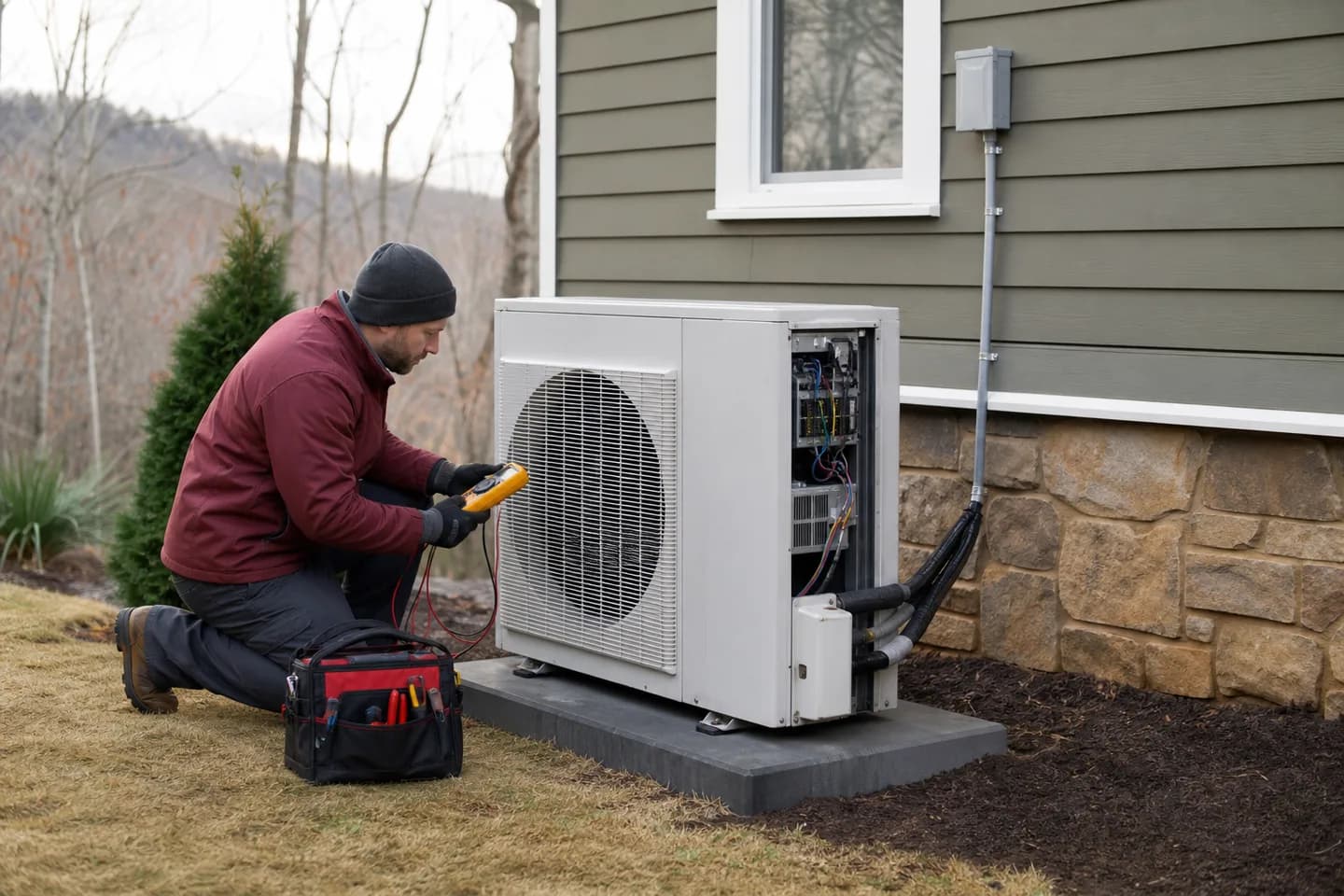
Measurements must be read in context. An electrical value can show whether a motor is receiving power and how it is operating. Temperature readings can show whether the equipment is adding or removing heat. Static pressure can help reveal airflow resistance. Fault codes can point toward an area but do not always prove which part failed. The technician combines the code, system behavior, manufacturer information, and direct tests before recommending a repair.
Common HVAC parts and repair decisions
Controls, capacitors, contactors, relays, motors, sensors, switches, igniters, pumps, and thermostats are among the parts that may need repair or replacement. The exact list depends on whether the home uses an air conditioner, heat pump, furnace, air handler, or packaged unit. Some modern motors and control boards are specific to the model. Identifying the equipment and checking parts availability is part of forming a realistic repair plan.
A failed part may also have a cause outside the part itself. A motor can be damaged by airflow resistance or a dirty wheel. A fuse may open because of a short. A drain safety may stop the system because water cannot leave. Replacing the failed item without checking the surrounding condition can lead to a repeat call. A complete repair addresses the confirmed failure and any related condition that can be reasonably identified during testing.
When repair should include a broader system conversation
An HVAC system may have more than one issue, especially as equipment ages. A repair can restore operation while an airflow, duct, or comfort concern still remains. The technician should separate what caused the breakdown from other observations. That lets the homeowner decide what needs action now and what can be planned. It also prevents a smaller recommendation from being presented as though the system cannot run without it.
When a major component fails, compare the repair with system age, condition, past costs, warranty status, and expected life. Mixed equipment, unavailable controls, refrigerant type, and poor comfort may affect the choice. Wayne explains the immediate fault first, then discusses the larger picture when it is relevant. The customer keeps control of the decision and can weigh short-term repair against replacement or improvement work.
Keeping the repaired system working well
Regular filter checks support both heating and cooling because the same blower often serves both. Keep returns and supply vents open and clear. Outdoor equipment needs open space for airflow. Drain lines and pumps need attention before a blockage causes a shutdown or water problem. A seasonal maintenance visit can record electrical, airflow, temperature, and operating conditions that make future changes easier to spot.
Manufacturer guidance matters for newer equipment. Filter type, thermostat setup, control settings, and maintenance steps can differ across systems. Wayne continues technical education so service follows the design of the equipment rather than a one-size method. Homeowners can help by keeping model information, manuals, warranty records, and repair history together. Those records make it easier to understand patterns as the system ages.
Common questions
HVAC repair questions
What is the difference between AC repair and HVAC repair?
AC repair focuses on cooling equipment and related controls. HVAC repair can include cooling, heating, ventilation, airflow, thermostats, and shared system parts. The services overlap because many homes use the same blower, ducts, and controls in both seasons.
Why does my thermostat work but the HVAC system does not start?
The thermostat may have display power while the equipment has a tripped breaker, open safety, low-voltage fault, damaged wire, failed control, or another problem. A thermostat click only shows that it attempted a call. Testing is needed to see where the signal stops.
Can duct problems look like equipment failure?
Yes. A disconnected, crushed, leaking, or poorly balanced duct can reduce airflow and create rooms that stay uncomfortable. Equipment problems can cause similar symptoms, so the blower, pressure, duct path, and room pattern should be considered together.
Should heating and cooling equipment be repaired at the same time?
Only the confirmed problems need repair. Shared components may affect both modes, while other parts serve only heating or cooling. The technician should explain which system is affected, whether another condition was observed, and which work is needed now.
Does HVAC maintenance replace the need for repair?
No. Maintenance can clean equipment, check operation, and find some developing concerns. It cannot prevent every failure or restore a part that has already failed. Repair addresses a specific fault, while maintenance supports normal equipment that is still operating.