
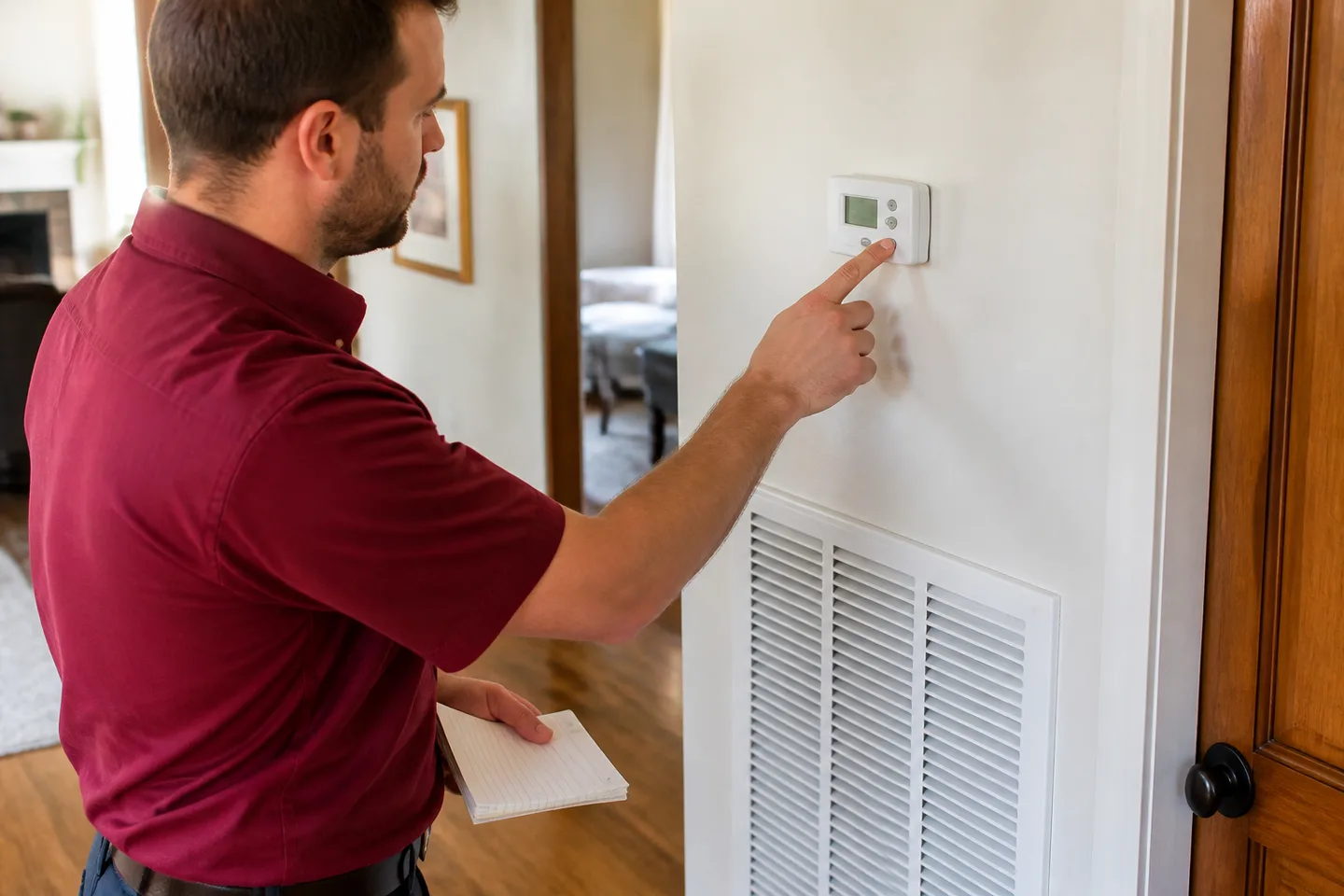
Room-by-room comfort control
Zoning repairs restore communication between thermostats, dampers, and equipment.
Zoning System Repair in Jasper, GA addresses systems that divide a home or building into separate comfort areas. Each zone may have its own thermostat. A central panel reads those calls and opens or closes motorized dampers in the ducts. The panel also tells the heating or cooling equipment when to run. When a thermostat, damper, sensor, wire, control panel, or setup fails, one zone may stay hot while another becomes too cold, or the main equipment may cycle in an unhealthy pattern.
Zoning is more than adding thermostats. The ducts, dampers, equipment stages, airflow, bypass strategy when used, and control setup must work together. Wayne Buras applies 20 years of HVAC experience and continued manufacturer education to these connected systems. Air Conditioning Repair Man begins with the reported room pattern, then follows the zone call from thermostat to panel, damper, equipment, and delivered airflow. The homeowner receives an explanation of which part stopped responding and what repair fits.
How a zoned HVAC system should operate
When a zone needs cooling, its thermostat sends a call to the zone control panel. The panel moves dampers to direct air toward that area and sends the proper request to the equipment. As other zones call, more dampers may open. When the thermostats are satisfied, the panel ends the equipment call and returns dampers to their designed position. Heating follows a related sequence based on the equipment and panel setup.
Some systems stage equipment or change blower speed based on the number of open zones. Others use a bypass damper or a designed relief path to control pressure. Sensors may protect the equipment from air that becomes too cold or too hot when only a small zone is open. These details matter during repair. A replacement panel or thermostat must be compatible and configured for the dampers, equipment type, stages, and safety strategy.
Signs of a zoning system problem
One common sign is a zone that receives air even when its thermostat is satisfied. Another zone may receive little or no air when it calls. A thermostat can be blank, show the wrong temperature, or call without a response at the panel. The system may run whenever one specific zone asks, then stop too soon. You may hear air rushing from a few vents, ducts flexing, dampers clicking, or the equipment cycling on a low- or high-temperature safety.
Not every uneven room is a zoning failure. Sun exposure, insulation, closed registers, duct leakage, room use, and equipment performance can create similar comfort patterns. A zone with low airflow may have a stuck damper, but it may also have a disconnected duct or a blocked supply. The diagnostic process compares thermostat calls, panel outputs, damper movement, system pressure, and delivered air before a zone part is replaced.
- A zone stays hot or cold while other areas are comfortable
- Air continues from vents after that zone is satisfied
- A thermostat calls but its damper does not open
- Ducts become noisy when only one small zone is active
- The main equipment cycles on a safety or starts and stops too often
Testing thermostats, panels, and zone wiring
The technician confirms each thermostat reading and call, then checks whether that signal reaches the panel. The panel should display or output the matching zone and equipment commands. Low-voltage wiring, transformers, fuses, terminal connections, and configuration can interrupt the sequence. A thermostat may appear normal while one output has failed. A panel light or code may point toward the problem area, but direct voltage and continuity tests help confirm it.
Communicating zone systems may use data connections and equipment-specific controls instead of standard thermostat terminals. Setup information, addresses, sensor readings, and manufacturer fault history can matter. Replacing a control without recording the configuration can create a second problem. Wayne's continued technical education helps him follow the design that is present rather than treating every zone panel as though it uses the same wiring and logic.
Damper motors, blades, and duct airflow
A zone damper contains a blade inside the duct and an actuator outside it. The motor may fail, a linkage may loosen, a blade may bind, or the damper may lose power. Some dampers spring open or closed when power is removed, while others drive both directions. The technician should confirm the commanded position, watch actuator movement, and verify that airflow changes as expected. A moving motor does not always mean the internal blade moved with it.
Airflow testing helps protect the main equipment. If too many dampers stay closed, duct pressure can rise and airflow across the coil or heat exchanger can fall. That can cause noise, coil freezing, furnace limit trips, or short cycles. A failed damper may be the immediate repair, but panel setup, blower configuration, bypass condition, and zone sizing may also need review when pressure remains outside a workable range.
When the zoning problem is really an equipment problem
The zone panel can send the correct heating or cooling call while the main system fails to respond. In that case, the issue may be with the thermostat interface, furnace, heat pump, air conditioner, blower, or a safety control. Every zone may become uncomfortable because the shared equipment is not producing conditioned air. The panel and dampers can be working normally even though homeowners first notice the problem in one room.
The reverse is also true. The main equipment can test normally while a single zone stays uncomfortable because it receives the wrong airflow. A complete zoning repair separates the central equipment from the distribution controls. Wayne explains which part of the chain failed. This keeps a damper problem from becoming an unnecessary equipment repair and keeps a true equipment failure from being blamed on room thermostats.
Using a repaired zoning system well
Choose reasonable temperature differences between zones. Extreme settings can make zones compete, increase run time, and call for more heating or cooling than a small area can use. Keep all registers open within each zone unless the system was balanced another way. Do not block zone thermostats with furniture, lamps, direct sun, or supply air. The thermostat needs to sense room conditions rather than a local hot or cold spot.
Write down which thermostat controls each area and label dampers or panel terminals when practical. Keep panel instructions and setup records with the equipment documents. If comfort changes, note which zones were calling and whether air came from each group of vents. This information makes an intermittent zone problem easier to repeat. Planned maintenance can also include operation of each zone, damper response, and system behavior under different calls.
Common questions
Zoning system repair questions
Why is air coming from a zone that is turned off?
The damper may be designed to remain partly open, may have failed open, or may not match the thermostat command. Some air can also leak past a closed blade. The panel output, actuator position, blade movement, and system design should be checked together.
Can I replace a zone thermostat with any smart thermostat?
Not always. The thermostat must work with the zone panel or communicating control and may need specific wiring or configuration. Some smart features are managed by the central zoning system. Check compatibility before removing the existing thermostat.
Why do my ducts whistle when one zone runs?
Air pressure may be high because too few ducts are open, a damper is stuck, the blower speed is not matched, or the bypass or relief path has a problem. Register restrictions can add noise. Pressure and damper operation should be tested before changes are made.
Does zoning save energy?
Zoning can reduce conditioning in areas that do not need the same temperature, but results depend on system design, controls, duct leakage, equipment staging, and how the thermostats are used. Poorly designed zoning can create pressure, cycling, and comfort problems instead.
Can one failed zone stop the entire HVAC system?
Yes, depending on the panel and fault. A shorted thermostat wire, transformer issue, control failure, or safety response may affect all calls. Other damper or thermostat faults stay limited to one area. Testing shows whether the problem is local or shared.