
Routine care for cooling equipment
AC maintenance supports the system between repairs and replacements.
AC Maintenance in Jasper, GA is planned care for cooling equipment that is operating or ready for seasonal startup. Maintenance reviews the conditions that affect airflow, drainage, electrical operation, controls, and outdoor heat transfer. It may include accessible cleaning and adjustments within the service scope. The goal is to reduce avoidable strain, record equipment condition, and point out repair needs before a long period of summer operation.
Air Conditioning Repair Man brings a contractor's full-system view to maintenance. Wayne Buras has 20 years of residential and light commercial experience and continues education with equipment manufacturers. He knows a checklist must fit the system in front of him. Heat pumps, traditional split air conditioners, packaged units, variable-speed equipment, and communicating controls can require different procedures. The homeowner receives a clear separation between routine work and any repair that needs added approval.
What routine AC maintenance can address
Maintenance may review the thermostat, filter, indoor airflow, accessible blower and coil condition, condensate drain, outdoor coil, electrical parts, controls, and system operation. The exact work depends on access, equipment, condition, and the selected service. A lightly soiled accessible area may fit routine care. A heavily impacted indoor coil, blower wheel, blocked drain system, or damaged part may need separate cleaning or repair.
The visit also creates time for the homeowner to report changes. Longer cycles, room temperature differences, higher humidity, new sounds, and thermostat alerts may not stop the system yet. Those details can direct added checks. Maintenance is most useful when it responds to actual equipment history rather than treating every home as the same list of boxes.
Filters, blowers, and cooling airflow
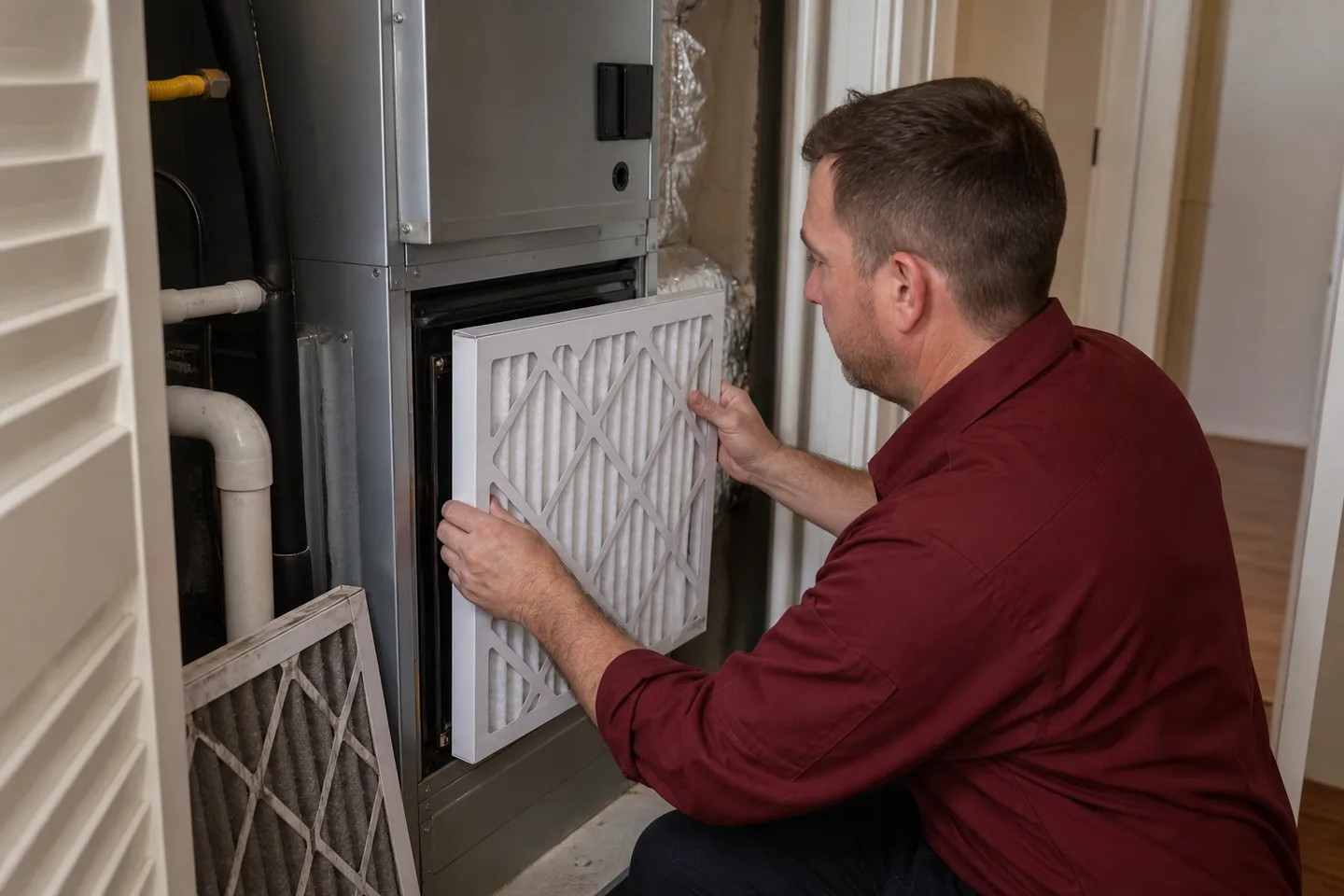
The filter should fit the rack and allow the blower to move the required air. A filter that is too dirty or too restrictive can reduce cooling, add motor strain, and contribute to coil freezing. Replacement timing depends on filter type, pets, dust, remodeling, operating hours, and the home. Checking condition regularly is more useful than assuming one schedule works everywhere.
The technician may observe blower startup, sound, wheel cleanliness, cabinet leakage, and accessible coil condition. Room airflow concerns may point toward dampers, ducts, returns, or zoning. Static pressure or added airflow testing can be recommended when basic observations show a restriction. Changing a filter helps only one part of the path, so continued weak airflow deserves a wider review.
- Confirm filter size, fit, direction, and replacement needs
- Observe blower operation and accessible indoor equipment condition
- Keep return grilles and supply vents open and free of blockage
- Review room comfort changes and zone behavior
- Recommend added airflow testing when the basic visit shows a concern
Condensate drainage during humid weather
Cooling removes moisture, and that water must leave through the drain. Jasper's humid summer conditions can produce long drainage periods. A line beginning to clog may overflow during peak use even if it passes a small amount of water during mild weather. The pan, trap, pump, float switch, termination, and visible piping should be reviewed based on the installation.
Routine drain service cannot repair a cracked pan, failed pump, poor slope, disconnected pipe, or frozen coil. Water staining and rust may show that a problem occurred earlier. The technician should explain whether the drain needed normal care or whether another condition calls for repair. Homeowners should avoid pouring harsh products into a system they do not understand because materials and drain designs differ.
Outdoor equipment and electrical wear
The condenser needs open space and a clean path for air through the coil. Plants, grass clippings, pollen, and leaves can build around it. Appropriate cleaning depends on the coil and degree of buildup. High pressure can bend fins or cause damage. The technician may also note cabinet condition, line insulation, vibration, motor sound, and anything that blocks discharge air.
Electrical parts face repeated starts, heat, weather, and vibration. Accessible wiring and connections can be inspected. Capacitors, contactors, motors, and compressor operation may be measured when included and appropriate. A weak reading should be compared with the component rating and connected system. The customer should receive an explanation before a maintenance observation becomes a repair recommendation.
Performance checks and maintenance limits
Thermostat response, cycle operation, temperature change, and other readings can show how the system operates under current conditions. Airflow must be considered before refrigerant performance is judged. Outdoor temperature, indoor load, equipment design, and stable run time affect the numbers. Refrigerant should not be added as a routine maintenance product. An incorrect charge needs a reason and a proper diagnostic path.
Maintenance cannot predict every failure. A control board, motor, capacitor, or compressor can test normally and fail later. Storms and physical damage can occur after the visit. The service reduces avoidable neglect and may find developing concerns. It does not create a guarantee that no repair will be needed. Honest limits help the homeowner use maintenance for what it does well.
Scheduling and keeping maintenance records
Many cooling systems benefit from service each year before peak summer use. Heat pumps may need attention in both heating and cooling modes. Manufacturer guidance, equipment type, system use, environment, and warranty terms can affect timing. A service contract can help homeowners who want reminders and a set schedule, but the written plan should describe its actual tasks and covered equipment.
Keep visit summaries, repair invoices, filter information, model numbers, warranty documents, and startup records together. History helps the contractor compare readings and see repeating conditions. Wayne started Air Conditioning Repair Man to create closer customer relationships. Ongoing maintenance supports that goal because the same company can learn the equipment and explain how its condition changes over time.
Common questions
AC maintenance questions
How is AC maintenance different from an AC tune-up?
The terms often overlap. A tune-up usually describes a seasonal maintenance visit. A maintenance plan may cover recurring care across the year. Ask for the written tasks because the name alone does not show which checks or cleaning are included.
Can maintenance improve uneven cooling?
It may help when the cause is a dirty filter, airflow restriction, control setting, or another included condition. Long-term room differences can involve ducts, returns, zoning, insulation, sun exposure, or sizing and may need added evaluation.
Does AC maintenance include refrigerant?
Refrigerant is not a routine refill. If readings suggest an incorrect charge, the technician should explain the evidence and recommend the proper diagnostic or leak work. Refrigerant, leak repair, and charging may be separate from maintenance.
Can maintenance be done if the AC is frozen?
A frozen system needs to be turned off and thawed. It also needs diagnosis if the cause is not a simple filter issue or if freezing returns. Normal maintenance testing cannot be completed accurately while the coil is covered in ice.
What maintenance can a homeowner handle?
Homeowners can check filters, keep vents clear, remove loose debris around the outdoor cabinet, and watch for changes. Electrical panels, motors, internal cleaning, controls, and refrigerant work should be handled by trained service personnel.
When is the best time to schedule AC maintenance?
Many homeowners schedule before the longest summer run times, but useful maintenance can be completed whenever weather and equipment conditions allow the planned checks. Booking earlier may also leave time for an identified repair. Manufacturer guidance, system use, and warranty requirements can affect the schedule.
Is indoor coil cleaning included with normal maintenance?
It depends on access, coil condition, and the written service scope. Inspection and light care may be included while removal, deep cleaning, cabinet modification, or work on a heavily impacted coil may be separate. Ask how the contractor decides when added cleaning is needed and how it will be priced.
Do homes with pets need HVAC filters changed more often?
They may, but filter size, type, system runtime, number of pets, household dust, and grooming all affect loading. Check the filter regularly and replace it based on condition and manufacturer guidance. The contractor can also confirm whether the chosen filter creates too much resistance for the system.