
A contractor-led seasonal system review
A useful tune-up combines routine care with clear documentation.
AC Tune-Up in Jasper, GA prepares operating cooling equipment for longer summer run times. The visit can review thermostat response, filters, airflow, drainage, outdoor coil condition, electrical parts, controls, and cooling performance within the selected scope. A tune-up is not a repair plan for broken equipment and is not a guarantee against every future failure. It is a scheduled chance to handle routine care and find some developing concerns before peak demand.
The contractor matters because tune-up lists are not identical. Equipment design, age, access, maintenance history, and manufacturer guidance affect the right checks. Wayne Buras has 20 years of residential and light commercial HVAC experience and continues manufacturer education. Air Conditioning Repair Man explains what is included, which observations are normal maintenance, and which finding needs separate diagnostic or repair approval. That distinction keeps the seasonal visit useful without turning it into a vague sales inspection.
Choosing a tune-up scope
Ask what the advertised tune-up includes before scheduling. A basic visit may cover operation and visual checks. A more detailed service may include specific electrical measurements, drain care, coil cleaning, and a written report. Heavily impacted coils, blower cleaning, repairs, refrigerant, duct testing, and specialized control work may be separate. Written scope helps the homeowner compare value instead of comparing only a short service name.
Confirm how many systems are included. A home with two condensers and two indoor units needs more time than a single-system home. A heat pump needs attention to heating functions, defrost, and auxiliary heat in addition to cooling. Zoning panels and multiple thermostats add controls. Tell the contractor about these features so the appointment includes the correct equipment and enough time.
Indoor equipment and airflow review
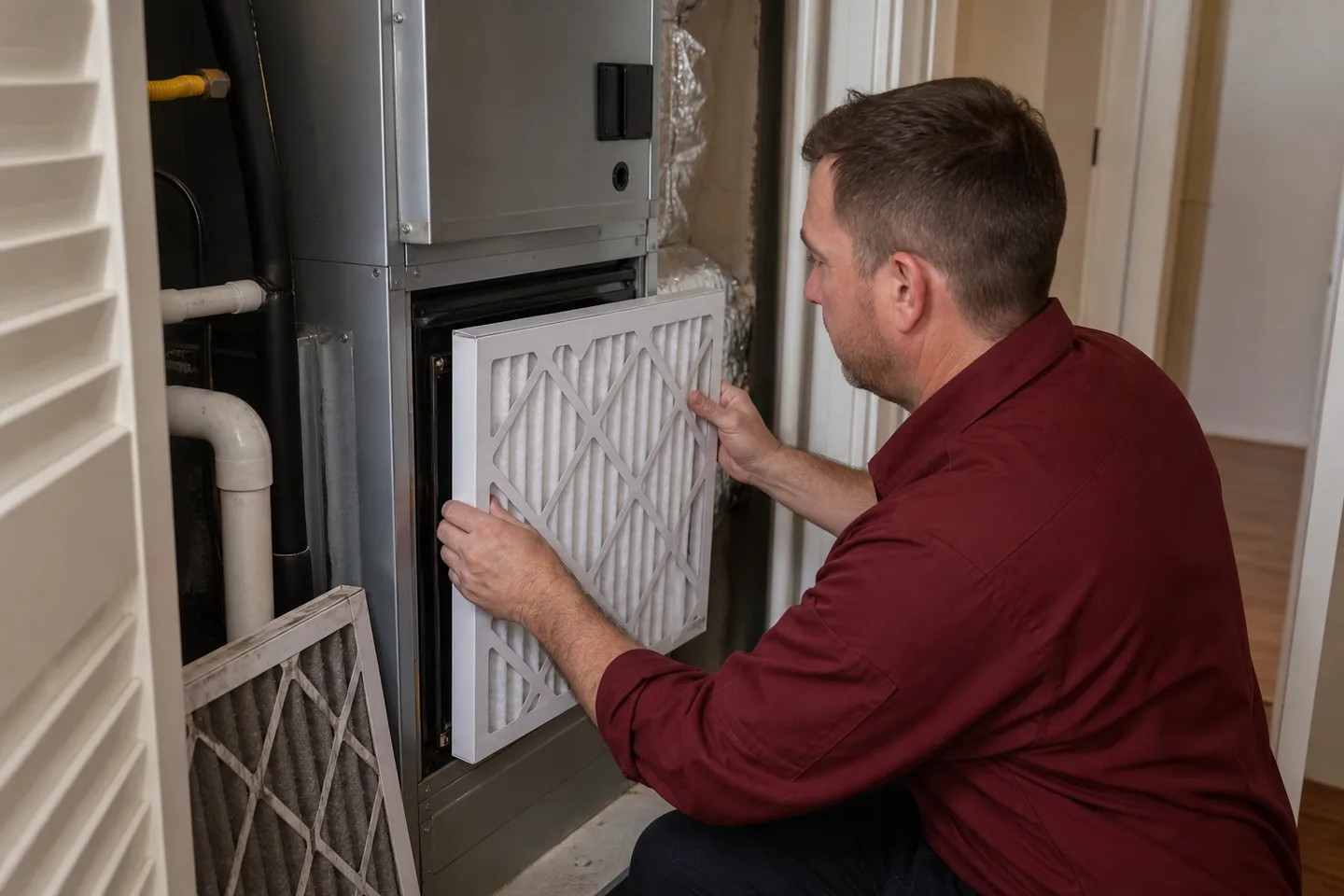
The filter is the homeowner's most regular maintenance item, but its fit and effect matter. A filter that is too small allows bypass. One that is too restrictive can reduce airflow. The contractor may review filter condition, return grilles, blower operation, accessible coil condition, cabinet leakage, and room airflow concerns. Added pressure or airflow testing may be recommended when basic checks show resistance.
Cooling airflow affects capacity, humidity removal, coil temperature, and motor operation. A dirty blower or coil may need separate cleaning when access and buildup go beyond the tune-up. Closed vents, blocked returns, failed zone dampers, and damaged ducts can create similar symptoms. The visit should identify which condition was observed and avoid promising that a filter change will solve a wider airflow problem.
- Filter size, fit, condition, and replacement discussion
- Thermostat call, fan setting, and basic control response
- Blower sound, accessible cleanliness, and visible cabinet condition
- Indoor coil and drain observations within safe access
- Room airflow or zoning concerns reported by the homeowner
Drain, outdoor coil, and seasonal debris
The indoor coil produces water as it removes humidity. A tune-up may address accessible drain components, check a pump or float switch, and look for staining or rust. A cracked pan, failed pump, poor drain slope, frozen coil, or repeat blockage needs repair beyond routine care. Jasper's humid weather makes drainage especially important during long cooling cycles.
Outside, pollen, grass clippings, leaves, and plant growth can limit condenser airflow. Cleaning should fit the coil design and material on it. Pressure washing can bend fins and cause damage. The contractor may also review equipment support, clearance, insulation, cabinet condition, and visible line concerns. A clean coil helps heat leave the system, but it does not correct an electrical, motor, compressor, or refrigerant fault.
Electrical and performance documentation
Electrical components face heat and repeated starts. The tune-up may include inspection and measurements for capacitors, contactors, motors, connections, and compressor operation when those tasks are part of the service. Values should be compared with component ratings and equipment data. A weak reading deserves an explanation of likely effect and repair options, not an automatic replacement without context.
Temperature change and other performance readings can create a baseline. Refrigerant readings require proper airflow, stable operation, outdoor conditions, and the correct manufacturer method. Adding refrigerant should never be a standard tune-up step. When readings suggest a charge or leak concern, the contractor should move the issue into a diagnostic conversation and describe the added work before proceeding.
What a written tune-up summary should tell you
The summary should show that the visit covered the agreed equipment and tasks. It may include filter information, operating observations, maintenance completed, measurements, and repair recommendations. If weather prevented a full test, that limit belongs in the notes. If a panel or coil could not be accessed without added work, the customer should know it was not directly inspected.
Recommendations should be grouped by purpose. A current repair need affects operation or safety. A maintenance item supports care. An optional improvement may address comfort, controls, or convenience. Future planning may involve aging equipment that still works. Wayne uses open communication so homeowners can tell these categories apart and decide without feeling that every note is an emergency.
Using tune-up records through the life of the system
Keep summaries with installation documents, warranty information, repairs, model numbers, and filter records. Repeated readings can reveal a change that one isolated visit cannot. A drain that needs frequent clearing, a motor value that moves over time, or recurring room complaint may point toward a condition that needs a wider look. Records also help with warranty and sale questions when proof of care is requested.
A tune-up can be scheduled alone or as part of an AC service contract. Review the terms when choosing a plan. Air Conditioning Repair Man can continue with diagnostic, repair, replacement, and residential AC service when the visit finds a larger need. The value comes from continuity and clear records, not from assuming one seasonal appointment can cover every future issue.
Common questions
Contractor AC tune-up questions
Are all AC tune-ups the same?
No. Included checks, cleaning, measurements, number of systems, and documentation vary. Equipment type and access also change the work. Ask for the written scope and repair approval process before comparing tune-up prices.
Should a tune-up include a written report?
A written summary is helpful because it records work, findings, limits, and future needs. The format varies. Ask ahead if you need measurements or a formal document for warranty, property, or recordkeeping purposes.
Can a tune-up be completed during very cool weather?
Some maintenance checks are possible, but full cooling operation or refrigerant evaluation may be limited by outdoor temperature and manufacturer instructions. The contractor should state which tests were not appropriate under the conditions.
Does a tune-up include AC repair?
Routine adjustments or minor tasks may fit the listed scope, but failed parts and diagnostic work are usually separate. The contractor should explain the finding and price before completing any repair not included in the tune-up.
What should I do before the tune-up appointment?
Provide safe access to the thermostat, indoor equipment, outdoor unit, and electrical panel. Gather past service records and write down any comfort, noise, humidity, water, or thermostat concern that appeared since the last visit.
How long does an AC tune-up take?
Timing depends on the checklist, equipment type, number of systems, access, condition, and whether an operating concern appears. Ask for the expected scope instead of choosing by the shortest time. A detailed report and appropriate measurements take longer than a basic visual check.
Is a tune-up worthwhile for an older AC system?
It can provide routine care and useful information about current operation. The contractor should avoid disturbing fragile components without reason and should explain any limit caused by condition or parts. Maintenance cannot reverse wear, but it can support an informed repair or replacement decision.
Should I change the thermostat setting after a tune-up?
Usually the household can return to its normal setting after the technician confirms operation. Ask about any special instruction for a repaired drain, newly installed control, thawed coil, or follow-up test. Avoid extreme settings because they do not make a standard system cool faster.