
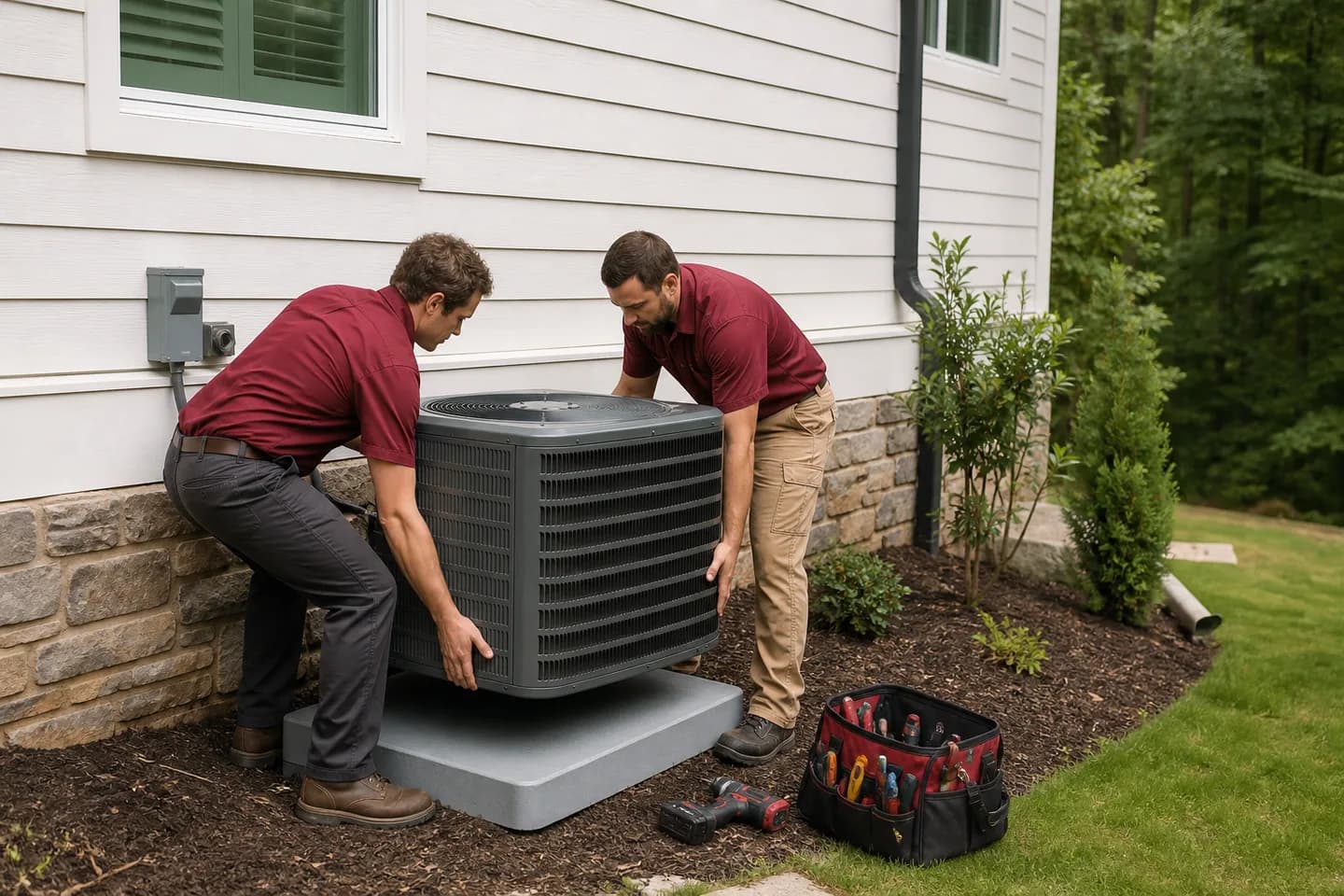
A replacement plan based on the home and equipment
The new system should solve the right problem and arrive as a complete installation.
AC Replacement in Jasper, GA is more than swapping an outdoor cabinet. The indoor equipment, outdoor equipment, thermostat, refrigerant lines, electrical components, drainage, airflow, duct system, equipment support, and controls all affect the finished result. A replacement proposal should identify the connected equipment, explain why the selected system fits the home, and show the work required to install and start it correctly.
Air Conditioning Repair Man is owned and operated by Wayne Buras, a Georgia-licensed warm-air contractor and EPA Section 608 Universal Technician with 20 years of residential and light commercial HVAC experience. Wayne combines site measurements, manufacturer information, and an honest discussion of the homeowner's goals. His family-owned company was built around direct communication, so the person evaluating the project can explain the recommendation and remain accountable for the work.
Deciding between repair and replacement
A failed component does not automatically require a new system. A repair may make sense when the problem is clear, the rest of the equipment is in reasonable condition, parts are available, and the cost fits the remaining value. Replacement becomes more practical when a major repair combines with advanced wear, repeated failures, poor comfort, unavailable components, refrigerant concerns, or a homeowner's plan to improve the entire system.
Compare the confirmed repair with a complete replacement scope, not with a promotional equipment price. Consider indoor and outdoor equipment condition, past expenses, energy use, noise, humidity, room comfort, warranty status, and expected time in the home. Age provides context but does not diagnose condition. Wayne can explain both paths when both are reasonable, including what the repair changes and what it leaves in place.
Sizing the system for the current house
The capacity of the old equipment is a starting point, not proof of what should go back. Homes change. Windows, insulation, additions, finished spaces, shade, ductwork, and air leakage can be different from the original installation. A load calculation evaluates how heat enters and leaves the home under design conditions. It supports equipment selection and gives the contractor a better basis than square footage or the existing nameplate alone.
Oversized cooling equipment may run short cycles, create temperature swings, remove less humidity, and stress components through frequent starts. Undersized equipment may run for long periods and still struggle during design heat. Proper sizing works together with airflow and duct capacity. A calculated load does not correct a damaged or restrictive duct system, so the replacement assessment should also consider whether the air distribution can support the proposed equipment.
- Home size, orientation, windows, insulation, and air leakage
- Room use, additions, finished basements, and recent renovations
- Existing supply and return layout and accessible duct condition
- Comfort, humidity, noise, control, and efficiency priorities
- Manufacturer-approved indoor and outdoor equipment combinations
Selecting matched equipment and useful features
The indoor coil or air handler and outdoor unit should be selected as a matched combination. The furnace blower, heat pump controls, auxiliary heat, and thermostat must also be compatible when they are part of the system. Published performance and efficiency depend on the tested combination, not the outdoor model alone. A proposal should list the major model numbers or clearly describe how the final combination will be documented.
Efficiency level, staged or variable operation, sound, filtration, humidity control, thermostat features, and heat pump capability can all affect the choice. More features are not automatically better for every home. Controls and replacement parts can be more complex, while better modulation may improve comfort in the right application. The contractor should relate each recommended feature to a household priority and explain the maintenance it may require.
What belongs in a complete replacement proposal
The proposal should define removal and disposal of old equipment, new equipment, equipment pad or support, refrigerant-line treatment or replacement, electrical work within scope, disconnects and protection, condensate drainage, thermostat, transitions, permits when required, startup, registration, and cleanup. It should also identify exclusions and any work that depends on conditions discovered after removal. Clear details make competing proposals easier to compare.
Ask how existing ducts and line sets were evaluated. Confirm who handles electrical or building work outside the HVAC scope. Review payment terms, equipment and labor warranty information, and the process for registering eligible products. If rebates or tax incentives influence the choice, verify current eligibility and documentation before relying on them. Programs and qualifying requirements can change, and the installing contractor should not promise a benefit controlled by another organization.
Removal, installation, and startup
Replacement begins with protecting the work path, recovering refrigerant properly, disconnecting utilities, and removing equipment without damaging the home. The installation then needs sound support, sealed air connections, correct drainage, manufacturer-required clearances, electrical connections, control wiring, and proper refrigerant practices. Existing material may be reused only when it is appropriate, compatible, clean, and included in the agreed plan.
Startup is part of installation. The contractor should confirm thermostat calls, fan operation, airflow settings, drainage, electrical operation, temperatures, and refrigerant performance under suitable conditions. Heat pumps also need heating, auxiliary heat, and control checks when weather and manufacturer procedures allow. If outdoor conditions limit final testing, that limitation and the plan for completion should be documented instead of treating power-on as the final test.
Learning and caring for the new system
Before the job closes, the homeowner should know how to operate the thermostat, which filter fits, how often to check it, where shutoffs are located, and what normal sounds or cycles to expect. Ask which documents to keep and whether equipment registration has been completed. Warranty coverage usually has conditions and exclusions. Read the manufacturer and contractor terms so parts coverage, labor coverage, maintenance expectations, and claim procedures are clear.
A new system still needs routine care. Keep the outdoor unit clear, maintain accessible filters, watch drainage, and schedule service based on equipment guidance and use. Save the load information, proposal, model and serial numbers, startup readings, registration, and maintenance records together. Wayne continues manufacturer classes and seminars so his service can follow current equipment. That ongoing relationship gives the homeowner a known contractor if a question appears after installation.
Common questions
AC replacement questions
Do the indoor and outdoor AC units need to be replaced together?
They generally need to form an approved, compatible combination. Whether an existing component can remain depends on its condition, refrigerant, controls, blower capability, warranty, and manufacturer matching information. The contractor should document the proposed combination.
Can I replace my AC with the same size as the old one?
The existing size is useful information, but it should not be the only basis. Changes to the home and past comfort problems may affect the correct capacity. Load and airflow evaluation support a more defensible selection.
How long will an AC replacement take?
Timing depends on system type, access, duct or electrical changes, permits, equipment availability, and conditions found after removal. Ask for a project schedule and how the home will be left if return work is needed.
Should the refrigerant lines be replaced?
That depends on size, condition, routing, cleanliness, refrigerant compatibility, manufacturer requirements, and access. The proposal should say whether the lines will be replaced or reused and how reused lines will be prepared and tested.
What documents should I receive after replacement?
Keep the final proposal, model and serial numbers, warranty and registration information, operating instructions, permits or inspection records when applicable, startup notes, and future maintenance guidance.
Can I replace only the outdoor AC unit?
Only when the remaining indoor equipment creates an approved and practical match. Refrigerant, efficiency ratings, metering, controls, blower performance, age, condition, and warranty all matter. Ask the contractor to identify the tested combination and explain the tradeoffs before keeping an older component.
Do I need to leave the house during AC replacement?
Usually the household can remain if work areas and paths stay clear, but access, noise, temperature, pets, children, or other project work may change the plan. Ask when power or cooling will be off and keep anyone vulnerable to heat in a comfortable location.