
A contractor for urgent cooling decisions
Emergency service should protect the home and identify the real repair.
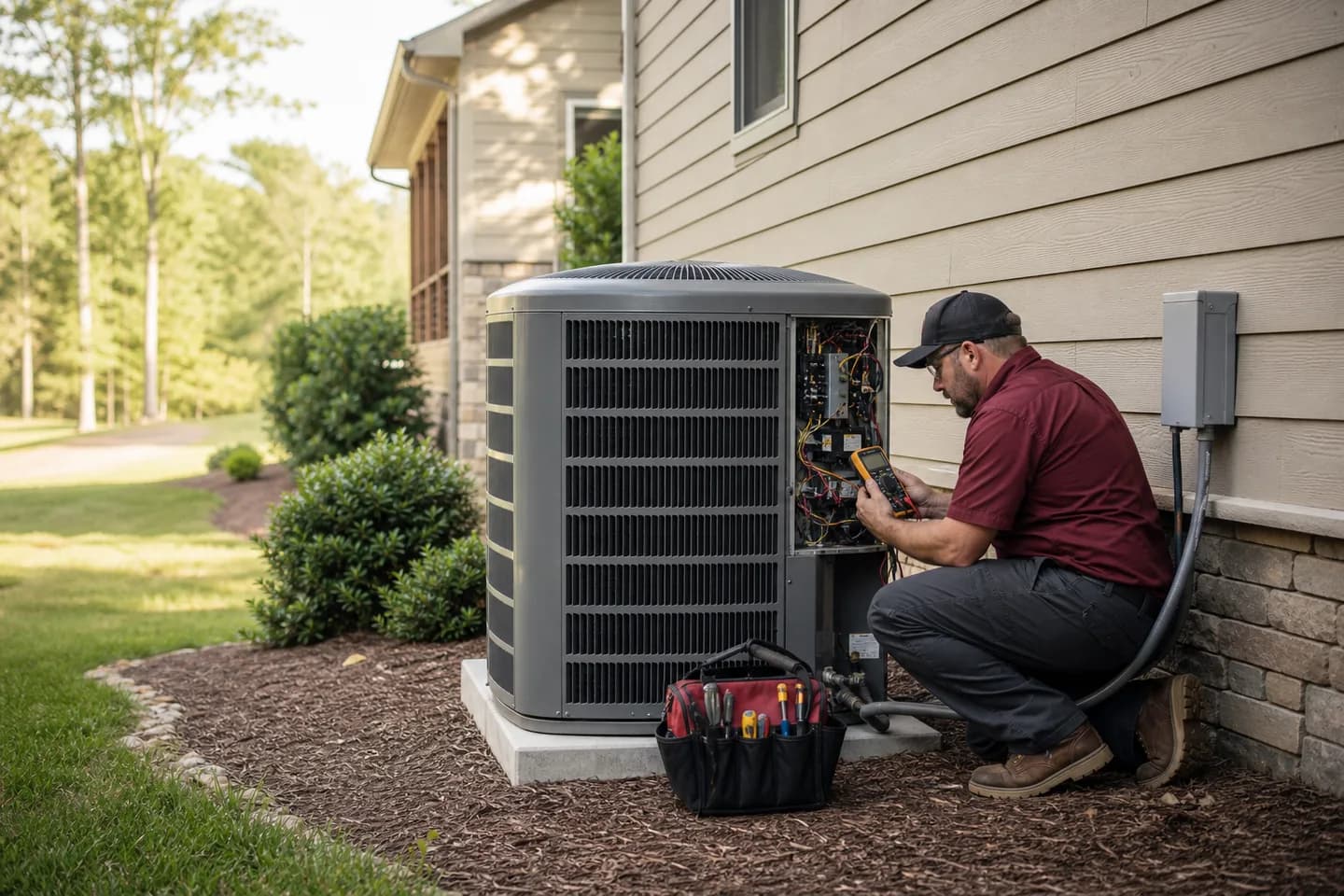
Emergency AC Repair in Jasper, GA calls for a contractor who can handle immediate troubleshooting without losing sight of the full system. A complete loss of cooling during heavy summer heat may require prompt service. Smoke, burning odor, repeated breaker trips, severe mechanical noise, ice, or water near electrical parts can make shutdown the first step. Once the equipment is safe, the technician still needs to test the failed sequence and explain the repair.
Air Conditioning Repair Man is led by Wayne Buras, an owner and technician with 20 years of residential and light commercial HVAC experience. He started the family-owned company to communicate directly with customers and help them understand their options. Emergency availability and arrival timing can vary with current calls, travel, weather, and parts. Wayne explains what can be handled during the visit, what must remain off, and what follow-up may be needed.
Calling the right kind of emergency service
An HVAC contractor handles equipment diagnosis and repair. Active fire, smoke, sparking that presents immediate danger, or a suspected gas or carbon monoxide event belongs with emergency services or the appropriate utility first. Water from the AC may also require steps to protect the building. Describe the condition clearly when calling so the company can give shutdown guidance and determine whether the request fits available HVAC service.
The urgency of no cooling depends on outdoor heat, indoor conditions, household needs, and safe alternatives. If the home becomes hard for anyone to tolerate, move to a cooler safe place. Close blinds, limit heat-producing appliances, and use properly connected fans while waiting. Never operate a generator, grill, or other fuel-burning device indoors, in a garage, or near openings.
What to turn off and what to check
Turn the system off for smoke, a burning smell, severe buzzing or grinding, ice, repeated breaker trips, or water near electrical components. A homeowner may reset a tripped breaker once when no unsafe sign is present. If it trips again, leave it off. Do not open panels, push a contactor, reach into a fan, replace a capacitor, or bypass a drain or electrical safety.
Safe checks include thermostat mode, setting, display, and batteries; filter condition; open vents; and visible outdoor debris. Note whether the indoor blower and condenser operate. Take a photo of an error message or equipment label. A short video of an intermittent sound can help. Stop changing settings once the symptom is recorded because repeated resets can erase useful fault history.
- Describe the exact symptom and when it began
- Report smoke, odor, water, ice, noise, or breaker trips first
- Share equipment type, age, access, and recent repair history when known
- Keep people and pets away from damaged or noisy equipment
- Move to a safe cooler place when indoor heat cannot be managed
Emergency diagnosis and contractor responsibility
The contractor checks immediate safety and confirms the symptom. From there, testing follows thermostat demand, power, controls, safeties, airflow, indoor equipment, outdoor equipment, drainage, and the refrigerant circuit when appropriate. The order changes with the complaint. A breaker trip starts differently from a water leak. A silent condenser starts differently from a frozen indoor coil.
A common part should still be measured. Replacing a capacitor without checking the motor and circuit can miss a connected problem. Clearing a drain without checking a damaged pan or freeze history may lead to another leak. Adding refrigerant without evaluating the charge and possible leak does not provide a complete repair. The urgent setting makes efficient testing important, not optional.
Immediate repair, temporary action, or return work
Some failures can be repaired during the first visit when the correct part and conditions are available. Equipment-specific motors, boards, sensors, coils, compressors, and refrigerant work may require parts or a return appointment. A temporary action is appropriate only when it is safe, follows equipment requirements, and does not bypass a protective control. Some systems need to stay off until the permanent repair is complete.
The contractor should explain what is confirmed, what has been restored, and what remains untested. Ask whether normal operation is allowed, which thermostat setting to use, and what sign should cause another shutdown. Record the part or condition and expected follow-up. An emergency visit can still provide value when it makes the situation safe and replaces uncertainty with a clear plan.
When emergency repair becomes a replacement choice
A major failure on older equipment may create a repair and replacement decision at an inconvenient time. The contractor should identify the current fault before presenting the comparison. Useful facts include system age, repair size, condition of connected equipment, refrigerant type, parts availability, prior failures, warranty, comfort, and how the system is likely to stand after repair.
The homeowner may choose a repair to restore cooling now or decide that replacement makes more sense. Both options need honest scope and timing. A rushed equipment change can repeat sizing, duct, drainage, or control problems. Wayne explains the emergency repair first and can plan a replacement properly when that path is selected. Urgency should not remove the basic review that protects a larger investment.
Preparing before the next urgent call
Keep model numbers, filter size, breaker location, indoor unit access, warranty information, and past invoices in one place. Know how to turn the thermostat off. Keep outdoor equipment clear and filters checked. Planned maintenance can find some weak readings, dirty conditions, and drain concerns before hot weather, though it cannot prevent every failure.
Continuity with a local contractor can help. Wayne has lived in the Cherokee and Pickens County area for 39 years and built Air Conditioning Repair Man around customer relationships. When the company already knows the equipment history, an urgent call begins with more context. Service records show what changed, which parts were replaced, and whether the present symptom has happened before.
Common questions
Emergency contractor questions
How do I know whether to call an HVAC contractor or emergency services?
Call emergency services for fire, active smoke, dangerous sparking, or another immediate life safety event. An HVAC contractor handles equipment diagnosis after the danger is addressed. Suspected gas or carbon monoxide problems may also require the utility or emergency response.
Can a contractor guarantee an emergency arrival time?
Arrival depends on technician availability, existing calls, travel, weather, and safety. Ask for the current estimate when calling. Share unsafe symptoms first so the company can tell you whether to shut the equipment down.
Should I approve replacement during an emergency call?
Review the confirmed fault, repair option, replacement scope, timing, equipment match, and written price. A major failure may make replacement practical, but the contractor should still explain why and avoid skipping basic sizing and installation planning.
Can an emergency repair use a temporary part?
Only a compatible part or safe manufacturer-supported action should be used. Protective controls should not be bypassed. If the correct part is unavailable, the equipment may need to stay off until permanent repair can be completed.
What information speeds up an emergency service call?
Provide the address, equipment type, model photo when available, access details, exact symptom, start time, thermostat response, indoor and outdoor operation, breaker status, water, ice, odor, noise, and recent repair or storm history.
Is a frozen air conditioner an emergency?
It needs attention, and the system should be turned off so the ice can thaw. Urgency depends on indoor heat and household needs. Do not break ice from the coil. Water can appear during thawing, so protect the area and report repeat freezing to the contractor.
What happens if the emergency repair part is not available?
The contractor should make the condition safe, identify the required part, explain whether the system can operate, and provide a return plan. A temporary option is appropriate only when it is compatible and does not bypass a safety. Some equipment must remain off.
Do I need to remain at the home for emergency AC service?
An authorized adult generally needs to provide access, answer questions, review findings, and approve work unless the company has arranged another process. Make sure the technician can reach the thermostat, equipment, electrical panel, and any attic or crawlspace access involved.