
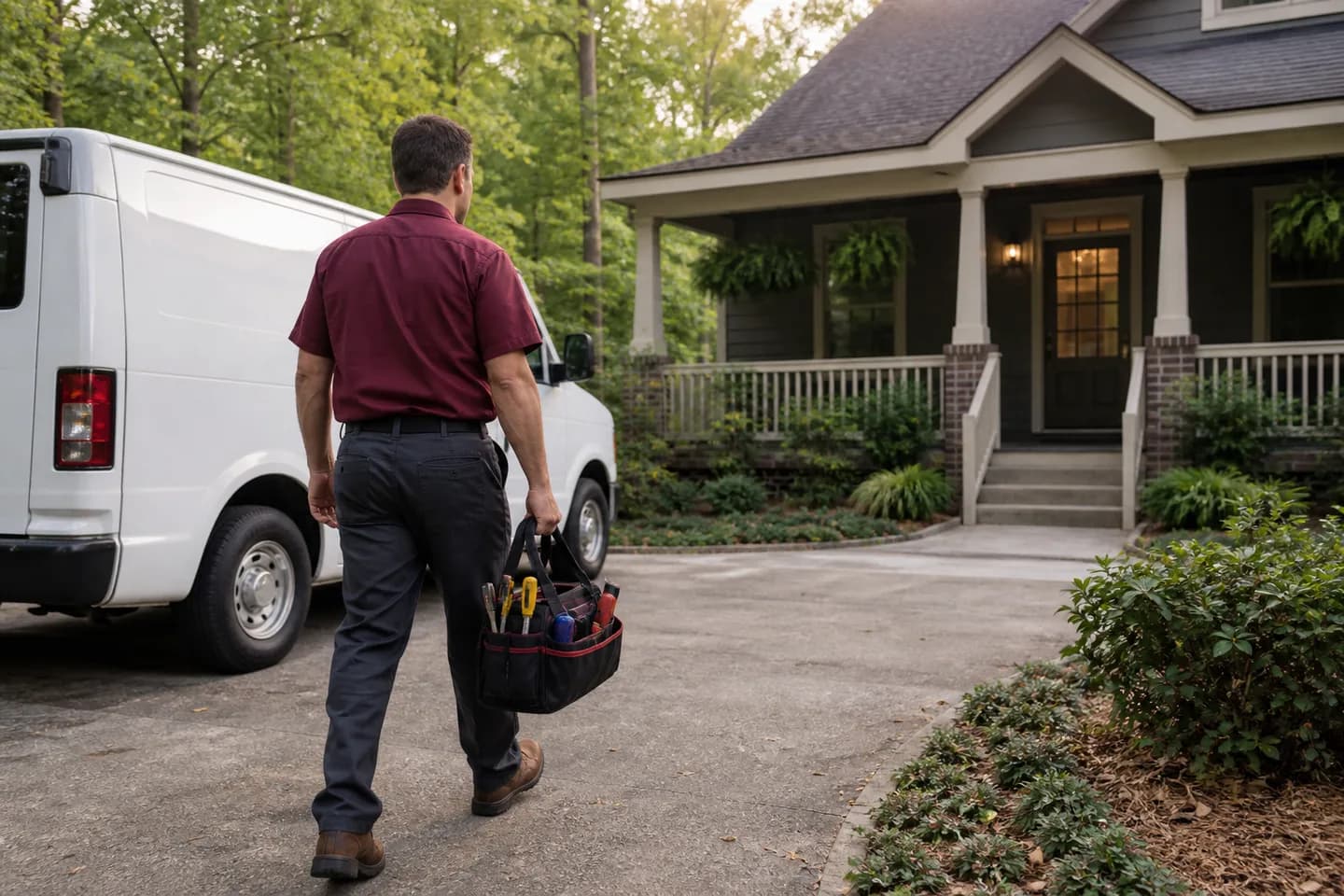
Cooling care built around the whole home
Residential service begins with how the house actually feels.
Residential AC Services in Jasper, GA cover more than a single repair or maintenance task. Home cooling depends on the air conditioner, thermostat, indoor airflow, duct system, drainage, electrical supply, building exposure, and the way the household uses each room. Good service starts with the concern that brought you to the phone, then looks far enough into the system to give that concern a useful answer.
Air Conditioning Repair Man provides installation, repair, diagnostics, replacement, seasonal care, and ongoing cooling support for homeowners. Owner and technician Wayne Buras brings 20 years of residential and light commercial HVAC experience to the work. He has lived in the Cherokee and Pickens County area for 39 years, holds a Georgia warm-air license, and is an EPA Section 608 Universal Technician. His approach is direct: listen first, test the equipment, explain the findings, and get approval before the work changes.
Matching the visit to the problem
A home that has stopped cooling needs diagnostic work. Equipment that still runs but has not received seasonal care may need maintenance. A system that has a confirmed major failure may need a repair and replacement comparison. A new addition, repeated room problem, or planned equipment change may call for a comfort and installation assessment. Choosing the right visit keeps routine service from being asked to solve a failure and keeps a repair call focused on restoring operation.
When scheduling, describe what you notice rather than trying to name the failed part. Say whether the system runs, which rooms are affected, when the change began, and whether there is water, ice, odor, noise, or a breaker problem. Mention recent electrical work, remodeling, storm damage, filter changes, or prior repairs. Those details give the contractor a better starting point without replacing hands-on testing.
Cooling equipment and systems found in homes
Many Jasper homes use a split system with an outdoor condenser and an indoor furnace or air handler. Heat pumps provide cooling and reverse for heating. Other homes may have package equipment, ductless systems, zoning controls, multiple thermostats, or more than one complete system. Each arrangement has a different operating sequence and set of components. Service should follow the installed equipment and manufacturer information rather than a one-size-fits-all checklist.
The age shown on an outdoor unit does not always tell the whole story. Indoor and outdoor sections may have been installed at different times. A thermostat or control may have been added later. Duct modifications can change airflow. The technician should record model and serial information, identify the equipment relationship, and confirm which system serves the problem area. That groundwork is especially useful in homes with finished basements, additions, or two systems located close together.
- Central air conditioners with a furnace or air handler
- Heat pumps with electric or dual-fuel backup heat
- Single-zone and multi-zone ductless equipment
- Homes with zoning dampers or multiple systems
- Older and newer controls connected to existing equipment
Looking beyond the thermostat number
A thermostat shows temperature at one location. It does not show airflow at each supply, heat entering through a sunny room, humidity across the home, or a return path blocked by a closed door. If the complaint involves comfort rather than a total failure, the contractor should ask where and when it occurs. An upstairs room that warms every afternoon has a different pattern from an entire house that never reaches the setting.
Basic checks can reveal a filter restriction, closed damper, disconnected duct, failed zone control, incorrect thermostat setting, or equipment problem. More persistent differences may involve duct design, return-air paths, insulation, windows, air leakage, or system sizing. HVAC service can identify the mechanical part of the concern and explain when building or duct evaluation is needed. A sound answer may involve more than adjusting refrigerant or lowering the thermostat.
Repair, maintenance, and improvement choices
A repair should address a demonstrated failure. Maintenance handles scheduled inspection, cleaning, and care within a defined scope. An improvement changes comfort, control, filtration, access, or efficiency even though the system may still operate. Keeping these categories separate helps a homeowner understand what is necessary now and what is optional. It also prevents a long list of observations from sounding like one urgent repair bill.
When a failed system is older or the repair is substantial, replacement may deserve comparison. That does not mean age alone makes a working system unrepairable. Consider the confirmed problem, repair cost, equipment condition, refrigerant type, service history, comfort, efficiency, and plans for the home. Wayne explains the practical choices and allows the homeowner to decide. A complete proposal should show what is included rather than relying on a single equipment price.
Planning service around the household
Tell the contractor about anyone who is especially affected by heat and make alternate cooling plans when indoor conditions are unsafe. Clear a path to the thermostat, indoor equipment, outdoor unit, electrical panel, and attic or crawlspace access when applicable. Secure pets and move stored items that block panels. These steps give the technician safer access and more time to work on the system itself.
Ask how long equipment should remain off before the appointment if it is frozen or making an unsafe sound. Save error messages, photos, and short videos of intermittent behavior. Gather previous invoices, warranty papers, model information, and filter details if available. You do not need a perfect equipment history, but even one older repair record can keep the same condition from being rediscovered without context.
Building a useful residential service record
After the visit, keep the diagnosis, work completed, parts used, operating notes, and recommendations. Record any limit, such as weather that prevented a full cooling test or an inaccessible component that was not inspected. If a repair needs a return visit, the summary should state whether the system may operate and what symptom should cause shutdown. Clear documentation supports warranty questions and makes the next visit more efficient.
Ongoing care can include filter changes handled by the homeowner, seasonal maintenance, drain observation, and prompt attention to new sounds or performance changes. Air Conditioning Repair Man can help with the full residential cooling cycle, from the first diagnostic visit through repair, tune-up, replacement, and a future maintenance schedule. The goal is not to make ownership complicated. It is to give the homeowner a reliable point of contact and enough information to make each decision confidently.
Common questions
Residential AC service questions
Which AC service should I schedule if I do not know what is wrong?
Schedule diagnostic or general repair service and describe the symptom. The technician can determine whether the cause is electrical, mechanical, airflow-related, drainage-related, or connected to another part of the system.
Can one company maintain, repair, and replace my residential AC?
Yes. Using one contractor for ongoing service can create a more useful equipment history. Ask whether the company works on your equipment type and whether installation, repair, and maintenance are all within its service scope.
Why is one room warmer than the rest of the house?
Possible causes include airflow balance, a duct problem, return-air limitations, zoning controls, sun exposure, insulation, air leakage, or system capacity. The pattern and system measurements help determine which conditions should be investigated first.
Should I turn the AC off before residential service?
Turn it off for smoke, burning odor, severe noise, ice, water near electrical parts, or repeated breaker trips. Otherwise, normal operation can help reproduce the symptom unless the contractor gives different instructions.
What records should I keep for my home AC system?
Keep model and serial numbers, installation and warranty documents, maintenance summaries, repair invoices, filter information, and any written operating limits. Photos of equipment labels are also useful if paper records are incomplete.
Can residential AC service address high indoor humidity?
It can evaluate system operation, airflow, controls, drainage, coil condition, cycle behavior, and equipment sizing as possible contributors. Outdoor moisture, air leakage, household activities, and building conditions also affect humidity. The contractor should explain which mechanical findings are confirmed and when a wider home evaluation may help.