Seasonal care matched to the heating equipment
Heating maintenance prepares an operating system for regular winter use.
Heating System Maintenance in Jasper, GA gives furnaces, heat pumps, electric heat, controls, blowers, filters, and connected components scheduled care before or during the heating season. A maintenance visit is best suited to equipment that can operate through its normal sequence. If the system will not start, trips a breaker, smells unsafe, or shuts down repeatedly, tell the contractor before the appointment because diagnosis may need to come first.
Air Conditioning Repair Man is led by owner and technician Wayne Buras. Wayne has 20 years of residential and light commercial HVAC experience, studied heating and air at Chattahoochee Technical College, and has held a Georgia warm-air license since 2007. His EPA Section 608 Universal Technician certification and continuing manufacturer education support work on heat pumps as well as furnaces. He explains which tasks are maintenance, which findings need repair, and which observations are simply useful for future planning.
Choosing the maintenance scope and schedule
Begin with the type and number of systems. A home may have a furnace paired with central air, an all-electric heat pump, dual-fuel controls, a package unit, ductless heat pumps, or separate equipment for each floor. The plan should identify the covered units and heating modes. Ask whether filters, cleaning, electrical measurements, ignition checks, heat pump functions, drainage, venting, and a written report are included.
Many homeowners schedule heating care before long winter run times. Equipment use, manufacturer instructions, system age, household needs, and warranty terms can affect frequency. Heat pumps work throughout the year and may need both heating and cooling attention. A service agreement can provide reminders and recurring visits, but its task list, term, covered equipment, exclusions, renewal, and cancellation details matter more than the plan name.
Filters, blowers, thermostats, and airflow
The filter and blower often serve both heating and cooling. Maintenance can review filter fit and condition, thermostat calls, blower response, accessible cabinet condition, supply and return connections, and room complaints. A filter that is too small may allow bypass. A filter that creates excessive resistance may reduce airflow. Dirty blower components, impacted coils, blocked returns, damaged ducts, and closed dampers can create similar effects.
Airflow affects furnace temperature, heat pump performance, comfort, sound, and component life. A basic visit may identify a visible concern, while pressure or airflow measurements may be needed to define it. Deep blower cleaning, indoor coil cleaning, duct repair, or balancing may be separate from routine maintenance. The contractor should show which condition was observed and explain the additional scope before work expands.
- Confirm thermostat settings, demand, and basic control response
- Review filter size, fit, condition, and replacement guidance
- Observe blower start, run, sound, and accessible cleanliness
- Check visible supply, return, cabinet, and duct connections
- Record recurring room, cycle, odor, or airflow concerns
Maintenance for fuel-burning furnaces
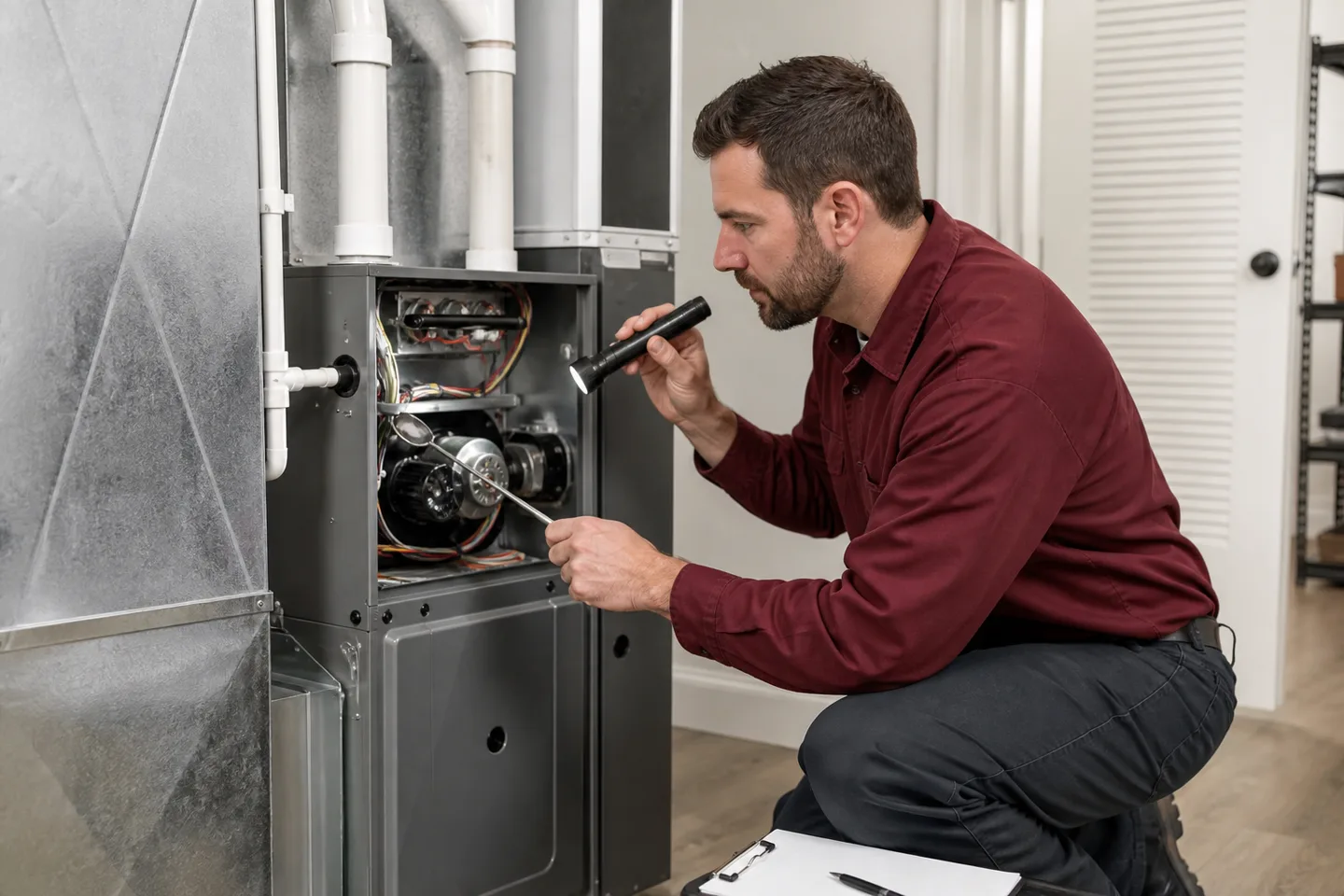
Gas furnace maintenance may include accessible burner and ignition condition, flame proving, inducer operation, blower timing, controls, safeties, venting, condensate drainage on high-efficiency equipment, temperature behavior, and electrical checks within the stated scope. Combustion analysis, gas pressure measurements, detailed heat-exchanger evaluation, and cleaning methods should be named when included because service packages differ.
Soot, repeated ignition trouble, vent damage, signs of overheating, rollout, unusual flame behavior, or a safety that opens can move the visit from routine care into diagnosis and repair. A safety should not be bypassed to complete maintenance. If the furnace cannot operate safely, the technician should explain the observed condition, shut the equipment down when required, and provide a repair path. Normal maintenance cannot guarantee against every future combustion or component problem.
Heat pump and electric heating maintenance
Heat pumps move heat through an indoor coil, outdoor coil, compressor, fans, refrigerant circuit, reversing components, and controls. Heating maintenance may review outdoor airflow, coil condition, defrost behavior, thermostat setup, electrical parts, refrigerant performance under suitable conditions, and backup heat operation. Frost can be normal in heating mode, while heavy ice that does not clear may point toward airflow, defrost, fan, sensor, control, or refrigerant concerns.
Electric air handlers and furnaces use heating elements, relays or sequencers, limits, breakers, wiring, and a blower. A staged system can still produce some heat when one stage fails, so operation and electrical measurements matter. Refrigerant should not be added as routine heat pump maintenance. If readings suggest a charge or leak concern, the contractor should explain the evidence and separate the diagnostic or repair work from the maintenance scope.
Separating routine care from repair recommendations
Maintenance tasks address scheduled care. A failed igniter, damaged motor, weak electrical component, defective control, unsafe vent, or nonworking heat stage is a repair. The technician should describe the finding, effect, urgency, and price before completing work outside the plan. Some notes may support future observation rather than immediate action, such as equipment age, surface wear, or a reading that remains within its stated range.
Maintenance cannot be completed fully when a primary failure blocks normal operation. Repair may restore the sequence, followed by the remaining checks during the same or a later visit. Weather can also limit heat pump performance tests or cooling checks on shared equipment. A useful summary states which mode was operated, what was maintained, what was repaired, and what remains untested instead of combining every item under one tune-up label.
Homeowner care and long-term maintenance records
Between visits, check filters regularly, keep supply and return grilles open, maintain outdoor-unit clearance, and watch for changes in sound, smell, drainage, frost, cycles, and thermostat messages. Test smoke and carbon monoxide alarms according to their instructions. Do not open electrical or fuel sections, use damaging chemicals, reach into moving equipment, or bypass protective controls. Call for service when a condition is outside safe homeowner access.
Keep maintenance summaries with installation, warranty, and repair documents. Repeated readings can show a change that one visit cannot. Records may reveal recurring limit events, drain issues, weakening electrical values, or room complaints. Wayne started Air Conditioning Repair Man to create closer customer relationships. Planned heating care supports that goal by giving the homeowner and technician a shared history of what the system has done over time.
Common questions
Heating system maintenance questions
How often should a heating system receive maintenance?
Many systems receive service before the main heating season, but equipment type, use, manufacturer guidance, environment, and warranty terms affect the schedule. Heat pumps may also need cooling-season attention because they operate throughout the year.
Can maintenance fix a furnace that will not start?
A nonworking furnace needs diagnosis first. Repair may restore normal operation so applicable maintenance checks can be completed. Tell the contractor about the shutdown when scheduling so the visit is planned around the active failure.
Does heating maintenance include a new filter?
Policies vary by filter type, size, and service plan. Ask whether a standard filter is included or whether the homeowner supplies it. The technician should still review fit, airflow direction, condition, and restriction concerns.
Is heat pump maintenance different from furnace maintenance?
Yes. Heat pumps use an outdoor refrigerant system, defrost, reversing controls, and backup heat. Fuel furnaces use ignition, burners, venting, and combustion safeties. The visit should follow the equipment rather than one shared checklist.
Will heating maintenance prevent every breakdown?
No. It can correct routine neglect and identify some developing problems, but a part may test normally and fail later. Maintenance supports reliable operation and better records without predicting every future component failure.
What should I receive after heating maintenance?
The summary should identify serviced equipment, tasks completed, findings, measurements when included, repairs, and any limit caused by weather, access, or an existing fault. Keep it with later service and warranty records.
Can heating maintenance lower my utility bill?
Maintenance may correct restrictions, dirt, setup, or operating problems that waste energy, but savings depend on the system, home, weather, thermostat use, fuel rates, and existing condition. A contractor should explain measured findings rather than promise a fixed reduction. Duct or building problems may need separate work.