Whole-system thinking for connected comfort problems
HVAC repair follows the problem across heating, cooling, airflow, and controls.
HVAC System Repair in Jasper, GA is useful when the problem reaches beyond one clearly identified furnace or air conditioner component. Heating and cooling equipment may share a thermostat, control board, blower, filter, ducts, zoning panel, drain, or electrical supply. A failure in a shared component can appear in both seasons, while a mode-specific failure can point toward the furnace, heat pump, condenser, backup heat, or controls used only for that call.
Wayne Buras owns Air Conditioning Repair Man and brings 20 years of residential and light commercial HVAC experience to system repair. He has held a Georgia warm-air license since 2007, holds EPA Section 608 Universal Technician certification, and continues learning through manufacturer classes and seminars. Wayne uses that training to identify the installed equipment, follow its sequence, measure the suspected condition, and explain the repair directly to the homeowner.
When a problem belongs to the HVAC system
A blank thermostat, blower that fails in both modes, repeated breaker trip, zoning problem, weak airflow throughout the home, water near shared indoor equipment, or control issue that changes between heating and cooling may require whole-system diagnosis. In other cases, the complaint is seasonal but the source is shared. A dirty indoor coil can restrict furnace airflow. A thermostat configuration error can affect a heat pump and its backup heat.
Tell the contractor what happens in each mode. Note whether the indoor blower runs, whether outdoor equipment starts, which rooms are affected, and what the thermostat displays. Mention recent storms, electrical work, renovations, filter changes, maintenance, and repairs. The goal is not for the homeowner to identify the failed part. It is to give the technician a timeline that can be tested against the system sequence.
- Heating, cooling, or fan operation that fails in more than one mode
- Thermostat, zoning, control, power, or communication problems
- Weak airflow, repeated cycling, or room comfort patterns
- Water, ice, odor, noise, or recurring safety shutdowns
- Equipment combinations that do not appear to operate together correctly
Mapping the installed equipment before testing
The technician identifies thermostats, indoor units, outdoor units, fuel or electrical sources, zoning equipment, accessories, ducts, and the spaces each system serves. A home may have a gas furnace with central air, an electric heat pump, dual fuel, mini-splits, package equipment, or multiple systems. Indoor and outdoor components may have different ages or may have been changed at separate times.
Model and serial information, wiring diagrams, thermostat setup, equipment ratings, and manufacturer data help establish how the system should operate. An outdoor unit cannot be evaluated in isolation from the indoor coil, blower, metering, controls, and airflow. A furnace used in dual fuel cannot be evaluated without knowing how the heat pump and thermostat choose a heat source. Mapping prevents one system's symptom from being assigned to the wrong equipment.
Following controls, power, airflow, and operating sequence
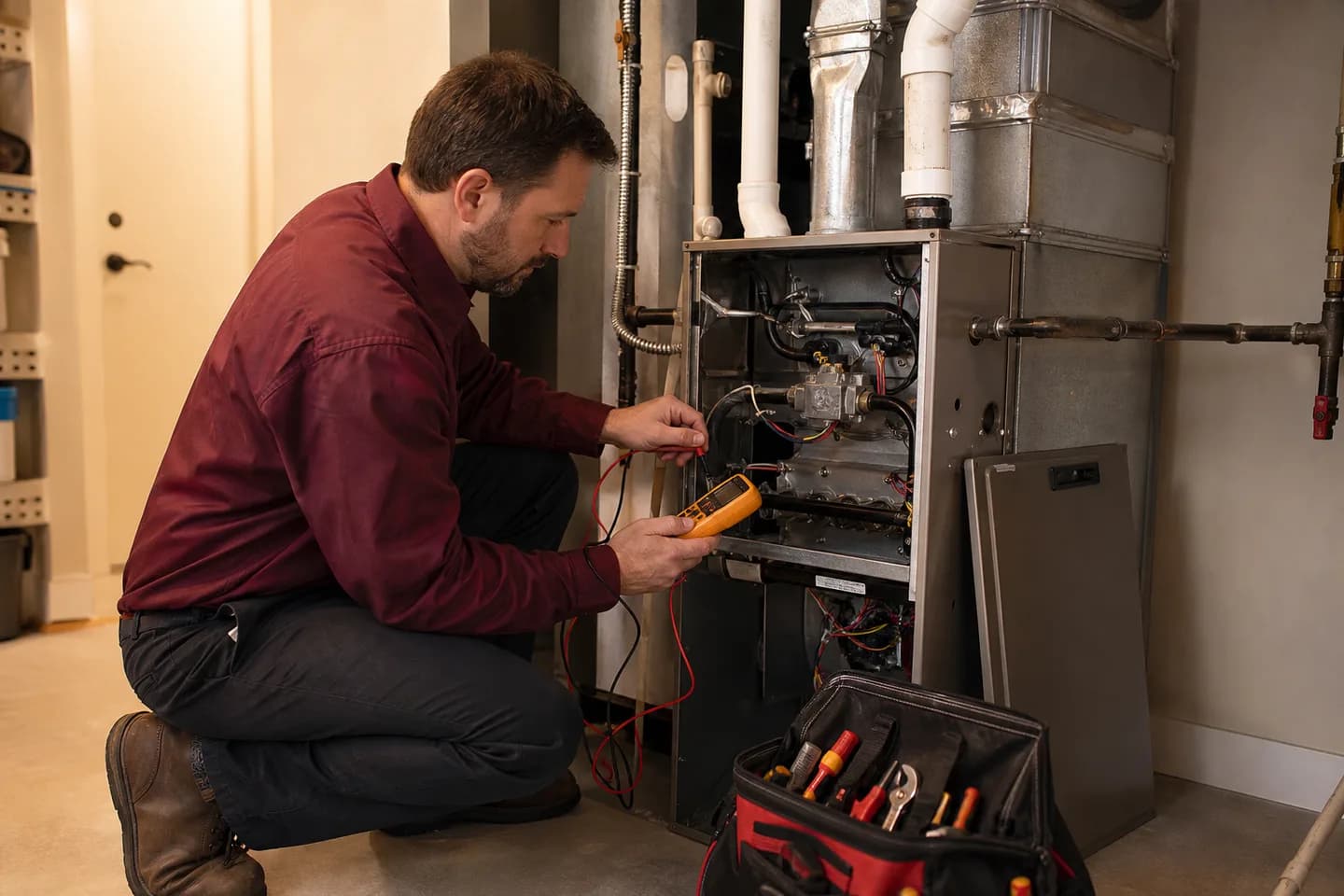
Diagnosis begins with the thermostat demand and follows power and commands through the relevant sequence. The technician may test low-voltage signals, line voltage, safeties, boards, relays, motors, heating components, outdoor components, temperature, airflow, refrigerant performance, or combustion functions depending on the symptom. A code is compared with measurements and wiring information rather than used as a shopping list for parts.
Airflow must be reviewed before many heating and cooling readings make sense. A restrictive filter, dirty blower, impacted coil, blocked return, damaged duct, failed zone damper, or incorrect speed can reduce comfort and affect equipment limits. Correcting a control or refrigerant problem without addressing severe airflow restriction can leave the system operating poorly. The diagnosis should state which cause is measured and which possible condition still needs added evaluation.
Handling layered and intermittent HVAC failures
One problem can hide another. A dead blower can stop heating and cooling tests. A failed transformer can remove all control power while the components it serves remain untested. A frozen coil must thaw before airflow and refrigerant operation can be evaluated accurately. The contractor should explain what has been confirmed, what repair is needed to continue testing, and whether the remaining checks are part of the same work.
Intermittent problems may not appear during the appointment. Stored code history, wire and connection condition, control behavior, temperature patterns, and homeowner recordings can help. Sometimes the responsible next step is monitoring rather than replacing a part without evidence. The customer should know whether the system may operate, what details to record, and which smell, sound, breaker event, water condition, or code requires shutdown and another call.
Repair authorization, safety, and post-repair checks
After diagnosis, the contractor should describe the confirmed condition, proposed correction, price, and possible follow-up before added work begins. Equipment-specific motors, boards, sensors, valves, compressors, coils, and controls may need to be ordered. Temporary operation is acceptable only when it follows equipment requirements and does not bypass a protective device. Some systems need to remain off until the correct part or repair is available.
Smoke, sparking, burning odor, severe mechanical noise, water near electrical parts, and repeated breaker trips call for shutdown. Suspected gas or carbon monoxide requires leaving the building and contacting emergency services or the appropriate utility from a safe place. After repair, the technician should test the affected mode and connected components. Any operating mode that weather or another fault prevents from being tested should be listed in the final report.
Deciding between repair, improvement, and replacement
A repair corrects a failed condition. An improvement may change airflow, controls, zoning, filtration, noise, or comfort even when the equipment runs. Replacement changes major equipment and requires a separate plan for sizing, matching, ducts, electrical or fuel needs, controls, drainage, venting, startup, and warranties. Keeping these choices separate helps the homeowner understand what restores operation now and what is optional or planned for later.
When a large failure occurs, compare repair and replacement using present condition, service history, part availability, refrigerant, safety, comfort, efficiency, warranty, and expected time in the home. Wayne started his company to communicate more openly and build long-term customer relationships. A written diagnosis, approved repair, verified operation, and saved service history put that approach into practice and make the next decision easier if the system changes again.
Common questions
HVAC system repair questions
How is HVAC system repair different from furnace repair?
Furnace repair focuses on the furnace heating sequence. HVAC system repair can follow a problem through heating, cooling, airflow, thermostats, zoning, power, and shared controls. The equipment and symptom determine the appropriate scope.
Why did both my heating and cooling stop working?
The modes may share a thermostat, control power, transformer, board, blower, electrical supply, filter, or zoning system. A whole-system diagnostic traces the common components before separate heating or cooling parts are replaced.
Can the HVAC system be fully tested in one season?
Some functions can be checked, but outdoor temperature and manufacturer procedures may limit full heating or cooling performance tests. The technician should state which modes were operated and which seasonal check remains.
Does HVAC repair include duct repair?
Not automatically. Accessible ducts may be observed during diagnosis, but leakage testing, resizing, sealing, balancing, or replacement can require a separate scope. Ask the contractor to distinguish equipment repair from proposed air-distribution work.
Can a control board be replaced based on a fault code?
A code alone is not enough. Power, wiring, sensors, safeties, connected loads, configuration, and communication may create board-related symptoms. Testing should support the board diagnosis and check for conditions that could damage a replacement.
What records should I keep after HVAC system repair?
Keep the symptom, diagnosis, repair scope, installed parts, test results, warranty details, and any untested mode or follow-up need. Model photos, previous invoices, and maintenance reports help establish the system's history.
Why might HVAC repair not fix one uncomfortable room?
Equipment repair restores the failed system function. One-room problems can also involve duct size or damage, return-air paths, zoning, insulation, windows, air leakage, or sun exposure. The technician can identify equipment and accessible airflow findings, then explain when duct or building evaluation is the next step.